Hanoi Wiki’s Visual Journey: Capture Every Icon
Hanoi is a city of layered textures, where ancient dynastic history collides with French colonial architecture and the relentless energy of modern Southeast Asia. For photographers and curious travelers alike, capturing the soul of Vietnam's capital requires more than just pointing a camera at a postcard view. Through Hanoi Wiki’s Visual Journey: Capture Every Icon, we invite you to explore the city’s most defining landmarks, understand their cultural context, and discover the exact angles that bring their stories to life.
The Architectural Landmarks of the Old Quarter
The Old Quarter is the beating heart of Hanoi, characterized by its narrow 'tube houses' and bustling commercial streets originally named after the specific guilds that operated there. To capture the authentic texture of daily life, you need to step away from the major thoroughfares and dive into the labyrinthine alleys.
Look for the weathered mustard-yellow walls, cascading electrical wires framing the grey sky, and street vendors balancing traditional bamboo shoulder poles. The early morning—just as the mist lifts and shop owners sweep their thresholds—offers the best natural light and a calm atmosphere rarely found during the midday rush.
Spiritual Sanctuaries and Peaceful Waters
Beyond the bustling streets, Hanoi offers serene spiritual spaces that anchor the city's identity. These locations provide striking geometric compositions, rich reds, weathered timbers, and reflective water surfaces.
The Temple of Literature (Van Mieu)
As Vietnam's first national university, the Temple of Literature is a masterpiece of traditional Vietnamese architecture. Divided into five distinct courtyards, it offers endless framing opportunities:
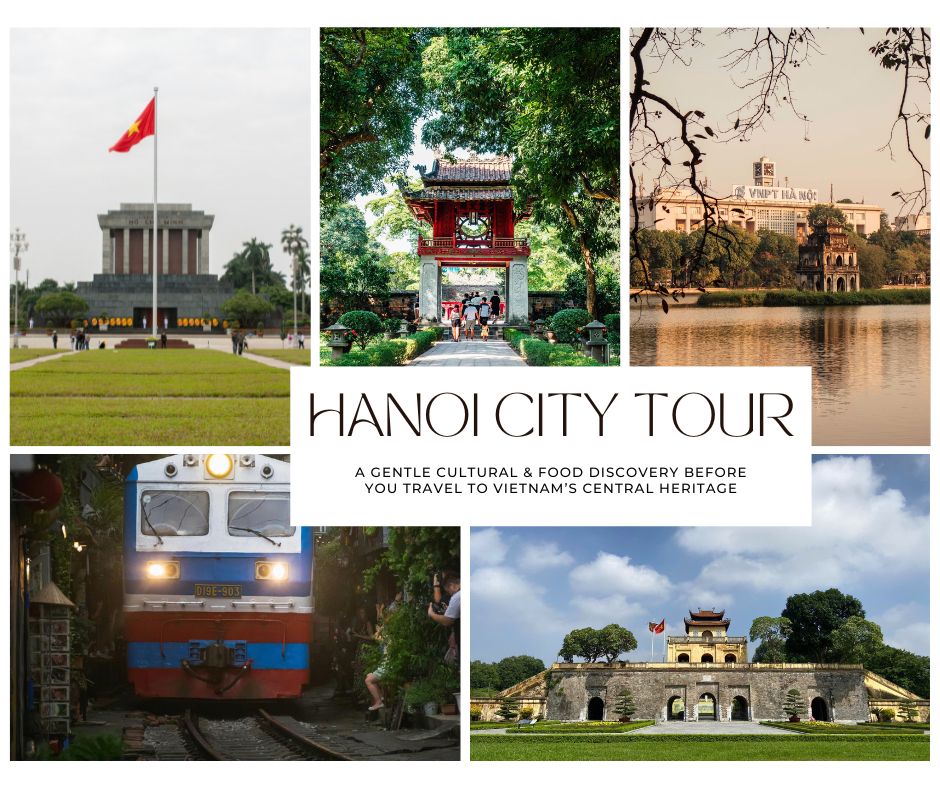
- The Khue Van Cac (Constellation of Literature Pavilion): This iconic red wooden pavilion serves as the official symbol of Hanoi. Capture it framed by the ancient gates during late afternoon when the slanted sun warms the woodwork.
- The Stelae of Doctors: Eighty-two stone tortoises carrying giant stone tablets inscribed with the names of successful scholars provide a powerful sense of historical depth.
Hoan Kiem Lake and Ngoc Son Temple
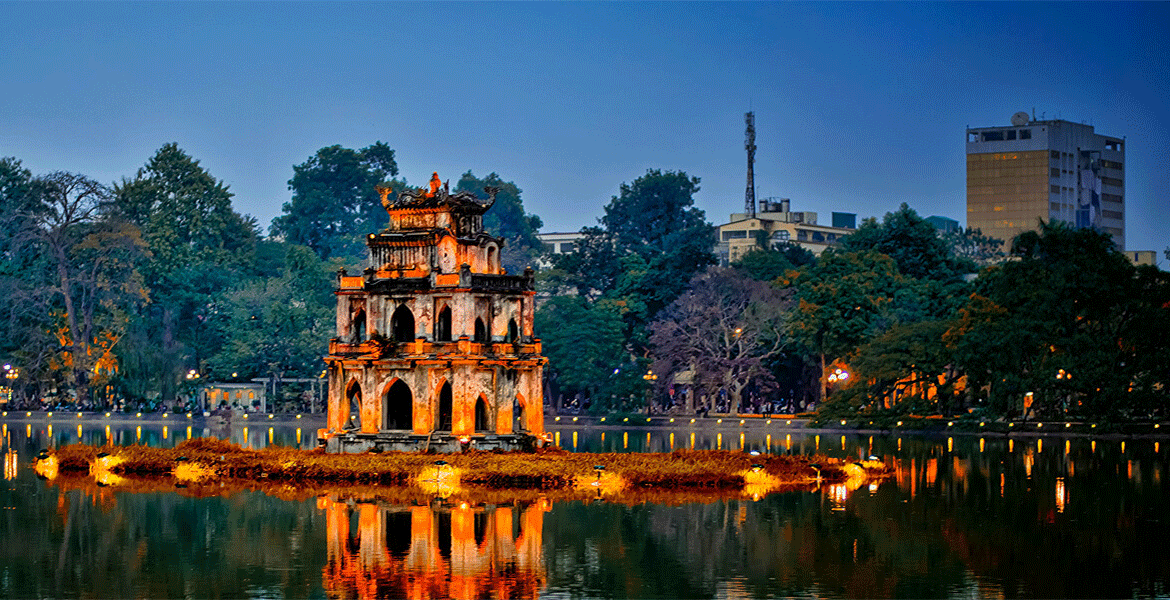
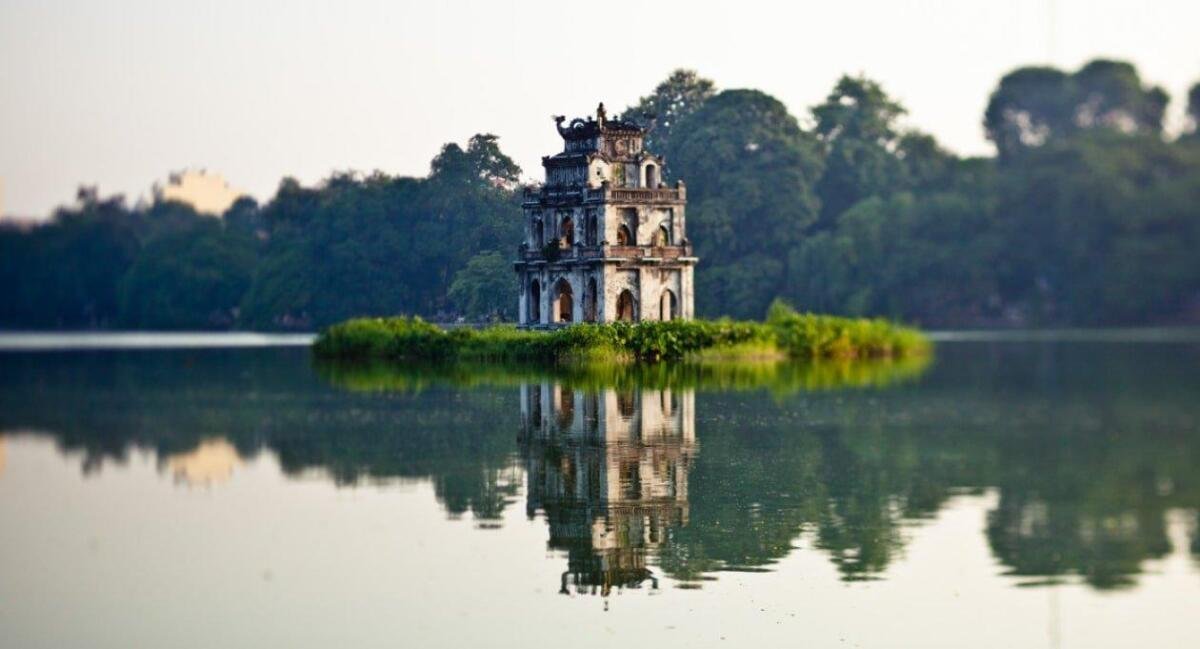
At the center of the city lies Hoan Kiem Lake, named after the legend of a magical sword returned to a golden turtle. The focal point for photographers is the Huc Bridge (The Bridge of the Rising Sun), a brilliant scarlet footbridge leading to Ngoc Son Temple on a small islet.

Pro Tip for Photographers: Visit just after sunset. The bridge and temple are dramatically illuminated against the dark water, creating stunning reflections and a moody atmosphere that contrasts sharply with the daytime hustle.
French Colonial Grandeur
The French colonial legacy left an indelible mark on Hanoi's urban landscape, introducing wide boulevards, public parks, and grand neoclassical buildings that stand in sharp contrast to the indigenous tube houses.
The Hanoi Opera House
Modeled after the Palais Garnier in Paris, the Hanoi Opera House is one of the city's grandest architectural achievements. Located at August Revolution Square, its symmetrical facade, wrought-iron balconies, and pale yellow stucco offer classical European aesthetics adapted to a tropical climate. Shooting from across the square during the golden hour highlights its intricate relief carvings.
St. Joseph’s Cathedral
Built in the late 19th century, St. Joseph’s Cathedral resembles a miniature Notre-Dame de Paris. Its twin bell towers and neo-Gothic facade are weathered by Hanoi's humid climate, giving the stone a dramatic, textured patina. The surrounding square is always lively, filled with locals sitting on tiny plastic stools sipping lemon tea, offering a quintessential street-life juxtaposition against the solemn church.
Practical Tips for Your Hanoi Photography Trip
To make the most of your visual exploration, keep these practical field tips in mind:
- Respect Local Customs: When visiting pagodas, temples, and churches, dress modestly (covering shoulders and knees) and ask permission before taking close-up portraits of monks or elders.
- Protect Your Gear: Hanoi's humidity and sudden tropical downpours require weather-sealed gear or a reliable rain cover. Always carry microfiber cloths to wipe down condensation.
- Master Street Crossings: Capturing moving traffic (especially the famous swarms of motorbikes) requires a steady hand and a willingness to step into the flow with confidence. Move at a slow, predictable pace, and let the drivers navigate around you.
By blending architectural exploration with an eye for intimate daily moments, your visual journey through Hanoi will yield a deeply personal portfolio that captures both the grand monuments and the subtle, beating pulse of a timeless city.