Harbor Freight Water Pump Guide: Which One to Buy?
Choosing the Right Harbor Freight Water Pump

When you are facing a flooded basement, need to empty a pool, or want to irrigate a garden, having a reliable water-moving tool is essential. For many DIYers and homeowners on a budget, a Harbor Freight water pump is the go-to solution. Harbor Freight tools are known for affordability, but navigating their inventory can be overwhelming with brands like Bauer, Chicago Electric, and Portland all vying for your attention.
Understanding the differences between these pumps—ranging from small submersible utility units to heavy-duty gas-powered trash pumps—ensures you purchase the right equipment for your specific job. Here is a comprehensive breakdown of what Harbor Freight offers, how to choose the right model, and tips to keep it running smoothly.
Types of Water Pumps Available at Harbor Freight
Harbor Freight categorizes its water-moving devices into a few distinct types based on power source and application. Before visiting a store or browsing online, you should identify which category fits your needs.
Submersible Utility Pumps
Submersible pumps are designed to sit directly in the liquid you want to remove. They are commonly used for draining swimming pools, flooded basements, hot tubs, and flooded yards. Most models run on standard 115V household electricity.
- Best for: Clean or slightly murky water, indoor flooding, and routine pool maintenance.
- Key feature: They operate quietly because the motor is underwater, but they generally require a minimum water depth to prime and run properly.
Transfer Pumps
Unlike submersible models, transfer pumps sit outside the water source. They use a garden hose or suction hose to pull water from one location and push it to another. These are portable and versatile.
- Best for: Draining water heaters, transferring water rain barrels, and minor lawn irrigation.
- Key feature: High portability and easy access, though they usually require manual priming before operation.
Gas-Powered Trash Pumps
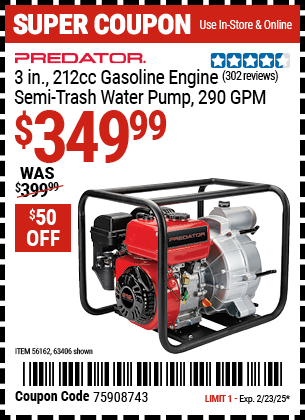
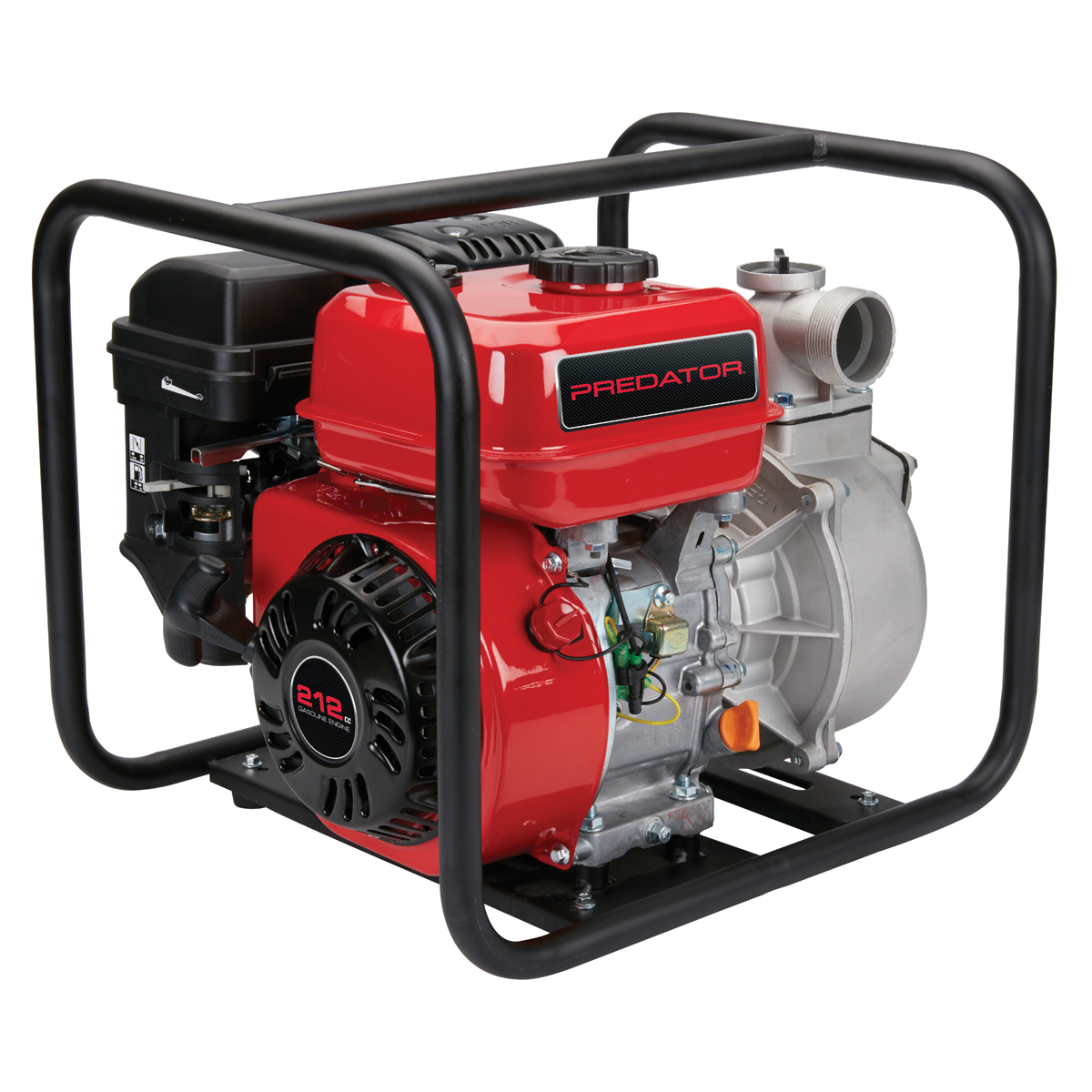
When you need heavy-duty performance far away from an electrical outlet, gas-powered trash pumps are the answer. These robust units are built to handle large volumes of water mixed with debris, leaves, and small solids.
- Best for: Construction sites, severe basement flooding, and agricultural drainage.
- Key feature: Powered by internal combustion engines (often under Harbor Freight's Bauer or Predator brands) and feature large discharge ports, typically 2 to 3 inches in diameter.
Top Brands at Harbor Freight
Harbor Freight carries several house brands. Knowing what each brand represents helps set realistic expectations regarding price, power, and durability.

Bauer
Bauer is Harbor Freight's mid-to-high tier brand, focusing on reliability and upgraded performance. Bauer water pumps often feature stronger motors, better housing materials (like stainless steel or heavy-duty thermoplastic), and longer warranties. If you plan to use your pump frequently or need dependable emergency performance, a Bauer model is usually worth the slight price premium.
Chicago Electric
Chicago Electric has long been Harbor Freight's budget-friendly staple for corded electric tools. Chicago Electric submersible utility pumps are inexpensive and get light-duty jobs done, but they may not offer the same longevity or build quality as Bauer alternatives. They are ideal for the homeowner who only needs to drain a pool once a summer.
Portland and Other Specialty Brands
Portland typically covers basic garden and household accessories. You may find lightweight transfer pumps or fountain pumps under this banner, designed strictly for low-stress, low-pressure applications.
Key Specifications to Consider
Buying a water pump is a numbers game. To avoid purchasing an underpowered unit, pay close attention to the following specifications:
- GPH (Gallons Per Hour): This tells you how fast the pump moves water. Small utility pumps might push 1,000 to 1,500 GPH, while heavy gas trash pumps can exceed 5,000 to 10,000 GPH.
- Max Lift / Total Head: This measures the vertical height the pump can push water. If you are pumping water out of a deep basement up to ground level, verify the pump's maximum head rating.
- Solids Handling Capacity: If you are moving muddy water or water with debris, check the solid-handling size rating. Standard utility pumps will clog if they ingest leaves or mud, whereas trash pumps feature open impeller designs to pass solids safely.
- Port Size: Discharge and intake diameters (1-inch, 1.5-inch, 2-inch, or 3-inch) dictate the volume of water you can move. Ensure your hoses match the pump fittings to prevent bottlenecks.
Tips for Maintaining Your Harbor Freight Water Pump
Proper maintenance ensures your investment lasts for years. Follow these best practices:
- Never run a pump dry: Most electric and gas water pumps rely on the fluid they move for lubrication and cooling. Running them dry can instantly ruin seals and burn out motors.
- Clean the intake screen: Debris buildup restricts flow and strains the motor. Regularly inspect and clear the intake guard.
- Winterize properly: If you live in a freezing climate, drain all remaining water from the pump housing before storage. Trapped water that freezes will crack plastic and metal housings.
- Use the correct gauge extension cord: If using a corded electric pump, avoid long, thin extension cords that cause voltage drops and overheat the motor.
Final Verdict: Are They Worth It?
A Harbor Freight water pump offers exceptional value for money, especially for homeowners who only need occasional drainage assistance. While professional contractors might prefer commercial-grade, name-brand industrial pumps, the average DIYer will find that Bauer and Chicago Electric models punch well above their weight class—provided you match the right pump type to the task at hand.