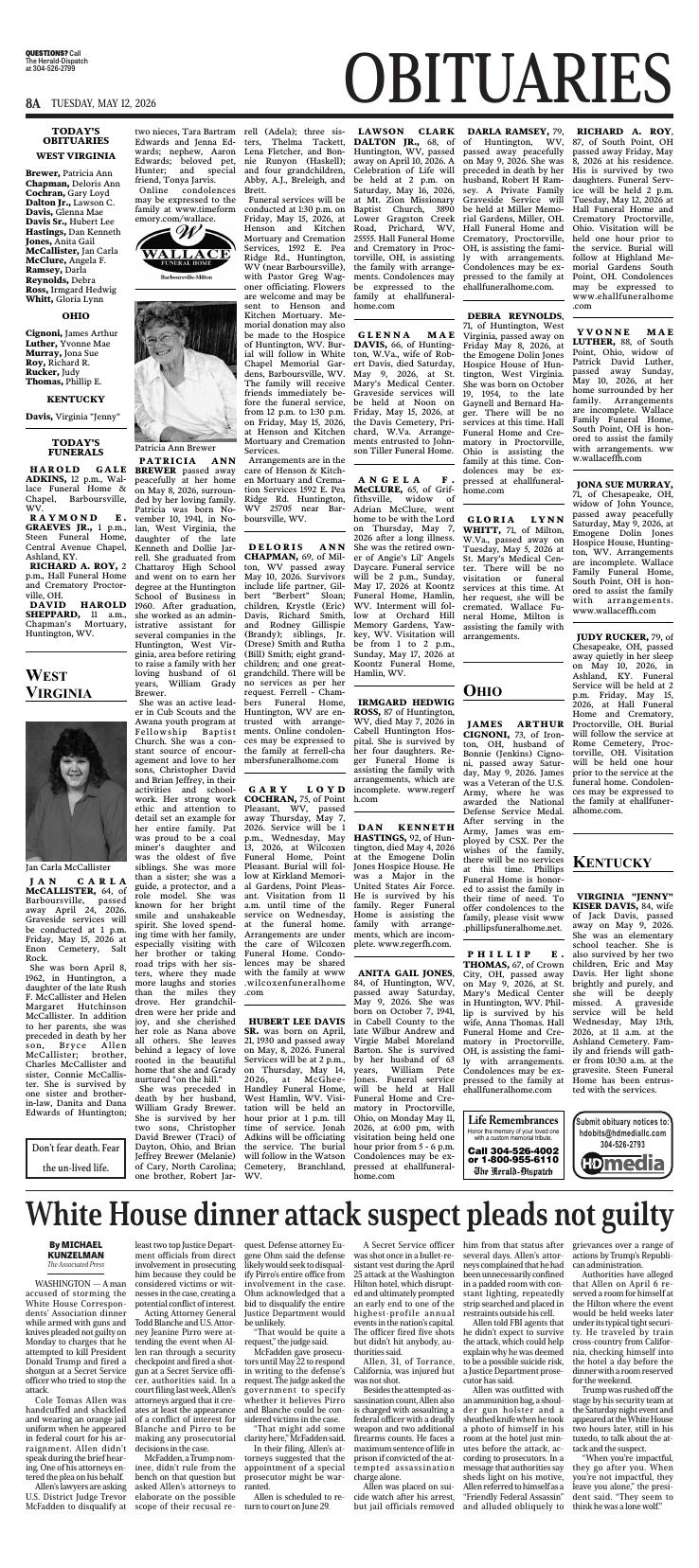
Herald Dispatch Obituary Update Contributions: 10 Facts
Navigating Herald Dispatch Obituary Update Contributions

Losing a loved one is one of life’s most difficult moments, and sharing their story with the community often begins with local journalism. For families in the Tri-State area, the Huntington Herald Dispatch serves as a vital historical record. However, navigating the submission and revision process can sometimes feel overwhelming. Understanding Herald Dispatch obituary update contributions ensures that your family's history is accurately preserved, shared, and updated when details change.
Whether you are drafting an initial notice or need to amend a date, service time, or surviving family member list, knowing how the system works makes a significant difference. Below are ten essential things you may not know about managing and updating obituaries through this prominent regional publication.
10 Things You Didn't Know About Obituary Updates
1. Submissions Usually Flow Through Funeral Homes
While families can theoretically submit notices directly, the vast majority of Herald Dispatch obituary update contributions are handled via contracted funeral directors. Funeral homes have direct portals to the newspaper's advertising and editorial departments. This partnership ensures that formatting standards are met and that verifications happen quickly during a sensitive time.
2. Corrections Are Free, But Expansions Cost Extra
If a factual error occurs due to a typesetting mistake by the newspaper, corrections are published free of charge. However, if the family wishes to add new information—such as a delayed memorial service detail or newly remembered survivors—this is typically treated as a new insertion or a paid revision, billed by the line or word count.
3. Strict Deadlines Govern Every Edition
Timing is everything in print journalism. To have an obituary or an update appear in the next morning's print edition, submissions and major revisions must meet strict daily deadlines, usually set in the afternoon. Missing the cutoff means the update will only appear online immediately and in print a day later.
4. Digital Archives Are Permanent
Once an obituary is published online through the Herald Dispatch’s digital partner platforms (such as Legacy.com), it becomes a permanent part of the internet's genealogical fabric. When you submit Herald Dispatch obituary update contributions, the digital record is refreshed, ensuring that future generations researching your family tree find the most accurate version.
5. Photo Quality Matters Immensely
Video: Obituaries - Clues to Look For.
Many update requests involve swapping out a low-resolution snapshot for a clearer, high-definition portrait. The production desk requires specific file formats (typically JPEG or TIFF) at 300 DPI or higher. Blurry cell phone screenshots of old printed pictures often get rejected because they do not render well on newsprint.
6. Standardized Formatting Saves Space and Money
Newspapers use standardized layouts for vital notices to maximize page efficiency. Knowing how to write concisely helps manage costs. When making Herald Dispatch obituary update contributions, professional staff often reformat sprawling paragraphs into standard genealogical shorthand (e.g., listing survivors by generation) to fit the publication's style guide.
7. Guestbooks Remain Open Indefinitely
An often overlooked feature of digital obituary updates is the online guestbook. Even long after the physical paper is recycled, family members and friends can continue to light virtual candles, share stories, and post condolences. Updating an obituary often rekindles activity in these memorial guestbooks.
8. Verification Policies Prevent Fraud
To protect families from malicious pranks or identity fraud, the Herald Dispatch requires proof of death or authorization from the designated next-of-kin before accepting major obituary updates. Be prepared to provide documentation from the attending mortuary or crematory if you are altering a notice independently.
9. Historical Archives Require Special Channels
If you are trying to update an obituary that was published decades ago in the print-only archives, the process differs from modern digital entries. These historical amendments usually require contacting the newspaper's research or library division, as older physical microfilms cannot be physically altered—though digital database corrections can sometimes be appended.
10. Social Media Integration Amplifies Reach
Modern obituary contributions automatically trigger social media feeds managed by the publication. When an update is processed, the revised link often propagates across regional Twitter and Facebook channels, helping spread essential service information to community members who missed the initial publication.
Summary
Managing family records in local media requires patience and attention to detail. By understanding how Herald Dispatch obituary update contributions are processed, verified, and published, you can ensure your loved one's legacy is honored accurately and respectfully for years to come.