Hidden Patterns in Your Co-Star Birth Chart Report
Co-Star has become a cultural phenomenon, largely known for its minimalist black-and-white aesthetic, blunt AI-generated push notifications, and bite-sized astrological analysis. However, many users never look beyond the app's daily updates to examine the comprehensive natal data sitting right beneath the surface. When uncovering hidden patterns in your Co-Star birth chart report, you transition from viewing astrology as casual entertainment to using it as an insightful diagnostic map of your psychological wiring.

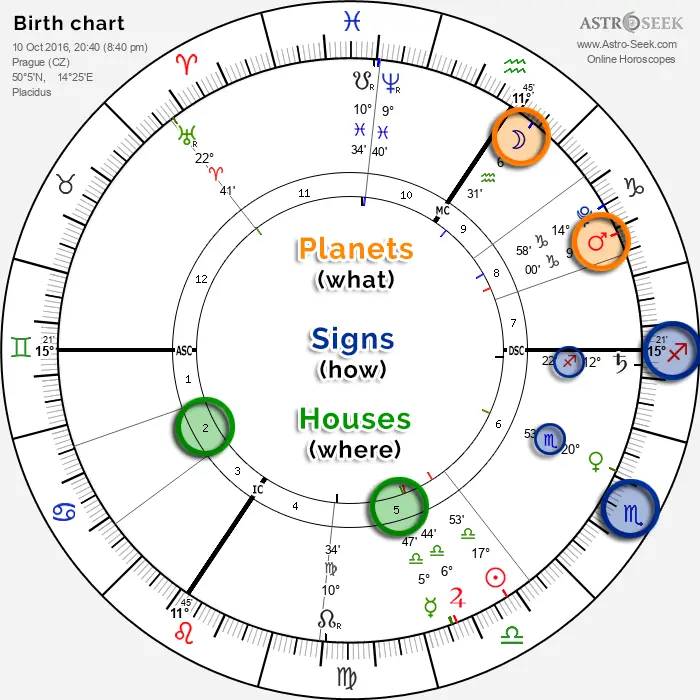
While traditional astrologers use a circular natal wheel, Co-Star displays your chart as a structured, tabular breakdown. This design choice makes the information visually accessible, but it can also obscure how different celestial placements interact. By understanding how the app organizes planetary data, house systems, and aspect geometry, you can extract meaningful, long-term themes about your relational habits, subconscious roadblocks, and innate talents.
Understanding Co-Star’s Architectural Framework
To accurately interpret your report, you must understand the technical engine powering the app. Co-Star sources its planetary coordinates directly from NASA’s Jet Propulsion Laboratory data, ensuring high astronomical precision. However, its method of organizing the sky differs significantly from that of other popular astrological platforms.
Most notably, Co-Star relies on the Porphyry house system. Unlike the Whole Sign system (which assigns one entire zodiac sign to each house) or Placidus (which divides houses based on time elapsed), Porphyry calculates house sizes by taking the four primary angles of your chart—the Ascendant, Descendant, Midheaven (MC), and Imum Coeli (IC)—and dividing the space between them into three equal segments. This means your houses in Co-Star will often vary in size, leading to distinct placements that may differ from charts calculated on other websites.
A Guide to Uncovering Hidden Patterns in Your Co-Star Birth Chart Report
The true value of your report lies in the synthesis between isolated placements. Instead of reading each planet in isolation, use these three diagnostic layers to identify recurring psychological and emotional loops.
1. The Elemental and Modal Blueprint
When you expand your chart details in Co-Star, look past your "Big Three" (Sun, Moon, and Ascendant) and take inventory of the fundamental building blocks: elements (Fire, Earth, Air, Water) and modalities (Cardinal, Fixed, Mutable).
- Elemental Imbalances: Count how many planets fall into each element. A complete absence or heavy concentration tells a clear story. For example, zero Water placements alongside an abundance of Air often signals a habit of over-intellectualizing feelings rather than actually feeling them. Conversely, a chart dominated by Fire without stabilizing Earth can reveal high creative initiative paired with difficulty finishing projects.
- Modal Tensions: A dominance of Fixed signs (Taurus, Leo, Scorpio, Aquarius) highlights resilience but points to stubbornness and resistance to change. A high Cardinal count (Aries, Cancer, Libra, Capricorn) indicates a natural initiator who might burn out rapidly.
2. Aspect Clustered Tension and Harmony
Co-Star does not draw aspect lines across a wheel; instead, it lists planetary relationships in a dropdown format, describing planets as "in harmony with," "in conflict with," or "opposing" one another. Translating this phrasing into classical astrological mechanics is crucial for spotting patterns:
- Harmonious Patterns (Trines and Sextiles): These indicate areas where energy flows effortlessly. If your Mercury is in harmony with your Saturn, you naturally possess disciplined thinking and clear structural logic, often so intuitive that you take it for granted.
- Dynamic Friction (Squares): Listed in the app as conflicting energies, squares represent internal tension that forces growth. A square between Mars and the Moon, for instance, frequently manifests as an instinctive, emotional reactivity that requires conscious self-regulation.
- Polarity Pulls (Oppositions): When planets sit opposite each other across the zodiac, you may feel torn between two competing life areas, such as the career focus of the 10th house versus the private emotional demands of the 4th house.
3. Empty Houses and Hidden Rulerships

One of the most common points of confusion in Co-Star is finding houses that contain no planets. Users often assume an empty house represents a dormant or unimportant area of life. In reality, every house is governed by a sign, and that sign is ruled by a planet located elsewhere in your chart.
If your 7th house of committed relationships is empty but sits in Taurus, the ruler of that house is Venus. To understand your partnership dynamics, locate where Venus resides in your Co-Star chart. If Venus is situated in the 10th house under Capricorn, professional ambition, public standing, and long-term stability will heavily influence your romantic choices, even though your 7th house appears blank on first glance.
Decoding the "Your Day at a Glance" Transits
The short, provocative daily readings Co-Star produces are generated by transits—the real-time movement of planets across the sky interacting with your static birth chart. Rather than reading these blurbs as random daily fortunes, evaluate them against your foundational patterns.
If the app repeatedly delivers warnings about communication breakdowns, boundary issues, or sudden burnout over several consecutive weeks, it indicates a slow-moving outer planet (Saturn, Uranus, Neptune, or Pluto) is making a prolonged contact with one of your personal planets. Use the app’s transit section to note which specific planets are interacting. Tracking these cycles over three to six months helps you anticipate periods of restructuring rather than feeling blindsided by daily mood shifts.
Contextualizing Co-Star’s Psychological Tone
Co-Star uses an editorial voice designed to be candid, modern, and sometimes pessimistic. The artificial intelligence generates text from a library of interpretations authored by poets and astrologers, meaning challenging aspects are often described with dramatic intensity.
When analyzing your chart, remember to decouple the poetic rhetoric from the astrological core:
- A placement described as "emotionally detached" or "condemned to solitude" often simply indicates an independent Saturnian or Aquarian influence that thrives on autonomy.
- Intense descriptions of "destructive impulses" usually refer to an active Mars-Pluto aspect that can be harnessed into exceptional stamina, athletic discipline, or investigative research when channeled intentionally.
Actionable Steps to Synthesize Your Findings
To turn your Co-Star data into actionable self-awareness, avoid reading placements in isolation. Open your app and work through these practical steps:
- Map the Core Narrative: Write down your Sun, Moon, and Ascendant, noting where they sit by sign and house. Identify whether their natural goals conflict (e.g., an adventurous Sagittarius Sun paired with a home-loving Cancer Moon).
- Group Your Aspects: Tally your harmonious versus conflicting aspects. If your chart leans heavily toward conflicts, your life path emphasizes internal friction that drives real-world resilience.
- Track Your Transits Against Real Events: When Co-Star alerts you to tension in your social or professional spheres, cross-reference the transit listed at the bottom of the screen. Keep a simple log to see how long-term planetary cycles genuinely correlate with your life changes.
By moving past the surface-level notifications and engaging directly with the planetary mechanics of your chart, Co-Star shifts from an unpredictable digital oracle into a sharp, practical framework for personal development.