How Arthur T. Demoulas Multiply His Net Worth
When people think of modern retail billionaires, names like Jeff Bezos or the Walton family typically come to mind. Yet tucked away in New England is an executive whose corporate survival and wealth generation rival any Wall Street drama. Understanding how Arthur T. Demoulas multiply his net worth — a billionaire story waiting to be told! — requires looking beyond ordinary balance sheets to examine one of the fiercest corporate battles and most loyal consumer followings in modern American business history.
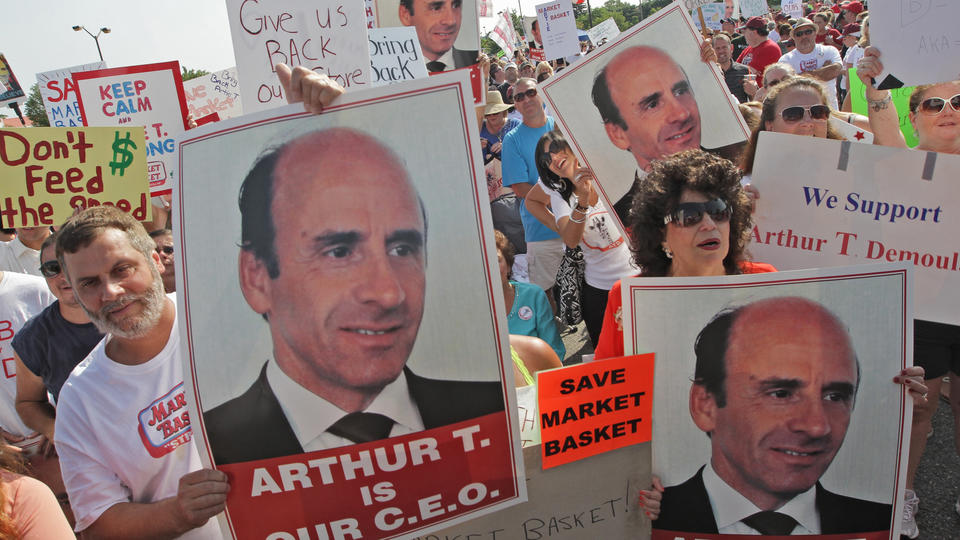
Known affectionately to hundreds of thousands of shoppers and employees simply as "Artie T.," Arthur T. Demoulas transformed Demoulas Super Markets Inc. (better known as Market Basket) from a regional grocer into a multi-billion-dollar retail powerhouse. Along the way, he defied standard corporate playbooks, bought out his rivals in a historic $1.6 billion deal, and built a personal fortune estimated well into ten-figure territory.
The Roots of the Demoulas Grocery Dynasty
The story began in 1917 when Greek immigrants Athanasios ("Arthur") and Efrosini Demoulas opened a modest neighborhood grocery store in Lowell, Massachusetts, specializing in fresh lamb. In the mid-1950s, their sons, Telemachus ("Mike") and George Demoulas, bought the shop and began expanding it into a full-scale supermarket chain.
Following George's sudden death in 1971, Mike assumed operational command. Arthur T. Demoulas, Mike's son, learned the grocery business from the ground up—working in warehouses, stocking shelves, and absorbing the operational rhythms of low-margin, high-turnover food retail. However, the division of ownership between George's heirs (led by Arthur S. Demoulas) and Mike's heirs (led by Arthur T.) ignited decades of bitter litigation over equity distribution and governance.
The 2014 Corporate Standoff That Reshaped His Fortune
Arthur T. Demoulas was named CEO of Market Basket in 2008. Over the next six years, he steered the company through rapid regional expansion, maintaining debt-free operations and paying generous bonuses to workers. Despite his success, friction with the opposing family faction culminated in June 2014, when the board of directors—controlled by his cousin, Arthur S. Demoulas—fired Artie T.
What followed was an unprecedented revolt in American labor history:
- Worker Boycotts: Warehouse staff and truck drivers refused to deliver food, leaving store shelves completely empty across Massachusetts, New Hampshire, and Maine.
- Customer Solidarity: Shoppers organized rallies, taped competitor receipts to store windows to demonstrate lost revenue, and boycotted the supermarket chain in lockstep with staff.
- Political Intervention: The standoff crippled local supply chains to such an extent that the governors of Massachusetts and New Hampshire stepped in to facilitate negotiations.
Recognizing that Market Basket was worthless without Arthur T., the opposing side relented. In August 2014, Arthur T. Demoulas and his immediate family reached an agreement to acquire the remaining 50.5% stake of the company from his cousin's faction for approximately $1.6 billion. The buyout consolidated complete operational and majority equity control under Artie T.
How Arthur T. Demoulas Multiply His Net Worth — A Billionaire Story Waiting to Be Told!
Consolidating ownership of a $4 billion enterprise was only the initial phase. The real catalyst for how Arthur T. Demoulas multiplied his net worth was the post-2014 execution. Taking on significant leverage to finance the buyout placed enormous pressure on the business, yet Artie T. rapidly turned the company into a cash-flow juggernaut.
1. Relentless Commitment to Everyday Low Prices (EDLP)
Unlike competitors who rely on complex digital coupons, loyalty tracking, and erratic promotional cycles, Market Basket operates on a disciplined high-volume, low-margin model. By pricing staple goods 15% to 20% below major supermarket chains, Market Basket generates extraordinary inventory turnover. High inventory velocity frees up working capital, reduces spoilage, and generates steady operational cash flow.

2. Human-Centered Operational Efficiency
While the rest of the grocery sector raced to replace cashiers with self-checkout kiosks, Demoulas doubled down on human labor. Market Basket stores maintain high staffing levels, ensuring quick lines, clean aisles, and personal service. Higher-than-average wages and annual profit-sharing bonuses foster exceptional retention rates, drastically lowering the recruitment and training costs that plague typical retail operators.
3. Strategic, Real Estate-Savvy Expansion
Rather than overextending geographically, Arthur T. Demoulas focused on dense regional dominance across Massachusetts, New Hampshire, Maine, and Rhode Island. Market Basket frequently acts as an anchor tenant or directly develops retail plazas, capturing real estate appreciation alongside retail margins. Today, the chain operates nearly 90 stores, generating an estimated $6 billion to $7 billion in annual sales.
Deconstructing Arthur T. Demoulas's Estimated Net Worth
Because Demoulas Super Markets Inc. remains a privately held corporation, exact figures are not filed with public regulators. However, financial analysts and wealth databases evaluate his net worth based on enterprise valuations, debt paydown milestones, and commercial real estate assets.
- Majority Equity in Market Basket: Valuing regional grocery chains typically commands multiples between 0.4x and 0.8x annual revenues, adjusted for debt. With revenues approaching $7 billion, Market Basket holds an enterprise value between $3 billion and $4.5 billion. Controlling the lion's share of this equity forms the bedrock of Demoulas's billionaire standing.
- Aggressive Debt Reduction: Following the 2014 transaction, the company prioritized paying off the debt incurred to buy out the rival faction. Retiring this leverage transferred billions in enterprise value straight into equity value for Arthur T. and his family.
- Private Real Estate Holdings: Through affiliated real estate entities, the family owns substantial commercial acreage, shopping plazas, and industrial distribution hubs throughout New England.
Conservative estimates place Arthur T. Demoulas's net worth comfortably between $1.2 billion and $1.8 billion, cementing his position as one of New England's most influential—and discreet—retail billionaires.
Key Business Lessons from the Artie T. Playbook
Entrepreneurs and business leaders can extract valuable wealth-building principles from Demoulas's decades-long journey:
- Culture as an Economic Moat: Treating employees with dignity and fair pay creates brand equity that competitors cannot replicate, even with massive marketing budgets.
- Understand Your Customer Value Proposition: Market Basket never strayed into gourmet gimmicks; it remained dedicated to affordable family groceries.
- Conviction Under Pressure: When ousted in 2014, Demoulas did not capitulate; he leveraged his internal and external goodwill to structure a winning acquisition.
The Lasting Legacy of a Reluctant Billionaire
Unlike many modern executives, Arthur T. Demoulas rarely gives media interviews, maintains no public social media presence, and shuns ostentatious displays of wealth. He continues to visit his stores regularly, chatting with stock clerks, deli workers, and regular customers.
His wealth multiplication was not built on financial engineering or software algorithms, but on an enduring principle: building an organization where customers save money, workers share in the profits, and ownership takes the long view. It remains one of the most compelling, authentic billionaire stories in American enterprise.