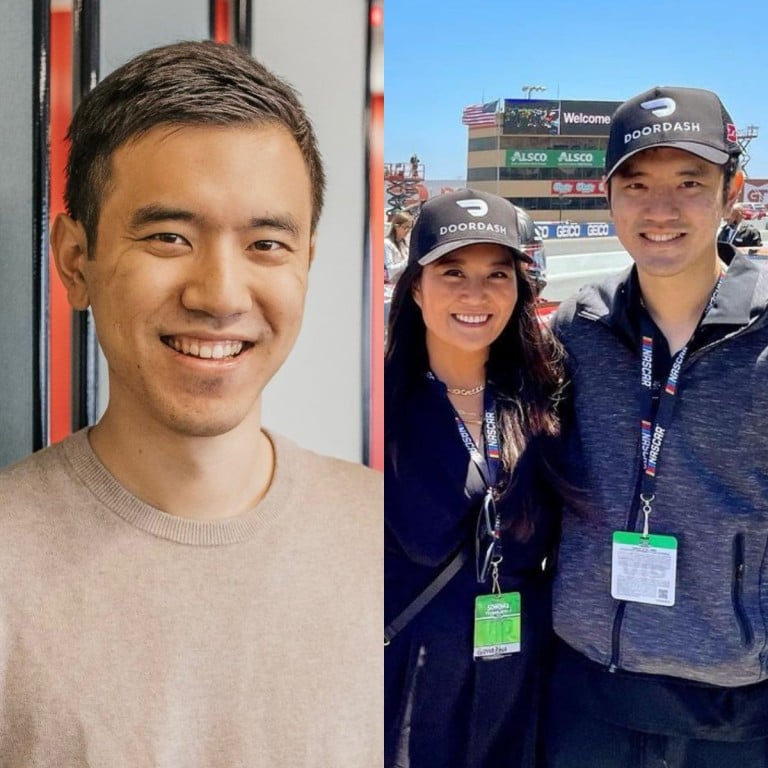
How DoorDash’s Founder Built a Billionaire Fortune
The Untold: How DoorDash’s Founder Built a Billionaire Fortune in Years!

In the fast-paced world of technology startups, few success stories rival the meteoric rise of DoorDash. When Tony Xu and his Stanford classmates set out to solve a local logistical problem in Palo Alto, they had no idea they were laying the groundwork for a multi-billion-dollar empire. Today, the platform dominates the North American food delivery market, making its creators members of an elite club of tech billionaires. But beneath the surface of soaring valuations and public offerings lies a grueling story of grit, operational obsession, and relentless execution.
Humbly Rooted: The Early Days of Tony Xu
Before building a massive enterprise, Tony Xu’s journey began far from Silicon Valley boardrooms. The son of Chinese immigrants, Xu grew up watching his parents navigate the steep challenges of moving to the United States. His mother worked multiple jobs—including washing dishes and practicing traditional medicine—while his father pursued a graduate degree. Witnessing this tireless work ethic instilled in Xu a deep appreciation for small business owners and the dignity of labor.
When Xu eventually found himself studying engineering at Stanford University, those early lessons stayed with him. He wasn't just interested in abstract computer science theories; he wanted to build tangible solutions that could help hardworking people operate more efficiently.
The Palo Alto Delivery Experiment
The genesis of DoorDash happened almost by accident in 2012. Xu and fellow students Stanley Tang, Andy Fang, and Evan Moore were talking to local merchants in Palo Alto to figure out what pain points they faced. They noticed a recurring theme: independent restaurants were losing customers simply because they didn't have the resources to manage their own delivery fleets.
To test their hypothesis, the founders didn't immediately write a complex software platform. Instead, they built a simple website called PaloAltoDelivery.com, printed out paper menus from local restaurants like a Thai eatery down the street, and uploaded them online. They put their own personal phone numbers on the site.
- The First Order: As the legend goes, the very first order came in while Xu was sitting in a classroom. He left the lecture, picked up the food from the restaurant, and delivered it himself.
- The Operator Mindset: This hands-on approach became a hallmark of the company's culture. The founders refused to ask employees to do anything they weren't willing to do themselves.
Realizing they had struck a nerve, the quartet rebranded as DoorDash in 2013 and officially entered the prestigious Y Combinator startup accelerator program. Armed with seed funding and a ferocious appetite for growth, they set out to conquer the logistics space.
Scaling Through Hyper-Local Strategy
While competitors like Grubhub focused on larger metropolitan areas and partnering with well-established chains, DoorDash took a different route. They targeted suburban neighborhoods and smaller, independent merchants who were completely ignored by legacy players.
The Three-Sided Marketplace Challenge

Building a delivery app requires mastering a notoriously difficult business model known as a three-sided marketplace. The founders had to simultaneously balance:
- Merchants: Convincing restaurants that joining the platform would increase their sales without crushing their profit margins.
- Consumers: Delivering a fast, reliable, and frictionless ordering experience that kept users coming back week after week.
- Dashers: Recruiting, retaining, and managing an army of independent couriers who needed flexible earning opportunities.
To solve this, Xu and his team utilized hyper-local data analytics. They didn't launch nationwide overnight; instead, they conquered one specific neighborhood at a time, ensuring that supply and demand were perfectly balanced before expanding to the next zip code.
Overcoming Critics and Fierce Competition
As DoorDash grew, it faced intense scrutiny and fierce competition. Well-funded rivals like UberEats, Postmates, and Amazon Restaurants poured billions of dollars into customer acquisition and driver subsidies. Critics frequently questioned whether food delivery could ever be a genuinely profitable business, pointing to high customer acquisition costs and thin margins.
Xu responded by relentlessly optimizing operational efficiency. Under his leadership, the company automated dispatch algorithms, streamlined batching orders so couriers could pick up multiple meals on a single route, and expanded into non-restaurant verticals like grocery, convenience, and retail delivery.
The IPO and Billionaire Status
The turning point for the company’s valuation came during an unexpected global event. When the COVID-19 pandemic swept the world in 2020, lockdowns forced millions of people to stay indoors. Demand for contactless food delivery skyrocketed overnight.
Sensing the historic window of opportunity, DoorDash accelerated its plans to go public. In December 2020, the company made its debut on the New York Stock Exchange. The stock surged on its first day of trading, officially catapulting Tony Xu and his co-founders into the billionaire ranks.
Key Takeaways from the DoorDash Playbook
The rise of DoorDash offers timeless lessons for aspiring entrepreneurs and business leaders:
- Stay Close to the Customer: The founders started by physically talking to restaurant owners and personally delivering food. Never lose touch with the ground-level reality of your market.
- Embrace Unsexy Problems: Logistics, routing, and dispatching food are difficult, unglamorous problems. Solving them effectively creates a massive competitive moat.
- Execution Beats Ideas: Countless people thought about food delivery, but DoorDash won because they executed faster and more relentlessly than anyone else.
Today, Tony Xu remains at the helm as CEO, steering the company into new frontiers like autonomous drone delivery and international expansion. The story of DoorDash is a testament to the fact that with obsessive customer focus, operational discipline, and a willingness to do the unscalable early work, a simple college project can transform into a titan of modern commerce.