How Edison’s Inventive Mind Transformed into a Billionaire Fortune Forever
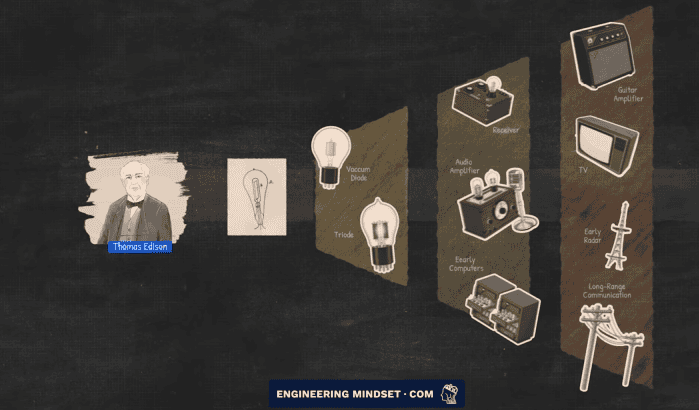
When most people think of Thomas Alva Edison, they picture a solitary genius working late into the night under the warm glow of a prototype incandescent bulb. Yet historical reality tells a far more commercially driven story. Edison was not merely an inquisitive tinkerer; he was an astute venture builder, an intellectual property strategist, and a pioneer of corporate research and development. Examining how Edison’s inventive mind transformed into a billionaire fortune forever reveals the exact inflection point where nineteenth-century mechanical ingenuity collided with modern industrial capitalism.

While Edison’s personal net worth at the time of his death in 1931 was estimated at roughly $12 million—equivalent to over $250 million in modern purchasing power—the industrial ecosystem and corporate entities he created, most notably General Electric, grew into multi-billion-dollar enterprises that reshaped global commerce. Here is how Edison bridged the gap between pure invention and unprecedented commercial scale.
The Invention Factory: Menlo Park as the First R&D Lab
Before Edison established his laboratory in Menlo Park, New Jersey, in 1876, invention was largely a decentralized, haphazard pursuit. Independent mechanics designed gadgets in relative isolation, rarely possessing the capital, legal protection, or manufacturing capacity to scale their creations.
Edison changed this paradigm completely by institutionalizing the inventive process. He gathered machinists, chemists, mathematicians, and draftsmen under one roof, providing them with cutting-edge tools, raw materials, and clear commercial mandates. Edison famously promised "a minor invention every ten days and a big thing every six months or so."
- Cross-disciplinary collaboration: Chemists and glassblowers worked side-by-side to solve structural bottlenecks in electrical lighting.
- Iterative prototyping: Edison tested thousands of materials—from carbonized cardboard to Japanese bamboo—before perfecting the lightbulb filament.
- De-risking capital: Investors were not backing a lone eccentric; they were financing a systematic production line for intellectual property.
Building Platforms, Not Just Products
Many inventors of the late 1800s developed functional electric lights. What set Edison apart was his structural understanding of network effects long before the term existed. He realized that an incandescent lightbulb was useless without a comprehensive, reliable power grid to supply the current.
Instead of merely selling bulbs, Edison designed and commercialized the entire electrical architecture:
- Centralized dynamos to generate continuous direct-current electricity.
- Insulated underground cables to safely route power through dense urban corridors.
- Meters and switches to monitor usage and bill commercial customers accurately.
- Affordable lamp fixtures engineered to plug seamlessly into the broader system.
When Edison launched the Pearl Street Station in lower Manhattan in September 1882, he switched on lighting for the New York financial district. By controlling the generation, transmission, and terminal consumption devices, Edison secured an unassailable commercial moat across the energy economy.
How Edison’s Inventive Mind Transformed into a Billionaire Fortune Forever
The transformation of Edison’s creative output into compounding financial enterprise required sophisticated corporate finance. In the late 1880s, Edison consolidated several of his operating businesses—including the Edison Lamp Company, the Edison Machine Works, and Bergmann & Company—into the Edison General Electric Company.
Backed by Wall Street titan J.P. Morgan, this entity orchestrated a monumental merger in 1892 with rival firm Thomson-Houston. The resulting conglomerate, General Electric (GE), became one of the original twelve companies listed on the Dow Jones Industrial Average in 1896. GE went on to define twentieth-century American industry, evolving into a multi-billion-dollar manufacturing and infrastructure titan that rewarded shareholders for generations.
Though Edison sold down much of his equity in GE following disputes over alternating current versus direct current, his methodology of tying patents directly to industrial manufacturing established the corporate venture blueprint that modern technology giants still follow today.
Aggressive Patenting and Strategic Monetization
Edison held 1,093 U.S. patents alongside hundreds of foreign filings across the United Kingdom, France, and Germany. His legal acumen matched his scientific drive. He understood that an unpatented invention was merely public charity, while a well-defended patent was a cash-generating asset.
He deployed three distinct intellectual property strategies:
- Defensive patenting: Edison filed improvements and variations around his core designs to box out competitors from developing workarounds.
- Licensing and royalties: Where manufacturing capacity fell short, he licensed rights to regional operators, generating passive, recurring cash flows.
- Consolidation via pooling: In the emerging motion picture industry, Edison co-founded the Motion Picture Patents Company (often called the Edison Trust), collecting licensing fees on cameras, projectors, and raw film stock throughout the United States.
Pivoting Capital: The Iron Ore Debacle and Portland Cement
True entrepreneurship is defined by how a founder absorbs catastrophic failure. In the 1890s, Edison poured millions of dollars of his own capital into a mechanized iron-ore milling facility in Ogdensburg, New Jersey. He engineered massive crushers, magnetic separators, and automated conveyors.
When the discovery of rich, low-cost iron deposits in Minnesota’s Mesabi Range crushed ore prices, Edison’s processing plant collapsed commercially. Rather than declaring defeat, Edison repurposed his heavy crushing and rotary kiln machinery to produce Portland cement.
The Edison Portland Cement Company transformed a sunk-cost disaster into a booming commercial venture. Edison redesigned long rotary kilns that doubled production efficiency across the industry. His cement was used to construct Yankee Stadium, public roadways, and massive industrial warehouses, illustrating his capacity to monetize engineering principles across wildly divergent markets.
Timeless Lessons from Edison’s Commercial Playbook
Entrepreneurs, operators, and investors navigating today’s digital and hardware ecosystems can extract concrete insights from Edison’s business philosophy:
- Focus on distribution channels: Product breakthroughs mean little without the infrastructure required to put them into consumers' hands at scale.
- Treat innovation as a factory output: Replace haphazard inspiration with disciplined experimentation, measurable milestones, and structured team workflows.
- Protect your technological perimeter: Build patent and operational moats early to safeguard your margins as markets mature.
- Repurpose failing assets: Hard engineering assets and proprietary software algorithms often have high-value applications in entirely unrelated verticals.
Conclusion
Thomas Edison did not merely harness the power of electricity and acoustic recording; he professionalized the art of commercialization. By aligning scientific curiosity with patent protection, vertical integration, and outside capital, he set the precedent for the modern enterprise. His enduring legacy is not just the artifacts he left behind, but the realization that true technical genius achieves its highest potential when married to industrial scale.