How Howard Hughes Made His Billionaire Fortune
Decoding the Myth of Howard Hughes's Wealth

When people think of Howard Hughes, they often picture a reclusive, eccentric billionaire living out his final years in the penthouse of a Las Vegas hotel. However, behind the pop-culture caricature lies one of the most astute and aggressive industrialists of the 20th century. To understand how he achieved his status, we need to look past the Hollywood glamour and examine the exact dollars that made Howard Hughes a billionaire legend!
His journey to unprecedented wealth was not a simple stroke of luck. It was a calculated combination of a massive inherited industrial monopoly, high-stakes aerospace manufacturing, shrewd real estate acquisitions, and lucrative defense contracts during World War II and the Cold War. Let's break down the actual financial architecture that built the Hughes empire.
The Foundation: The Drill Bit Monopoly ($500,000)
Every legendary fortune needs a cornerstone. For Howard Hughes, that foundation was literal rock—or rather, the tools used to drill through it. His father, Howard Hughes Sr., invented the two-cone roller rock drill bit in 1909, which revolutionized the oil drilling industry by allowing drillers to penetrate hard rock much faster than ever before.
The Hughes Tool Company Cash Cow
Upon the sudden deaths of both his mother and father when he was a teenager, Howard Hughes inherited 75% of the Hughes Tool Company. By the time he dropped out of Rice University and bought out his relatives' remaining shares in 1924, he valued his stake at roughly $500,000. That single asset became an unstoppable cash machine.
- Patents and Monopolies: The company held ironclad patents on the Tri-Cone drill bit, giving them an effective monopoly over global oil well drilling.
- Cash Flow Galore: Throughout the 1920s and 1930s, as the Texas and Oklahoma oil booms exploded, the Hughes Tool Company poured millions of dollars in net profit directly into Hughes's personal bank account year after year.
This steady, unshakeable stream of industrial revenue provided the immense capital Hughes needed to fund his high-risk passions: aviation and filmmaking.
Hollywood Blockbusters and Aviation R&D
Hughes did not just hoard his oil tool money; he deployed it aggressively. In the late 1920s and 1930s, he poured personal capital into Hollywood, producing legendary films like Hell's Angels. While the film cost an astronomical $3.8 million to produce—making it one of the most expensive movies of its time—it established his reputation as a daring risk-taker.
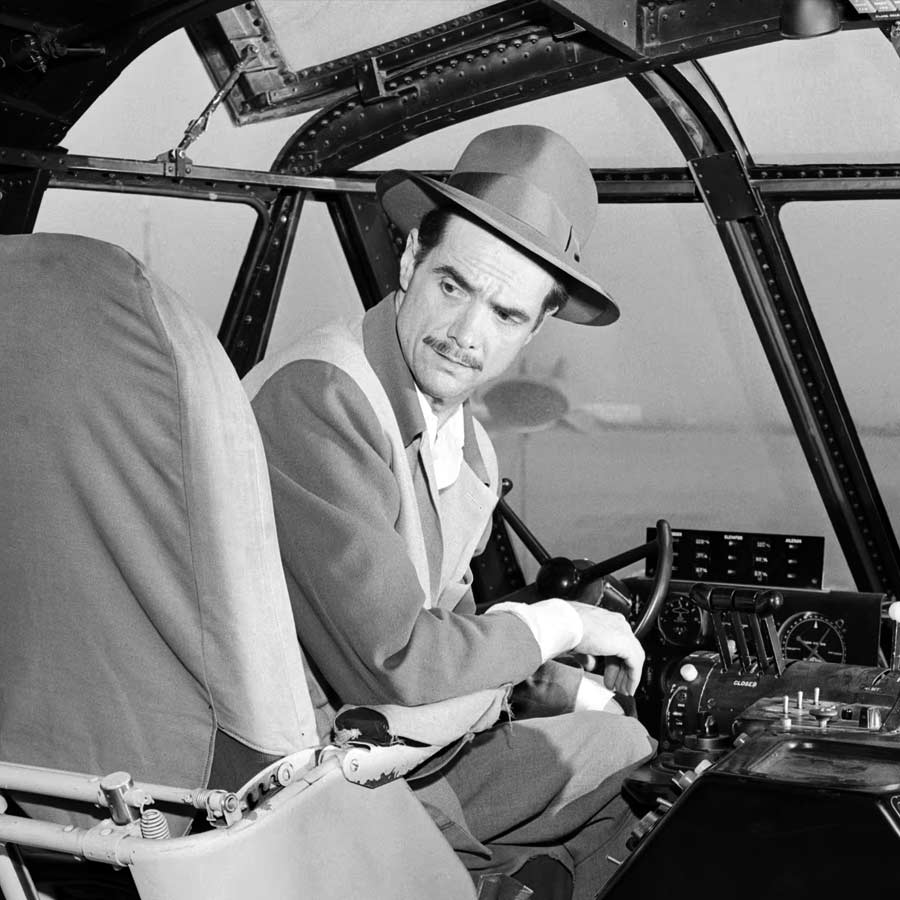
Simultaneously, he founded Hughes Aircraft in 1932. Initially a small venture designed to build racing planes, it quickly pivoted into a defense contractor. During World War II, Hughes secured massive government contracts. While projects like the massive wooden HK-1 flying boat (popularly known as the "Spruce Goose") famously went over budget, his company successfully mass-produced vital aircraft components and radar systems for the U.S. military.
The Defense Contracting Boom and the Cold War

The true explosion of Hughes's net worth into the billions happened during the post-WWII era and the height of the Cold War. Hughes Aircraft transformed from an airplane manufacturer into a cutting-edge electronics and aerospace powerhouse.
The Falcon Missile and Electronics
In the late 1940s and 1950s, Hughes Aircraft shifted focus to guided missiles, radar, and avionics. This pivot was remarkably timed with the onset of the Cold War and the Korean War.
- The Falcon Missile: Hughes developed the first U.S. air-to-air guided missile, securing lucrative, long-term Pentagon contracts.
- Monopoly on Defense Electronics: By the mid-1950s, Hughes Aircraft was the largest employer in the state of Arizona and a dominant defense supplier, generating hundreds of millions in annual revenue with high profit margins.
By 1966, when Hughes famously sold his television network (ABC stock) and consolidated his holdings, his net worth crossed the magical billionaire threshold—a rare feat in an era before tech startups minted young billionaires daily.
Las Vegas Real Estate and Liquid Cash
In 1966, Hughes relocated to Las Vegas, checking into the Desert Inn. When management asked him to leave, he simply bought the hotel for roughly $13 million. This marked the beginning of a massive Vegas shopping spree.
Using the liquid cash generated by Hughes Tool Company and his defense interests, he systematically bought up prominent properties:
- The Sands Hotel ($14.4 million)
- The Frontier Hotel
- The Castaways
- KLAS-TV
- Vast swaths of undeveloped desert land around the Las Vegas valley
These acquisitions transformed Las Vegas from a mob-controlled desert town into a corporate-backed entertainment destination, multiplying his net worth manifold.
The Final Tally of a Billionaire Empire
When Howard Hughes died in 1976 without a valid will, a massive legal battle ensued over an estate estimated to be worth between $1.5 billion and $2 billion (equivalent to roughly $8 billion to $10 billion today).
The exact dollars that made him a legend trace back to a brilliant patented drill bit, fueled by decades of oil industry dominance, supercharged by Cold War defense contracts, and cemented by shrewd Las Vegas real estate investments. Howard Hughes proved that industrial monopolies paired with relentless ambition were the ultimate ticket to legendary wealth.