How Jerry Jones Built an NFL Empire That Rich People Can’t Ignore!
In February 1989, an ambitious Arkansas oilman named Jerry Jones mortgaged almost everything he owned to purchase the Dallas Cowboys for $140 million. At the time, the franchise was hemorrhaging an estimated $1 million per month, the roster was aging, and critics considered the price tag financial suicide. Today, Forbes values the Cowboys at over $10 billion, making them the most valuable sports franchise on the planet. Understanding how Jerry Jones built an NFL empire that rich people can’t ignore requires looking beyond football to examine a revolutionary masterclass in intellectual property rights, luxury real estate, and elite brand prestige.

The $140 Million Gamble That Shocked Wall Street
When Jones acquired the Cowboys, team sports in North America were largely treated as vanity assets or community trusts rather than aggressive commercial growth engines. NFL owners generated modest returns primarily dictated by collective television contracts and ticket sales. Jones immediately broke that conservative mold.
On his first day in charge, he fired legendary head coach Tom Landry—the only coach the franchise had ever known—and installed his former college teammate Jimmy Johnson. While the football moves caused public outrage, Jones focused behind closed doors on stabilizing the balance sheet. He eliminated redundant operational overhead, replaced passive stadium lease agreements with aggressive revenue-generating concessions, and treated the franchise not as a pastime, but as a lean, high-growth corporation.
Breaking the NFL’s Commercial Monopoly
Jones recognized early that the traditional NFL revenue-sharing model capped the earning potential of elite brands. In the mid-1990s, he made a series of audacious business decisions that permanently altered the economics of professional sports.
The 1995 Sponsorship War
Under league bylaws, NFL Properties negotiated and pooled all licensing and corporate sponsorship revenue, splitting it equally among member clubs. Jones believed this penalized high-visibility franchises like Dallas while rewarding complacent owners. In 1995, he bypassed the league entirely by signing stadium-specific sponsorship deals with Nike, Pepsi, and American Express—direct competitors to official NFL league-wide partners Reebok, Coca-Cola, and Visa.
The Antitrust Lawsuit
The NFL filed a $300 million lawsuit against Jones for trademark violation and breach of contract. Jones promptly counter-sued the league for $750 million on antitrust grounds, arguing that the NFL’s centralized licensing suppressed free commerce. Faced with the prospect of an open-court antitrust battle, the league settled. Jones retained the exclusive right to control his stadium sponsorships and independent retail operations—a concession that unlocked tens of millions in uncapped annual revenue that remains proprietary to the Cowboys today.
AT&T Stadium: The Billion-Dollar Cathedral of Luxury
Completed in 2009 at a cost of $1.2 billion, AT&T Stadium (informally dubbed "Jerry World") redefined modern sports venue design. Instead of simply building an arena to host eight regular-season football games, Jones designed a year-round entertainment palace specifically engineered to attract corporate enterprise, global events, and high-net-worth consumers.
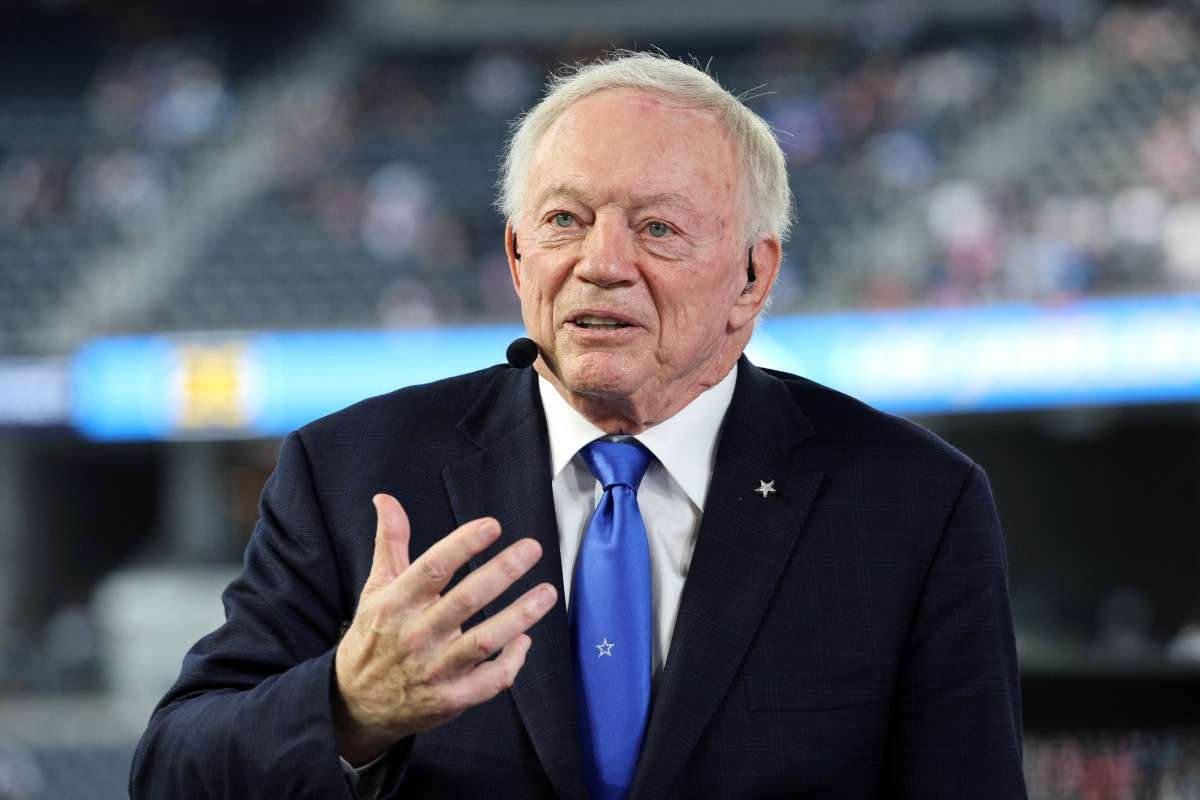
Video: NFL Author Ken Belson: How Jerry Jones & Robert Kraft Built a $23 Billion Empire | FOX43
- The Luxury Suite Blueprint: The venue features over 300 luxury suites, designed with high-end interior finishes, dedicated concierges, and field-level access that created unprecedented premium seating revenue.
- Museum-Grade Contemporary Art: Jerry and his wife, Gene, curated the Dallas Cowboys Art Collection inside the stadium, commissioning site-specific works from world-renowned contemporary artists like Anish Kapoor and Ellsworth Kelly to elevate the venue from a gridiron to a cultural destination.
- Multi-Purpose Utilization: By staging NCAA championships, mega-fight boxing events, international soccer friendlies, and sell-out stadium concert tours, Jones ensured the asset produced high-margin cash flow twelve months a year.
How Jerry Jones Built an NFL Empire That Rich People Can’t Ignore
Beyond individual stadium gates, Jones strategically expanded his business footprint into ancillary sectors that institutional investors and global executives could not bypass. The modern Dallas Cowboys are merely the flagship asset of a broader commercial conglomerate.
Legends Hospitality
In 2008, Jones partnered with the Steinbrenner family of the New York Yankees to launch Legends Hospitality. Rather than paying outside vendors to manage concessions, merchandising, and venue hospitality, Legends took over operations in-house. Today, Legends provides premium hospitality, venue consulting, and sponsorship sales for elite global venues, including SoFi Stadium, Notre Dame, and premier European soccer clubs, serving as a massive multi-billion-dollar enterprise asset.
The Star in Frisco: The Corporate Ecosystem
In 2016, Jones unveiled "The Star" in Frisco, Texas, a 91-acre, $1.5 billion world headquarters and practice facility. Rather than building an isolated training compound, Jones integrated corporate offices, a luxury Omni hotel, fine-dining restaurants, medical facilities, and high-end retail.
Fortune 500 CEOs and private equity partners routinely lease office space at The Star simply to operate within the Cowboys' orbit. Membership-only private clubs like the Cowboys Club grant high-net-worth individuals direct sightlines into team practices alongside five-star networking amenities. Jones successfully turned access to the Cowboys into a status currency for North Texas’ booming corporate elite.
Key Strategic Lessons from the Cowboys' Financial Ascent
The operational playbook Jones utilized offers sharp, actionable insights for modern entrepreneurs, institutional investors, and business leaders:
- Own the Infrastructure and Distribution: By fighting for independent merchandising rights and building his own hospitality firm, Jones ensured the Cowboys kept the vast majority of every dollar spent on their brand rather than splitting it with middlemen.
- Decouple Brand Equity from Pure Performance: The Cowboys have not reached an NFC Championship game since the 1995 season, yet their financial valuation continues to outperform championship-winning teams. Jones marketed the team as an entertainment lifestyle brand and national touchstone, insulating enterprise value from on-field win-loss records.
- Monetize Scarcity and Prestige: Jones recognized that the ultra-wealthy do not just purchase tickets; they purchase access, exclusivity, and relationship-building opportunities. Every suite, club, and private event is engineered to facilitate elite corporate commerce.
The Lasting Legacy of Jerry Jones' Business Blueprint
Jerry Jones permanently altered the sports business landscape. Before his tenure, sports ownership was largely a billionaire's vanity hobby. Jones proved that with relentless branding, fierce defense of proprietary rights, and expansive real estate ventures, an NFL franchise could transform into a self-sustaining corporate juggernaut.
By blending sports, commercial real estate, corporate hospitality, and elite cultural status, Jones built an economic machine that commands the attention of global capital markets—and shows no signs of slowing down.


