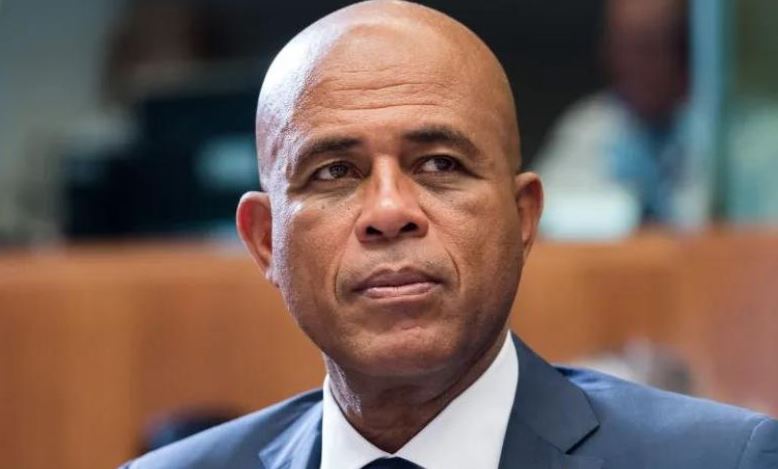
How Michel Martelly Built $1 Billion – The Business
Few figures in modern Caribbean history have transitioned from the entertainment stage to the presidential palace as dramatically as Michel Martelly. Known internationally by his stage moniker “Sweet Micky,” Martelly dominated Haitian popular music for over two decades before serving as President of Haiti from 2011 to 2016. In recent years, search queries and social media debates have frequently centered on the provocative premise of how Michel Martelly built $1 billion – the business, music, and political maneuvers behind his alleged fortune. But does Martelly actually command a ten-figure net worth, or is the billion-dollar tag a fusion of viral rumor, political controversy, and misunderstanding?
To understand the reality behind Martelly’s wealth, one must unpack his multi-decade career across commercial entertainment, post-presidential consulting, private enterprises, and the intense international financial scrutiny that followed his time in public office.
The Early Foundation: The Sweet Micky Entertainment Empire
Long before entering state politics, Martelly was one of the highest-earning performers in the French-speaking Caribbean. In the late 1980s, he pioneered a modern, synthesized subgenre of compas music (compas nouvelle génération). By removing traditional brass sections and utilizing electronic keyboards and sequencers, Martelly created a lean, high-energy musical act that lowered production overhead while maximizing live-performance profit margins.
Martelly capitalized on his popularity through several distinct commercial streams:
- Live Performance Guarantees: At the height of his musical career, Sweet Micky commanded premium appearance fees throughout Haiti, the French West Indies, Paris, Miami, and New York. His band routinely booked high-ticket private galas and packed diaspora club venues.
- Haitian Carnival Sponsorships: Martelly’s carnival floats were central to the annual Kanaval celebrations. These appearances secured massive commercial corporate sponsorships from telecommunications giants, beverage distributors, and local conglomerates.
- Merchandising and Intellectual Property: Martelly maintained ownership of his catalog, self-produced numerous albums, and licensed his brand across consumer goods and festival merchandise.
While this commercial entertainment venture generated millions of dollars over twenty-five years, it was a far cry from producing a billion-dollar liquid portfolio.
How Michel Martelly Built $1 Billion – The Business
The phrase how Michel Martelly built $1 billion – the business does not originate from conventional audited financial disclosures or standard business acquisitions. Instead, it stems from the intersection of his high-profile presidency and the massive international capital flows that passed through Haiti during his term.
Martelly assumed the presidency in May 2011, just sixteen months after the catastrophic 2010 earthquake. During his administration, Haiti was the recipient of unprecedented billions in pledged foreign assistance, reconstruction funds, and concessional oil financing through the Venezuelan Petrocaribe program.
The recurring online narrative crediting Martelly with a “$1 billion business” largely originates from three factors:
- The Petrocaribe Investigations: Investigative audits conducted by the Haitian Senate and the Superior Court of Accounts (CSC/CA) between 2017 and 2020 revealed that an estimated $2 billion in Venezuelan development loans had been mismanaged, misallocated, or remained unaccounted for across several successive administrations, including Martelly’s. While critics and political opponents accused Martelly and his associates of personally enriching themselves, these audits tracked state expenditures rather than verified private accounts.
- Clickbait Net Worth Aggregators: Online financial blogs and speculative net-worth algorithms frequently confuse public budgets managed by heads of state with personal assets, amplifying hyperbolic claims that Martelly had accumulated $1 billion.
- Post-Earthquake Reconstruction Contracts: Martelly’s tenure saw substantial infrastructure spending on roads, government administrative complexes, and public housing. Domestic business groups allied with the administration benefited significantly from state procurement, leading observers to associate the broader value of these commercial contracts with Martelly’s personal enterprise.
Private Investments: Real Estate and Commercial Holdings
Beyond state politics, Martelly and his extended family have engaged in genuine private enterprise. Public records, investigative journalism, and financial disclosures highlight several core sectors where Martelly invested his legitimate earnings from music and commerce:
1. High-Value Real Estate
Like many prominent figures in Caribbean public life, Martelly funneled substantial capital into prime real estate. Over the years, reports have linked his family to luxury properties in Pétion-Ville and the mountain suburbs of Port-au-Prince, as well as high-end residential real estate in South Florida. Real estate holdings in the United States served as a standard wealth-preservation hedge against domestic economic volatility in Haiti.
Video: Martelly Urges Business Community To Invest In Haiti

2. Entertainment Infrastructure and Hospitality
Following his presidency, Martelly revived his musical persona, quickly selling out international tour dates in North America and Europe. In addition to performance revenues, members of his circle invested in event production firms, sound staging logistics, and night hospitality ventures capable of hosting large-scale diaspora events.
3. Import-Export and Logistics
Members of Martelly’s broader business network held interests across various commercial import sectors, supplying consumer staples, vehicle fleets, and construction materials into the Haitian market. In a country heavily dependent on maritime trade, commercial logistics operations represent one of the most reliable generators of continuous cash flow.
International Sanctions and Asset Scrutiny
Any serious examination of Martelly’s current business standing must account for the severe regulatory actions taken against him by foreign governments in recent years.
In November 2022, the Canadian government imposed sweeping financial sanctions on Michel Martelly alongside other prominent Haitian political and business elites. The sanctions froze any Canadian-held assets and prohibited Canadian nationals from conducting financial transactions with him, citing alleged facilitation of illegal armed groups and illicit financing.
In August 2024, the United States Department of the Treasury’s Office of Foreign Assets Control (OFAC) followed suit, imposing direct sanctions on Martelly under Executive Order 14059. The U.S. government accused him of abusing his influence to facilitate the trafficking of illicit narcotics into the United States and engaging in money laundering. These measures effectively blocked Martelly’s access to the U.S. banking system and severed his ability to conduct business in American dollars.
These international measures have introduced profound liquidity barriers, dismantling traditional commercial partnerships and freezing cross-border investments.
Evaluating the Reality: What Is Michel Martelly Really Worth?
When assessing Martelly’s financial position through a factual lens, the idea that he built an authentic $1 billion business empire collapses under scrutiny. Legitimate billionaires are backed by documented equities, major multinational corporate stakes, verified patent portfolios, or large-scale institutional assets.
Instead, Martelly’s financial profile reflects that of an extraordinarily successful showman turned powerful political figure:
- Audited Reality: Credible analysts estimate Martelly’s private net worth prior to international sanctions to have been in the tens of millions of dollars, generated through decades of top-tier performance fees, brand licensing, real estate holdings, and familial commercial enterprises.
- The $1 Billion Disconnect: The “billion-dollar” figure is an artifact of political rhetoric, state corruption inquiries involving national infrastructure funds, and sensational internet speculation.
Final Thoughts
Michel Martelly undoubtedly built a formidable personal enterprise. He leveraged immense cultural charisma to construct one of the most profitable music brands in Haitian history, translated that notoriety into the highest executive office in the nation, and created commercial networks that spanned the Caribbean and North America. However, the narrative that he independently built a $1 billion business is fiction. While his political legacy and financial transactions remain under intense global scrutiny, separating confirmed commercial assets from viral billion-dollar myths remains essential for an accurate understanding of his career.