How Much Are Fishing Licenses at Walmart?
If you are planning a weekend on the water, you might be wondering: how much are fishing licenses at Walmart? Buying a state fishing license at your local Walmart is one of the most convenient ways to get legal before you cast a line. However, because fishing regulations and fees are managed entirely by individual state wildlife agencies rather than Walmart itself, there is no single nationwide price.

This guide breaks down what you can expect to pay, how the process works at the sporting goods counter, and what documentation you need to bring with you.
How Much Are Fishing Licenses at Walmart? (General Pricing)
Walmart acts as an authorized vendor for state Department of Natural Resources (DNR) or Fish and Wildlife agencies. Because of this, Walmart charges the exact same base fee that you would pay if you bought the license directly from your state's website or a local bait shop.
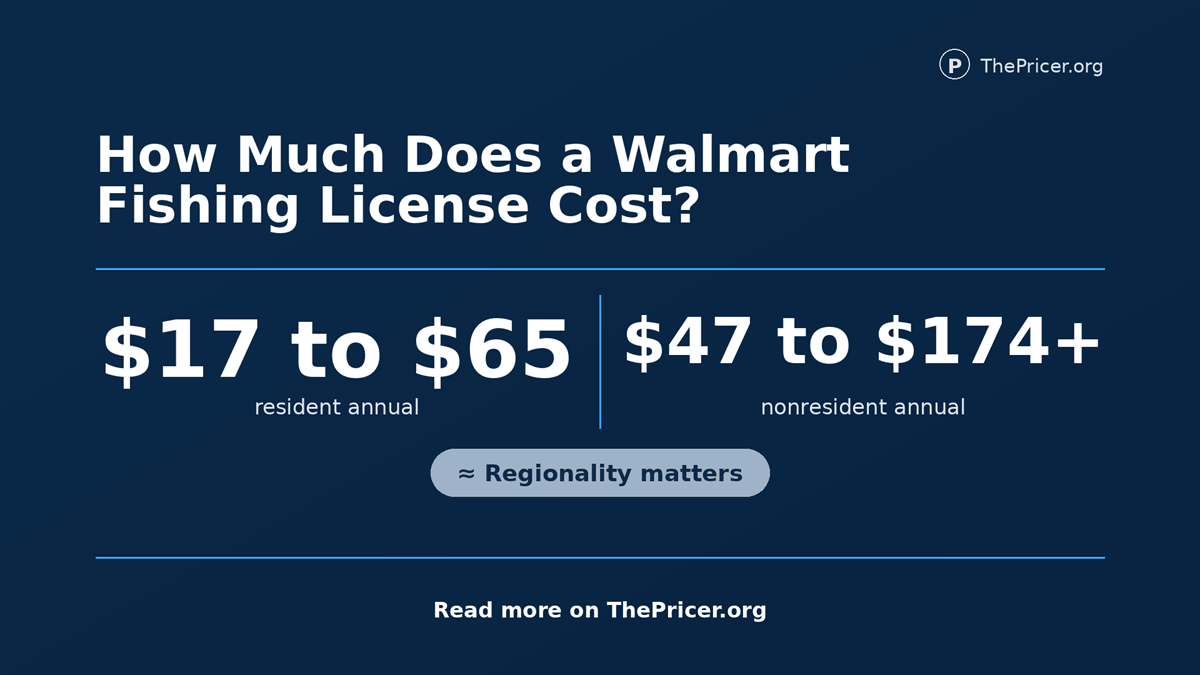
Generally speaking, you can expect to pay within these price ranges:
- Resident Annual Licenses: $10 to $45
- Non-Resident Annual Licenses: $35 to $100+
- Short-Term Licenses (1-day to 7-day): $5 to $25
For example, an annual resident fishing license in states like Texas or Florida typically costs around $30, while northern states with rich fisheries like Minnesota or Alaska may have different structures. Some states also charge a small issuing or transaction fee per transaction, usually between $2 and $5.
State-by-State Cost Breakdown Examples
To give you a clearer idea of how much a fishing license costs at Walmart, here is what standard annual resident licenses look like in a few popular states:
- Texas: ~$30 (Freshwater only) or ~$40 (All-water)
- Florida: ~$17 (Annual resident freshwater or saltwater)
- California: ~$58.50 (Standard resident sport fishing license)
- Ohio: ~$25 (Resident 1-year fishing license)
- Michigan: ~$26 (All-species resident fishing license)
Keep in mind that these prices change periodically based on state legislation and inflation.
Types of Licenses Available at Walmart
When you walk up to the sporting goods counter at Walmart, the associate will ask you what type of license you need. To avoid paying for more than you require, it helps to understand your options:
- Resident vs. Non-Resident: States drastically differentiate between residents and non-residents. To qualify as a resident, you typically must have lived in the state for at least six months and hold a valid driver's license from that state. Non-residents always pay a higher fee.
- Duration: You can choose from daily permits, multi-day permits (like 3-day or 7-day passes), or full annual licenses. If you only fish once or twice a year on vacation, a short-term license saves you money.
- Water Type: Some states sell separate licenses for freshwater and saltwater fishing. Others require a combined all-water license or specific stamps for trout, bass, or federal migratory birds.
Requirements to Buy a Fishing License at Walmart
You cannot simply walk up and buy a license anonymously. State wildlife agencies require specific tracking information to combat poaching and manage fish populations. When you purchase a license at Walmart, you must provide:

- A Valid Government-Issued ID: Driver's license, state ID, or passport to prove your identity and residency status.
- Your Social Security Number (SSN): Most states require your SSN by law to cross-reference child support enforcement databases and verify identity. (If you do not have a U.S. SSN, the associate can usually use an alternative identifier depending on state rules).
- Payment: Cash, credit, or debit card. Note that Walmart sporting goods registers accept standard store payment methods.
How to Buy Your License at Walmart Step-by-Step
Purchasing your pass is straightforward, but it helps to know how the process flows inside the store.
1. Head to the Sporting Goods Department
Fishing licenses are handled exclusively at the sporting goods counter, usually located near the back or side of the store. If no associate is standing immediately behind the counter, use the call button or ask a nearby employee to page someone certified on the POS (Point of Sale) licensing terminal.
2. Provide Your Information
The associate will log into the state’s online licensing portal through the Walmart register. They will ask for your name, address, date of birth, phone number, physical description (height, weight, eye color), and your Social Security Number.
3. Choose Your Add-Ons
The system will prompt the associate to ask if you want any additional stamps, such as a trout stamp or a habitat fee. Make sure you know what bodies of water you plan to fish so you don't accidentally skip a required stamp.
4. Print and Verify
Once paid, the associate will print your license on special thermal paper. Check the details immediately to make sure your name, date of birth, and license type are correct. Errors can result in fines if a wildlife game warden stops you.
Tips and Best Practices
- Laminate or Store Digitally: Traditional thermal paper fades quickly, especially if it gets wet or sits in a hot tackle box. Many states now allow digital copies on your smartphone, but check your specific state's rules to see if a physical paper copy is still mandated while on the water.
- Check Operating Hours: While Walmart stores are often open late or 24/7 (depending on location), the sporting goods counter typically operates on restricted hours—usually closing by 8:00 PM or 9:00 PM, and opening around 8:00 AM or 9:00 AM. Do not rely on buying an early-morning license at 4:00 AM at the counter.
- Consider Buying Online: If you want to skip the trip to the store entirely, you can purchase your fishing license directly through your state’s Department of Natural Resources website from your phone, print it at home, or save the digital PDF.
Ultimately, knowing how much fishing licenses cost at Walmart comes down to checking your specific state's DNR website beforehand. With a valid ID, your social security number, and a modest fee, you can walk out of Walmart and head straight to the lake.