How Much Does a 12x12 Paver Weigh? Full Guide
If you are planning a patio, garden walkway, or fire pit pad, one of the first practical questions you must answer is: how much does a 12x12 paver weigh? Pavers look manageable individually, but their cumulative weight adds up fast. Underestimating that weight can overload your pickup truck, strain your back, or ruin your project timeline.

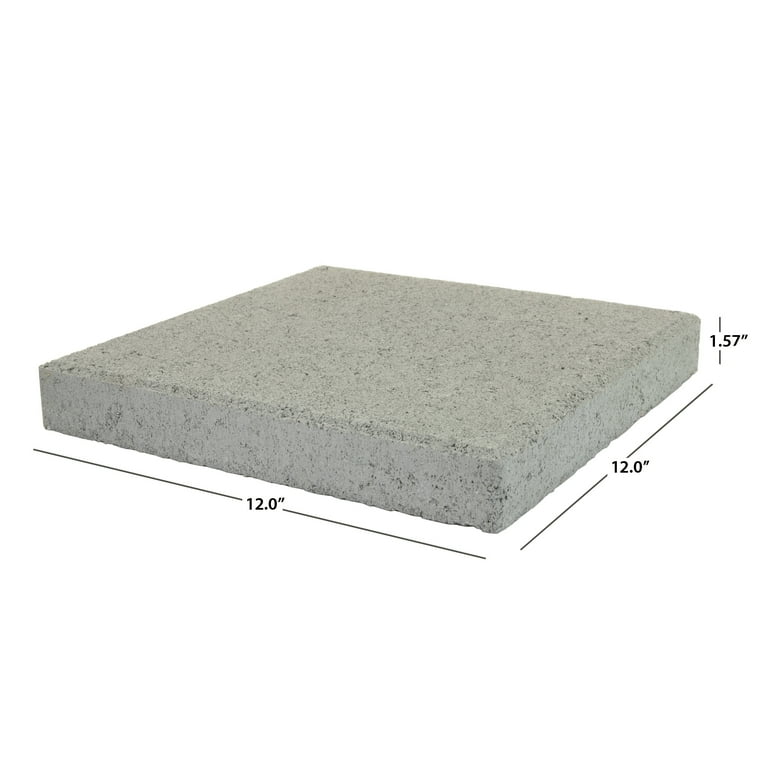
On average, a standard concrete 12x12-inch paver weighs between 14 and 22 pounds. The exact number depends primarily on two factors: thickness and the material used. A thin 1.5-inch stepping stone sits on the lighter end of that scale, while an industrial 2.36-inch (60mm) vehicular-rated paver pushes toward the heavier end.
How Much Does a 12x12 Paver Weigh by Material?
While concrete is the most common material for residential paving stones, it is far from the only option. Different materials offer drastically different densities and weights.
Standard Concrete Pavers
Concrete is made from an aggregate of crushed stone, sand, cement, and water. A cubic foot of cured concrete weighs roughly 145 to 150 pounds. Because a 12x12 paver covers exactly one square foot of surface area, its weight is directly proportional to its depth:
- 1.5 inches thick (residential stepping stones): 14 to 16 pounds each.
- 1.75 to 2.0 inches thick (standard patio grade): 18 to 20 pounds each.
- 2.36 inches / 60mm thick (heavy-duty driveway grade): 22 to 25 pounds each.
Natural Stone (Bluestone, Flagstone, Granite)
Natural stone is dense and heavy. Sawn bluestone or granite pavers cut to 12x12 inches generally weigh slightly more than standard wet-cast concrete.
- 1.5-inch Bluestone or Limestone: 18 to 22 pounds.
- 1.5-inch Granite: 20 to 24 pounds.
- 1.25-inch Travertine: 14 to 17 pounds (slightly lighter due to natural internal voids).
Outdoor Porcelain Pavers
Modern 20mm (approximately 0.75-inch) outdoor porcelain pavers have become a popular alternative to concrete. They are completely non-porous and high-density, yet their slim profile keeps them lightweight. A 12x12 porcelain paver typically weighs only 8 to 10 pounds.
Rubber or Composite Pavers
Recycled rubber pavers, often used around playgrounds, horse barns, and rooftop patios, weigh roughly 4 to 6 pounds per 12x12 square. They provide excellent shock absorption and reduce freight costs, though they are unsuitable for ground applications requiring rigid stability.
Weight Comparison Chart for 12x12 Pavers
Use this quick-reference overview when estimating your load:
- 12x12 Rubber Paver (1"): 4 – 6 lbs
- 12x12 Outdoor Porcelain (0.75"): 8 – 10 lbs
- 12x12 Concrete Patio Stone (1.5"): 14 – 16 lbs
- 12x12 Concrete Paver (2"): 18 – 20 lbs
- 12x12 Natural Bluestone/Granite (1.5"): 19 – 23 lbs
- 12x12 Driveway Paver (2.36"): 22 – 25 lbs
Why Paver Weight Matters for Your Project
Knowing individual unit weight is useful, but the real challenge begins when you multiply that figure across an entire landscaping installation.

1. Transportation and Vehicle Payload Limits
Many homeowners assume their pickup truck can carry an entire patio in one trip. That is rarely true. A standard "half-ton" pickup (such as a Ford F-150, Chevy Silverado 1500, or Ram 1500) typically has a maximum payload capacity between 1,500 and 2,200 pounds—and that includes the driver, passengers, and gear.
If you purchase 100 concrete 12x12 pavers weighing 18 pounds each, your cargo weighs 1,800 pounds. Add yourself and a passenger, and you have maxed out or exceeded your vehicle's safe payload capacity. Overloading ruins suspensions, stresses transmissions, and dangerously extends braking distances.
2. Sub-Base Compaction Needs
Heavier pavers exert more downward force, but they also offer superior interlocking stability. However, the combined weight of your pavers plus live foot traffic means your gravel sub-base must be solid. A shallow or poorly tamped gravel base will settle unevenly under thousands of pounds of stone, causing pavers to dip, wobble, or collect standing water.
3. Physical Fatigue and Ergonomics
Laying 150 pavers means lifting 18 pounds from the ground, carrying it, lowering it into position, adjusting the level, and tapping it down. In total, you will lift more than 2,700 pounds across a single afternoon. Planning your staging areas closer to the final installation saves hundreds of unnecessary steps and protects your lower back.
Calculating Paver Weight for Common Patio Sizes
Because a 12x12 paver is exactly one square foot, figuring out how many you need is simple: square footage equals paver count. It is always wise to add 10% extra for cuts, edge fitting, and future repairs.
Here is what typical patio sizes weigh using an average 18-pound concrete 12x12 paver:
- Small Walkway (4 x 10 ft / 40 sq ft): 44 pavers (with 10% overage) = 792 lbs. Easily hauled in any standard pickup or small utility trailer.
- Cozy Bistro Patio (10 x 10 ft / 100 sq ft): 110 pavers = 1,980 lbs. Right at the limit for a half-ton pickup; best split into two trips or moved with a heavy-duty trailer.
- Medium Dining Patio (12 x 12 ft / 144 sq ft): 158 pavers = 2,844 lbs. Exceeds standard half-ton payload limits. Requires a three-quarter-ton truck (F-250/2500 series), a dual-axle trailer, or job-site delivery.
- Large Entertainment Patio (16 x 20 ft / 320 sq ft): 352 pavers = 6,336 lbs (over 3.1 tons). This volume requires full pallet freight delivery from the supplier.
Pallet Quantities: How Many 12x12s on a Skid?
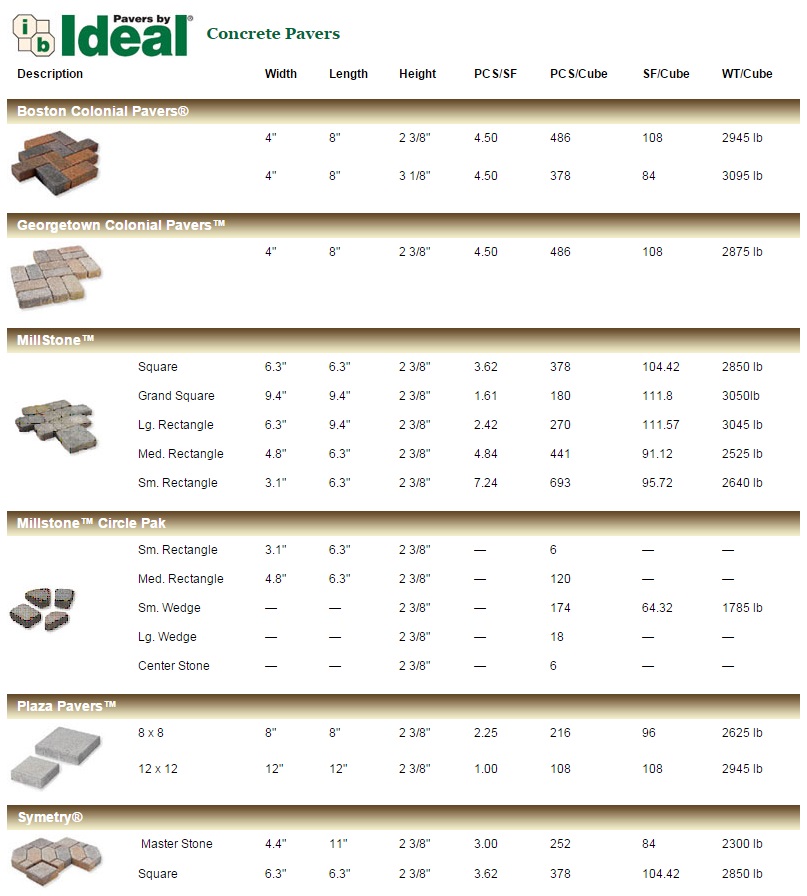
If you are buying in bulk, suppliers sell pavers by the pallet rather than by individual unit. A full pallet of 12x12 concrete pavers generally contains between 100 and 120 pieces.
A pallet of this size weighs between 2,000 and 2,400 pounds. Most landscape supply yards will not load a pallet directly into an undersized vehicle. If you do not have a dedicated commercial truck or rated trailer, pay the flat delivery fee. Delivery drivers use flatbeds with mounted piggyback forklifts that drop the pallet directly where you need it on your driveway.
Practical Tips for Moving Heavy Pavers
- Use a heavy-duty wheelbarrow or hand truck: Move 6 to 8 pavers at a time (about 110–140 lbs). Overfilling a wheelbarrow makes it prone to tipping and increases the risk of wrist injury.
- Stack vertically, not flat: When hauling pavers in a wheelbarrow or cart, lean them on edge rather than stacking them high. This lowers the center of gravity and prevents the top stones from sliding.
- Wear heavy-duty leather or rubber-dipped gloves: Concrete has an abrasive, moisture-wicking surface that dries out skin and causes blisters quickly during repeated lifts.
- Drop off close to the foundation: If paying for delivery, have the driver stage the pallet as close to your dig site as possible without driving over underground utilities or septic drain fields.
Taking a few minutes to calculate the total weight before purchasing ensures your project runs smoothly, your vehicle stays safe, and your patio build proceeds without unwanted surprises.