How Much Does a Dermatologist Make? Salary Guide
Choosing a medical specialty involves many factors, from lifestyle and patient care preferences to long-term financial potential. If you are researching medical careers, you have likely asked yourself: how much does a dermatologist make? Dermatology consistently ranks as one of the highest-paying and most competitive medical specialties in the United States.

However, a single salary figure does not tell the whole story. A dermatologist's compensation depends heavily on factors such as geographic location, whether they work in private practice or an academic hospital, how many hours they work, and whether they specialize in cosmetic or medical dermatology.
Average Dermatologist Salary Data
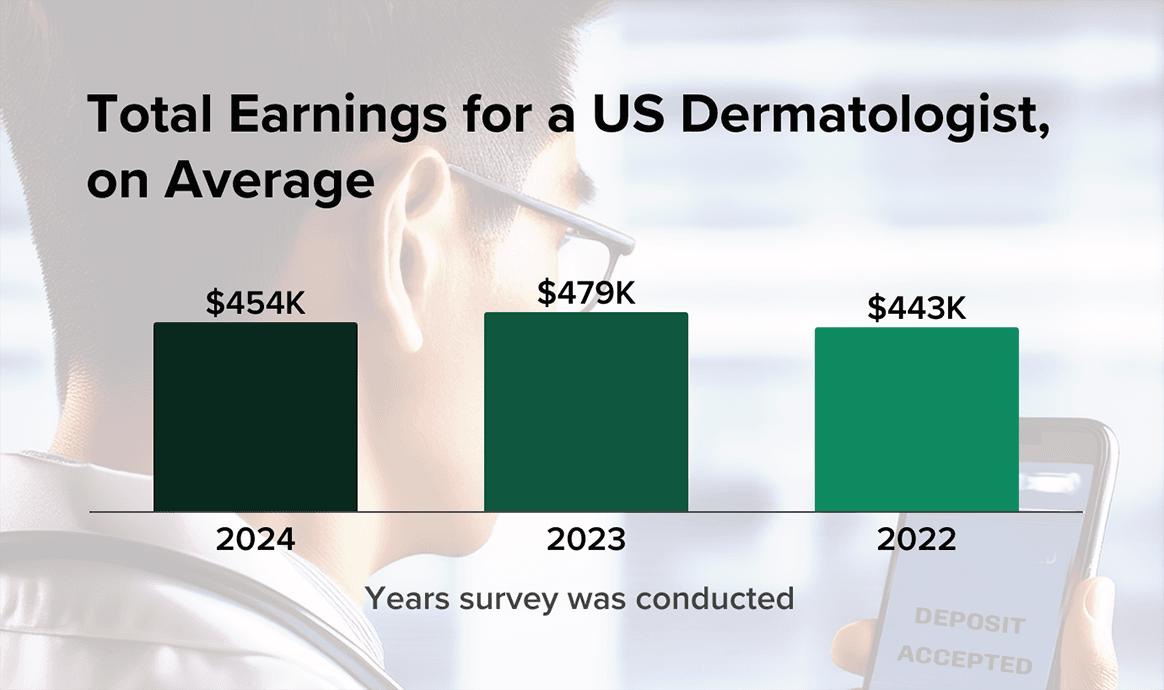
According to recent reports from the Medical Group Management Association (MGMA) and the Medscape Dermatologist Compensation Report, the average annual salary for a dermatologist generally falls between $400,000 and $450,000.
While this puts dermatologists comfortably in the upper echelon of medical earners, total compensation can vary dramatically. Some early-career dermatologists working part-time may earn closer to $250,000, while senior partners in high-demand private practices or successful cosmetic dermatologists can easily clear $700,000 to $1,000,000 or more per year.
Hourly and Production-Based Pay
Many dermatologists are compensated via a base salary plus a production bonus. Production is typically calculated using Work Relative Value Units (wRVUs) or a percentage of net collections (the revenue brought in by the patient's procedures and visits). On an hourly basis, dermatologists often make between $150 and $250+ per hour, depending on their efficiency and the types of services they provide.
Key Factors That Impact Dermatologist Earnings
No two dermatology careers look identical. Several critical elements influence how much a physician takes home at the end of the year.
1. Geographic Location
Supply and demand dictate compensation across different regions. Interestingly, highly desirable metro areas with pleasant climates—like Miami, Los Angeles, or New York City—often feature a high supply of dermatologists. Because competition is fierce among doctors to live in these areas, salaries can sometimes be lower than expected.
Conversely, rural or underserved suburban areas often face a shortage of specialists. To attract top talent, healthcare systems and private practices in these regions frequently offer significantly higher base salaries, lucrative sign-on bonuses, and relocation packages.
2. Practice Setting

The business model of where a dermatologist practices plays a massive role in their earning potential:
- Private Practice (Owners/Partners): Generally offers the highest earning potential. Owners keep a share of the practice profits derived from ancillary services, medical aesthetics, and mid-level providers (physician assistants and nurse practitioners) working under their license.
- Private Practice (Employees): Usually provides a stable base salary with productivity bonuses, but lacks the profit-sharing upside of ownership.
- Hospital Systems and Academic Medical Centers: Typically offer lower base salaries than private practice, but come with robust benefits, predictable hours, pension plans, and less administrative hassle.
3. Medical vs. Cosmetic Dermatology
The scope of services a dermatologist offers directly affects their revenue streams:
- Medical Dermatology: Focuses on diagnosing and treating skin diseases, skin cancer, acne, eczema, and psoriasis. Most of these services are covered by health insurance, which involves dealing with insurance reimbursements and administrative overhead.
- Cosmetic Dermatology: Focuses on elective procedures like Botox, dermal fillers, laser skin resurfacing, and chemical peels. Cosmetic services are almost always paid out-of-pocket by patients. Because dermatologists set their own cash prices and avoid insurance bureaucracy, cosmetic practices can yield much higher profit margins.
4. Experience and Career Stage
Like most professions, earnings scale with experience. Residents and fellows earn modest stipends (typically between $60,000 and $80,000 per year). Upon completing their three-year dermatology residency—and potentially an optional one-to-two-year fellowship in Mohs micrographic surgery or pediatric dermatology—their earning potential jumps immediately upon entering attending practice.
Dermatology vs. Other Medical Specialties
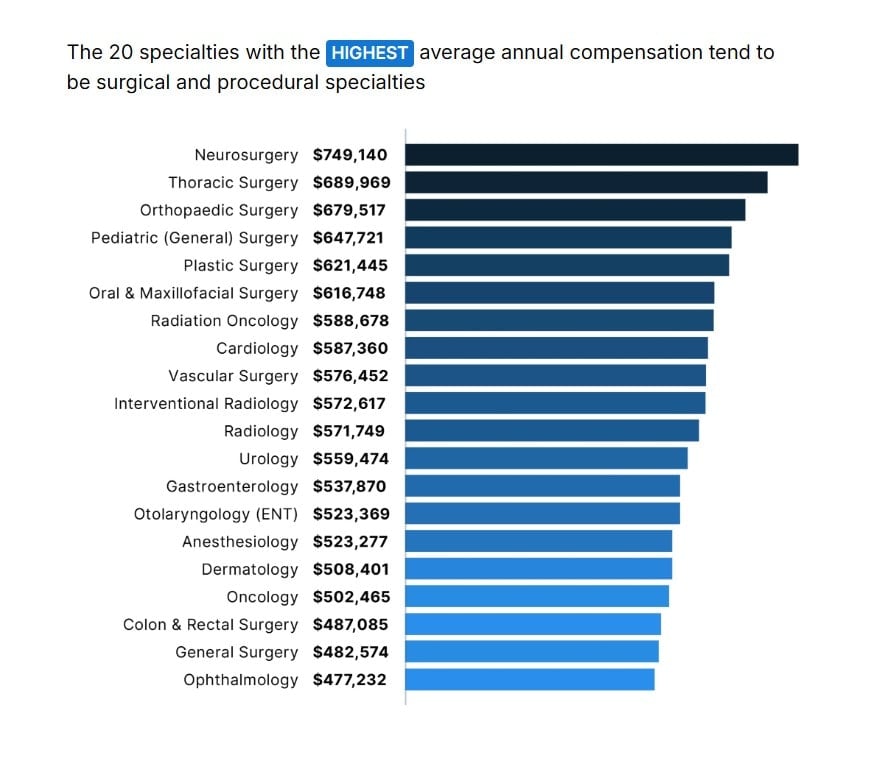
Dermatology consistently ranks near the top of Medscape’s annual compensation reports, frequently competing with orthopedics, plastic surgery, cardiology, and gastroenterology for the highest-paid specialty title.
What makes dermatology particularly attractive compared to surgical specialties is the lifestyle balance. Dermatologists rarely deal with grueling overnight hospital calls, emergency surgeries, or life-or-death hospital rounds. Most work standard outpatient clinic hours (four to five days a week), making the high compensation-per-hour ratio exceptionally favorable.
The Cost of Becoming a Dermatologist
To put these salary figures into perspective, it is important to remember the substantial upfront investment required to reach this career stage:
- Four years of undergraduate education (often resulting in student debt).
- Four years of medical school (with average debt exceeding $200,000).
- One year of a transitional or preliminary internship.
- Three years of a highly competitive dermatology residency.
By the time a dermatologist begins practicing independently, they are typically in their early-to-mid thirties, having spent a decade training while postponing peak earning years.
Conclusion
So, how much does a dermatologist make? With an average annual income hovering around $420,000, dermatology is a financially rewarding career. Beyond the impressive paycheck, the field offers a desirable work-life balance, flexible practice options, and the ability to branch into lucrative cosmetic procedures. For those who successfully navigate the rigorous training path, the long-term financial and professional rewards are substantial.