How Much Is Richard Dreyfuss Really Worth?
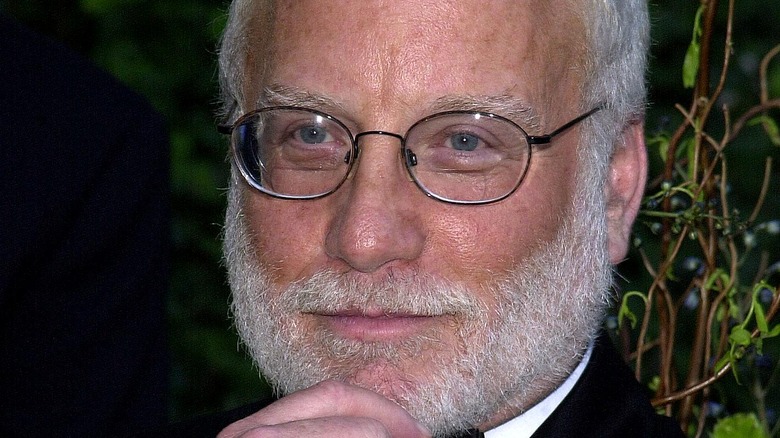
When moviegoers reflect on the golden age of 1970s and 1980s American cinema, few faces stand out quite like Richard Dreyfuss. From leading Steven Spielberg's legendary marine thriller to capturing an Academy Award before the age of thirty, Dreyfuss built an iconic cinematic resume. Yet, many fans asking The Shocking Truth: How Much Is Richard Dreyfuss Really Worth? Find Out Now! are frequently surprised to learn that his current balance sheet looks dramatically different from that of modern blockbuster stars. Today, Richard Dreyfuss has an estimated net worth of approximately $5 million.

While $5 million is undeniably a comfortable sum, it often strikes casual observers as surprisingly modest for a veteran performer whose filmography has grossed billions of dollars worldwide. Navigating the peaks and valleys of a five-decade career, Dreyfuss has weathered shifts in studio compensation, costly personal crises, high-profile legal battles, and a conscious pivot toward nonprofit civics education. Understanding his true financial picture requires looking beyond box office totals to examine the mechanics of Hollywood contracts and life after stardom.
The Golden Era: Paydays from Jaws to Mr. Holland's Opus
Richard Dreyfuss became a defining star of the New Hollywood movement during the 1970s. His breakout performance in George Lucas's American Graffiti (1973) proved he had magnetic screen presence, earning him leading roles in two of the most influential blockbusters in cinema history: Jaws (1975) and Close Encounters of the Third Kind (1977).
However, the business model of 1970s Hollywood operated very differently from today's multi-million-dollar upfront star packages:
- Modest upfront salaries: For Jaws, Dreyfuss reportedly earned a baseline salary in the low tens of thousands of dollars—a standard contract for a rising actor at Universal Pictures before the term "blockbuster" even existed.
- Lack of backend points: High gross-profit participation was reserved almost exclusively for veteran directors and established mega-stars. The massive box office windfall of Jaws (over $470 million globally) enriched the studio and producers far more than its ensemble cast.
- Historic Oscar recognition: Winning the Academy Award for Best Actor for The Goodbye Girl (1977) at age 30 cemented his critical stature, elevating his quotes into the six- and seven-figure range by the mid-1980s.
During his commercial resurgence in the late 1980s and early 1990s—featuring hits like Down and Out in Beverly Hills, Stakeout, What About Bob?, and an Oscar-nominated turn in Mr. Holland's Opus (1995)—Dreyfuss commanded multimillion-dollar upfront fees. Yet even during this peak earning window, studio accounting and gross participation caps limited the long-term passive wealth many assumed he had secured.
The Shocking Truth: How Much Is Richard Dreyfuss Really Worth? Find Out Now!
When the public searches for the shocking truth regarding Dreyfuss's financial standing, they often expect figures rivaling contemporaries like Harrison Ford or Sylvester Stallone, who sit on fortunes exceeding $300 million. The disparity between those mega-fortunes and Dreyfuss's $5 million net worth comes down to career choices, genre longevity, and intellectual property.
Unlike contemporaries who anchored multi-film, merchandising-heavy franchises (such as Star Wars, Indiana Jones, or Rocky), Dreyfuss primarily built his reputation on character-driven dramas, comedies, and standalone prestige projects. Standalone films generate standard residual checks rather than perpetual royalty streams from toy sales, theme park licensing, and recurring sequel payouts. When an actor relies primarily on active production fees, any pause in acting directly impacts their ongoing net worth.
Financial Headwinds: Health, Divorces, and Legal Battles
A performer's net worth is defined as much by what they keep as what they earn. Over several decades, Dreyfuss navigated numerous financial and personal challenges that cut deeply into his accumulated assets.
Substance Battles in the 1980s
In the late 1970s and early 1980s, Dreyfuss struggled with severe substance addiction, a battle that culminated in a serious automobile crash in 1982. The process of rehabilitation, stepping away from top-tier leading roles during critical career momentum, and rebuilding his professional reputation carried substantial direct and indirect financial costs.
Multiple Marriages and Divorce Settlements
Dreyfuss has been married three times. His first marriage, to writer and producer Jerami Rain, lasted from 1983 to 1995 and produced three children. The divorce and subsequent child support arrangements represented a major division of marital assets. A second marriage to Janelle Lacey ended in divorce in 2005. Marital dissolutions within California's community property system regularly require significant capital liquidations, impacting long-term investment portfolios.
Family and Studio Legal Disputes
Dreyfuss has not shied away from the courtroom to protect his interests, though litigation often brings significant legal fees:
- Disney Accounting Lawsuits: In 2015, Dreyfuss joined fellow actor Christine Lahti in legal filings against Walt Disney Pictures, alleging the studio blocked audits regarding profit participation on films from the 1980s and 1990s, including What About Bob? and Stakeout.
- Family Trust Litigation: In 2014, Dreyfuss was involved in an emotionally taxing legal dispute involving his father and brother regarding money transferred from a family trust decades earlier, underscoring private financial strains outside the spotlight.
Real Estate Portfolio and Personal Holdings
Real estate has traditionally provided stability to Dreyfuss's personal balance sheet. Over the years, he has owned several properties across Southern California.
In 2004, Dreyfuss sold a long-held estate in Encino, California, for approximately $1.9 million. He later transitioned his primary living footprint away from the heart of Los Angeles, purchasing residential properties in San Diego County, including homes in Carlsbad and Encinitas. By downsizing and relocating outside Hollywood's high-overhead neighborhoods, Dreyfuss adopted a more sustainable lifestyle tailored to his semi-retired acting schedule.
The Dreyfuss Civics Initiative
A major factor explaining Dreyfuss's financial profile over the past two decades is his shift in focus from acting to public advocacy. In 2006, Dreyfuss largely stepped away from Hollywood to spend years studying at St. Antony's College, Oxford, focusing on historical and political systems.
Upon his return, he founded The Dreyfuss Civics Initiative (now known as the Dreyfuss Initiative), a non-profit organization dedicated to restoring comprehensive civics education to American public elementary and secondary schools. Dreyfuss has personally directed considerable time, energy, and private funds toward this mission, publishing books such as One Thought Scares Me... in 2022. Choosing educational advocacy over high-paying film roles reflects a life stage where personal conviction superseded wealth accumulation.
Summary: A Legacy Measured Beyond the Bank Account
Richard Dreyfuss's estimated $5 million net worth tells a realistic story of Hollywood longevity. While he did not emerge with the corporate-level wealth of modern franchise stars, he achieved creative immortality through performances that shaped American cinema history. For Dreyfuss, financial independence provided something far more valuable than a nine-figure estate: the freedom to step away from the camera, speak his mind, and dedicate his later years to civic engagement.