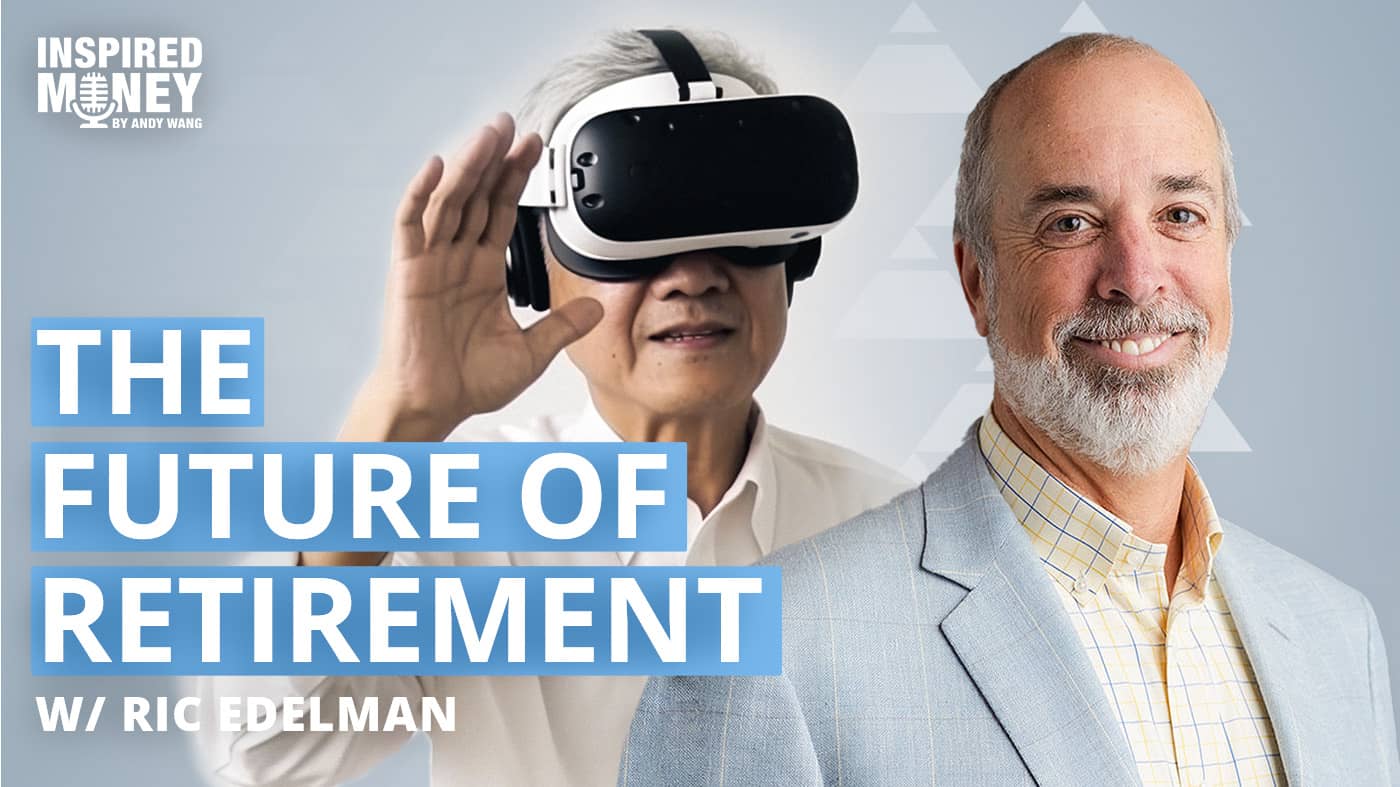
How Ric Edleman Gained Millions: The Surprising X-Factor!
When people study the titans of modern wealth management, they often look for proprietary trading algorithms, family dynasties, or Wall Street pedigree. Yet, the story behind How Ric Edleman Gained Millions: The Surprising X-Factor No One Sees! is rooted in an entirely different discipline: mass education, trust architecture, and radical media distribution.

Ric Edelman (often searched by casual readers as "Ric Edleman") co-founded Edelman Financial Services with his wife, Jean Edelman, in 1986. Over three decades, the firm evolved from a modest local practice into Edelman Financial Engines, overseeing well over $200 billion in client assets. While many assume his wealth sprang from elite stock picking or venture capital bets, his true competitive edge was a systematic, transparent business model that turned ordinary investors into lifelong advocates.
The Early Landscape: Why Traditional Wealth Management Failed the Public
In the late 1980s and early 1990s, financial planning in America was overwhelmingly transactional. Stockbrokers earned money by selling high-commission mutual funds, limited partnerships, and complex insurance contracts. The industry catered primarily to two groups: institutions and ultra-high-net-worth individuals.
The broad American middle class—families with modest savings, steady incomes, and standard mortgages—was largely ignored or exploited by commission-driven sales tactics. Edelman identified three core weaknesses in the prevailing system:
- Opaque Commission Structures: Advisors made money when clients traded, not when clients succeeded.
- High Minimums: Most elite private wealth firms refused to speak with anyone who had less than $1 million in liquid assets.
- Intentionally Complex Jargon: Financial institutions used technical terms to intimidate investors into compliance.
Edelman set out to invert every one of these incentives. Rather than positioning himself as a reclusive market guru, he positioned himself as an accessible financial translator.
How Ric Edleman Gained Millions: The Surprising X-Factor No One Sees!
The core breakthrough—the hidden X-factor that competitors chronically underestimated—was Edelman’s realization that education is the ultimate customer acquisition engine.
Before Edelman, financial advisory firms spent fortunes on outbound cold-calling, direct-mail brochures, and country club dinners. Edelman recognized that consumers were terrified of financial insecurity and desperate for honest, unbiased guidance. By leveraging broad communication platforms, he built what modern marketers call an inbound flywheel, years before the term existed.
1. The Communications Background
Unlike most financial founders, Edelman held a bachelor’s degree in communications. He was a journalist before he was a registered investment advisor. This distinct background shaped his perspective: while other advisors viewed financial data through spreadsheets, Edelman viewed it as a narrative to be simplified.
He understood that if an investor could not understand a concept—such as dollar-cost averaging, compound interest, or term life insurance—they would either make an emotional mistake or do nothing at all.
2. The Multi-Channel Media Engine
Edelman did not merely run advertisements; he built a public media presence that dominated the airwaves for decades:
- Long-Running Radio Syndication: *The Ric Edelman Show* (later *The Truth About Money*) aired on dozens of major radio markets nationwide. It provided real-time Q&A sessions where ordinary callers received actionable, plain-English advice without sales pitches.
- Bestselling Books: Titles such as The Truth About Money, Ordinary People, Extraordinary Wealth, and The Lies About Money became standard desk references across American households.
- Free Educational Seminars: Edelman organized in-person and digital workshops teaching fundamentals like retirement planning, college savings, and mortgage management.
By the time a prospective client contacted Edelman Financial Services, the sales process was already finished. The client had spent dozens of hours listening to his voice on Sunday drives or reading his books late at night. Trust had been established at zero marginal cost.
Aligning Incentives: The Shift to Fee-Based Fiduciary Advice

Distribution alone does not build durable wealth. If Edelman had funneled millions of educated listeners into predatory financial products, the empire would have collapsed under regulatory scrutiny and reputation loss. The operational pillar supporting his media engine was the fee-based fiduciary model.
By charging a predictable percentage of assets under management (AUM) rather than transaction commissions, Edelman aligned his firm's financial incentives with client outcomes. If the client’s portfolio expanded, the firm made more revenue; if the client’s portfolio dropped, the firm’s revenue declined.
This structure created two profound economic benefits:
- Predictable Recurring Revenue: Unlike commission brokers who started each month at zero revenue, an AUM model generated steady, recurring cash flow that allowed the business to invest heavily in technology, compliance, and talent.
- High Lifetime Client Value: Because clients felt protected rather than sold to, retention rates soared. Client relationships frequently spanned decades and transitioned across multiple generations.
Scaling Beyond the Founder: The Power of Systematization
Many advisory businesses hit a hard ceiling when the founder runs out of hours in the day. Ric Edelman overcame this constraint by treating his investment philosophy as an institutional standard rather than personal intuition.
Centralized Portfolio Management
Rather than allowing hundreds of individual advisors to pick different stocks or attempt market timing, Edelman standardized client portfolios around globally diversified, cost-effective index strategies. This eliminated key-person risk and ensured that a client in Virginia received the exact same disciplined strategy as a client in California.
The Mega-Merger with Financial Engines
The ultimate liquidity and wealth milestone occurred in 2018 when Edelman Financial Services merged with Financial Engines in a deal valued at over $3 billion, backed by private equity powerhouse Hellman & Friedman. This combined Edelman’s dominant retail brand and high-touch financial planning network with Financial Engines’ technology-driven 401(k) advisory platform.
By partnering with institutional capital and merging high-touch human planning with scalable workplace software, Edelman transitioned from a successful entrepreneur into one of the most prominent independent wealth architects in history.
Anticipating Trends: From Indexing to Longevity and Digital Assets
Even after stepping back from day-to-day corporate management, Edelman continued to capitalize on emergent market dynamics. His later work focuses on two macro trends reshaping wealth:
- Human Longevity: Highlighting how increasing life expectancies require entirely new retirement paradigms, prolonged career engagement, and updated healthcare models.
- Digital Assets & Blockchain: Through the Digital Assets Council for Financial Professionals (DACFP), Edelman became one of the earliest prominent financial planners to educate the wealth management community on Bitcoin and blockchain technology, positioning his brand once again at the intersection of public curiosity and professional regulation.
Key Lessons from Ric Edelman’s Wealth Journey
Entrepreneurs, advisors, and independent professionals can draw several strategic lessons from Edelman's trajectory:
- Translate Complexity into Simplicity: The professional who can explain complex subjects in plain English will always command market share over technical purists who cannot communicate.
- Own the Distribution Channel: Do not rely exclusively on rented platforms. Books, podcasts, and proprietary broadcast channels build direct relationships that competitors cannot bid away.
- Fiduciary Alignment Beats Short-Term Profit: Recurring, transparent fees create durable enterprise value, whereas commission extraction eventually encounters regulatory or consumer pushback.
- Systematize Early: Turn your expertise into reproducible operational systems so the business expands beyond your personal physical hours.
Ric Edelman did not gain millions by guessing where the market would close tomorrow. He built a lasting personal fortune by giving ordinary Americans the financial clarity they lacked, creating an institutional advisory ecosystem that delivered on those promises for decades.