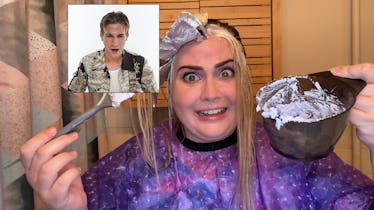
How to Bleach Hair Brad Mondo Style: Expert Guide
Bleaching your hair at home can easily turn into a disaster if you don't follow professional guidelines. Famous hairstylist and internet personality Brad Mondo has built an entire genre of reaction videos around what *not* to do when lifting hair color. If you want to achieve a bright, even blonde safely, learning how to bleach hair Brad Mondo style is your best starting point. Professional techniques focus heavily on hair integrity, proper sectioning, and avoiding the dreaded "hot roots."

Understanding the Basics of At-Home Bleaching
Before mixing any chemicals, you need to understand how lightener works. Bleach opens up the hair cuticle to dissolve your natural or artificial pigment. Professional stylists emphasize preparation and patience over speed.
The Golden Rules of Hair Bleaching
- Never bleach damaged hair: If your hair snaps when wet, stop immediately.
- Always do a strand test: Test a hidden section of hair to check processing time and potential damage.
- Use the right developer volume: Higher volume does not mean better; it often just means more damage.
What You Will Need
To pull off a salon-quality bleach job at home, gather your tools beforehand. Improvising mid-process leads to uneven application and potential hair loss.
- Quality powder lightener (bleach)
- Developer (20-volume is safest for most hair types; avoid 40-volume at home)
- Non-metal mixing bowl and tint brush
- Sectioning clips and a rat-tail comb
- Protective gloves and an old t-shirt or cape
- A digital kitchen scale (for precise mixing ratios)
- Bond-builder treatment (optional, but highly recommended)
Step-by-Step Guide on How to Bleach Hair Brad Mondo Style
Professional hairdressers never slap bleach onto the head all at once. Precision and timing are everything when it comes to an even lift.
Step 1: Prep and Sectioning
Start with unwashed hair that is at least two to three days old. The natural oils on your scalp will act as a buffer against chemical irritation. Using your rat-tail comb, divide your hair into four distinct quadrants: a parting from ear to ear, and another from the center of your forehead down to the nape of your neck. Secure each section with a clip.

Step 2: Mixing the Lightener
Mix your powder lightener and developer in a 1:1.5 or 1:2 ratio, depending on the manufacturer's instructions. You want a consistency similar to Greek yogurt—not too runny, or it will drip, and not too thick, or it won't saturate the hair. If you are using a bond-builder like Olaplex No. 1, add it now.
Step 3: The Application (Avoiding Hot Roots)
One of the biggest mistakes highlighted in professional tutorials is applying bleach directly to the roots immediately. Your scalp radiates heat, which causes the bleach near the roots to process much faster than the rest of the hair, resulting in bright orange "hot roots."
- Start applying the lightener about half an inch away from your scalp, working through the mid-lengths and ends of each section.
- Take thin, micro-sections (about 1/4 inch thick) to ensure every single strand is fully saturated with product.
- Once all mid-lengths and ends are covered, go back and carefully apply bleach to the root area.
Step 4: Processing and Monitoring
Let the bleach process according to the manufacturer's instructions, typically between 30 to 45 minutes. Never leave bleach on for longer than 50 minutes, as it stops lifting and only causes damage. Keep a close eye on the color change. Scrape a tiny bit of product away with your finger or comb after 20 minutes to check the underlying pigment.
Step 5: Rinsing and Toning
Rinse your hair thoroughly with lukewarm water until all the product is gone. Follow up with a gentle, sulfate-free shampoo to cleanse the scalp. If your hair pulls warm or brassy (which is normal during the lightening process), apply a toner or purple shampoo to neutralize yellow and orange undertones.
Post-Bleach Care and Maintenance
Once you've achieved your desired blonde, your hair will need intensive hydration and protein treatments to recover. Use deep conditioning masks weekly, incorporate leave-in bond-repair treatments, and dial back your heat styling tools. If you need to lift your hair further, wait at least two to four weeks before attempting another bleaching session to prevent severe breakage.