How to Create Calming Rooms With Coloring Books Right Now
Between relentless digital notifications and hectic daily schedules, our nervous systems are rarely given a chance to power down. Creating a tranquil physical sanctuary at home offers an antidote to this chronic stimulation. If you are looking for an accessible, budget-friendly way to recharge, you can learn how to create calming rooms with coloring books right now without hiring an interior designer or embarking on a major renovation.

Coloring is no longer just for children. For adults, it provides a tactile, analog escape that anchors the mind in the present moment. By pairing the mindful practice of coloring with thoughtful interior styling, you can transform an underused corner or an entire room into a peaceful restorative haven.
The Psychology of Coloring in Personal Sanctuaries
Coloring activates both hemispheres of the brain. When you choose a palette and guide a pencil across intricate linework, you engage logic and organization while exercising creative and sensory intuition. This process induces a state of flow similar to meditation, helping lower heart rates and diminish intrusive thoughts.
When you dedicate a specific physical environment to this practice, your brain quickly builds an associative habit. Walking into your designated coloring area signals your body to downshift out of fight-or-flight mode and into rest-and-digest recovery.
How to Create Calming Rooms With Coloring Books Right Now: A Step-by-Step Guide
You do not need a vast floor plan to craft an effective retreat. Follow these practical steps to design your space today using items you likely already own.
1. Identify and Clear Your Zone
Look for a low-traffic area with minimal visual chaos. This could be an alcove in a guest bedroom, a window seat in the living room, or a cleared-out corner of your home office. The primary rule is separation from active work: avoid setting up your relaxation nook right next to a laptop stand, laundry pile, or television screen.
- Remove surface clutter: Clear nearby tables and shelves so visual static does not compete with your focus.
- Establish boundaries: Use a small woven area rug or a folding screen to delineate your coloring sanctuary from the rest of the room.
2. Choose Books That Inspire Stillness
The style of your coloring books directly influences the mood of the room. High-stress geometric patterns with microscopic details can sometimes feel frustrating rather than relaxing. For a soothing environment, curate books featuring gentle, organic motifs:
- Botanical and landscape books: Nature-based scenes naturally encourage slow, rhythmic breathing and lowered cortisol.
- Mandala designs: Symmetrical circular patterns draw focus toward the center, promoting deep mental concentration.
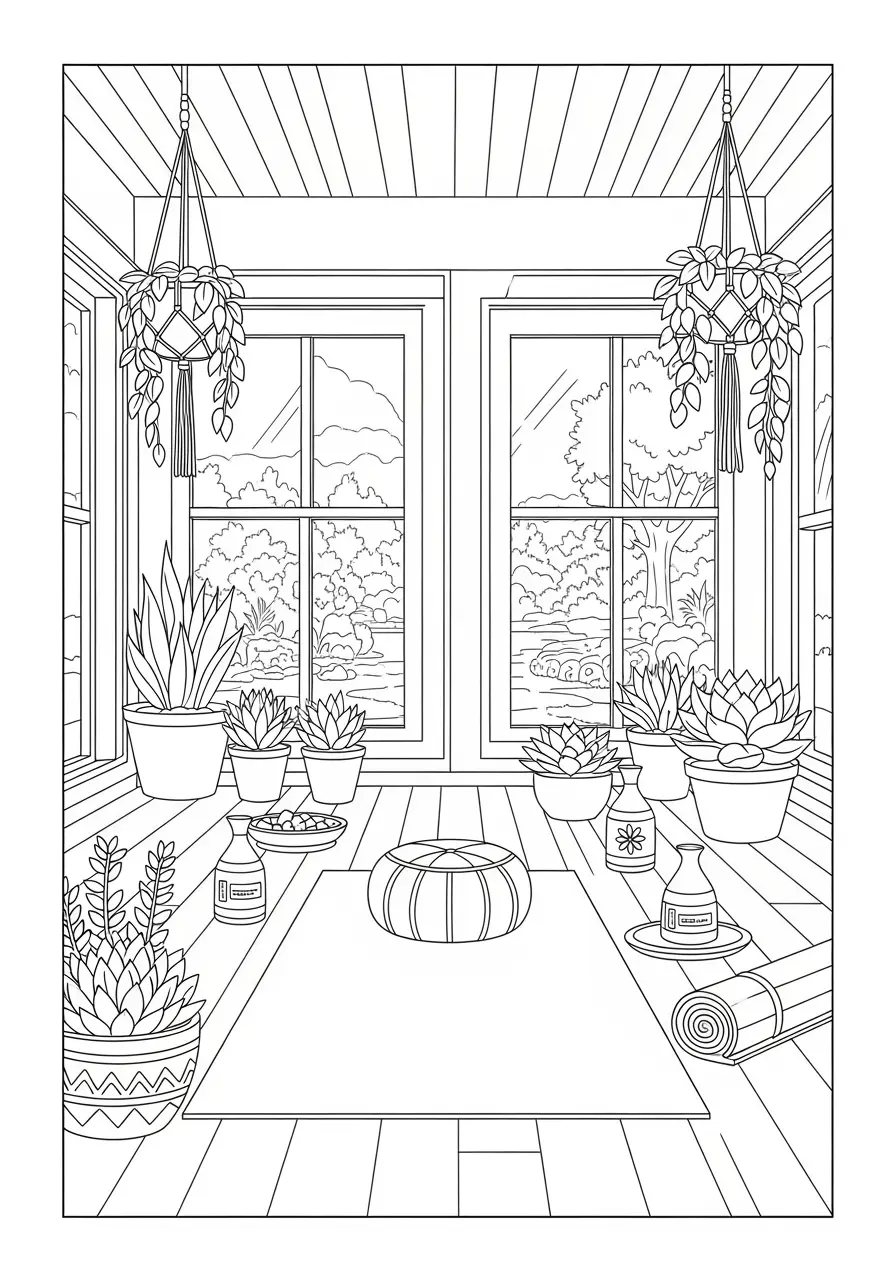
- Minimalist architecture and interiors: These allow for broad, sweeping strokes and expansive color washes.
3. Optimize Your Color Mediums and Organization
Calm environments rely on visual cohesion and tactile satisfaction. Instead of storing your art supplies in noisy plastic bins or chaotic zippered pouches, turn your supplies into functional decor:
- Colored pencils: Soft-core pencils offer a buttery, quiet glide across the paper with zero odor.
- Alcohol or water-based markers: Best for vibrant, streak-free color, provided your coloring books have thick, bleed-resistant paper.
- Display vessels: Store pencils grouped by warm and cool hues in ceramic tumblers, matte stone crocks, or shallow wooden trays. Seeing colors arranged harmoniously instantly relaxes the eyes.
Layering Sensory Elements to Deepen Relaxation

A true sanctuary engages more than just sight. To elevate your coloring space into an immersive retreat, layer in supporting sensory details that foster serenity.
Tailor the Lighting
Harsh overhead fluorescents cause eye strain and maintain nervous system vigilance. Instead, utilize layered ambient lighting:
- Place an adjustable task lamp directly over your coloring surface to clearly illuminate your pages without glaring.
- Use warm-toned LED bulbs (between 2700K and 3000K) throughout the rest of the room to create a soft, golden ambiance.
- If natural light is available, position your coloring chair adjacent to a window to catch gentle morning or late-afternoon sun.
Prioritize Ergonomic Comfort
Nothing disrupts a calming session faster than lower back tension or neck strain. Equip your space with supportive, cozy seating:
- Choose an armchair with upright back support and plush arms where your elbows can rest naturally while holding pencils.
- Add a high-density lumbar cushion and a textured throw blanket made from linen, bouclé, or washed cotton.
- Use a sturdy lap desk with an angled surface if you prefer working from a sofa, or a dedicated desk set to an ergonomic height.
Incorporate Subtle Aromas and Soundscapes
Aromatherapy works directly on the brain's limbic system. Diffuse essential oils known for grounding properties, such as French lavender, frankincense, sweet orange, or cedarwood. To block out traffic or household commotion, play instrumental lo-fi beats, ambient nature recordings, or soft acoustic music.
Using Finished Coloring Pages as Mindful Decor
Your coloring books do not need to remain closed on a shelf once a page is completed. Integrating finished work into the room's decor celebrates your creative process and personalizes your sanctuary.
- Rotate in gallery frames: Purchase inexpensive, clean-lined frames with pre-cut mats. Swap in recently completed pages to evolve your room's wall art over time.
- Create a gentle inspiration rail: Mount a slim wooden picture ledge or brass clips on the wall to hold several pages side by side.
- Curate a cohesive palette: Frame pages colored with neutral, earthy, or pastel tones that complement your room's existing wall paint and upholstery.
Building a Daily 15-Minute Coloring Ritual
Setting up your room is only the first half of the equation; using it consistently solidifies its calming value. Treat your coloring space as a screen-free zone. Commit to spending 15 to 20 minutes there each evening before bed or first thing in the morning with a cup of herbal tea.
Leave a book open to an unfinished illustration, with your favorite pencils laid out neatly on a tray. Removing the friction of pulling out supplies makes it effortless to sit down, take a deep breath, and begin coloring the moment you step into the room.