How to Fix SCR System Fault Peterbilt Trucks
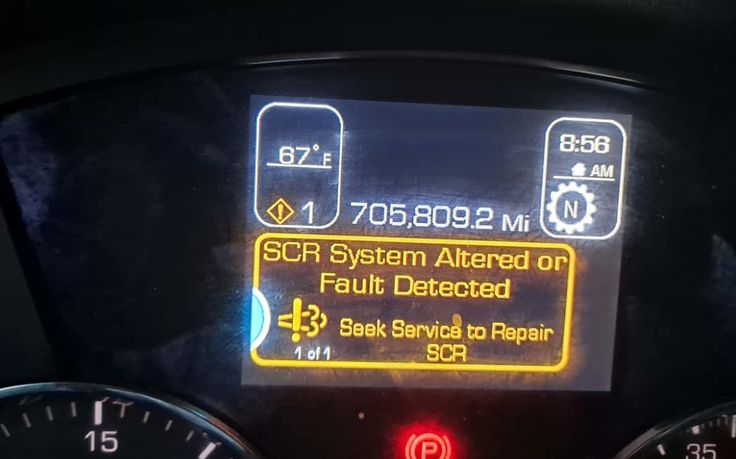
Seeing an SCR warning light flash on your Peterbilt dash is an immediate source of stress. Whether your rig is running a PACCAR MX-13 or a Cummins X15, an emissions fault initiates a countdown toward an engine derate that can restrict your road speed to 5 MPH. Learning how to fix scr system fault peterbilt warnings requires understanding how the Selective Catalytic Reduction (SCR) components interact, pinpointing the failed subcomponent, and running the proper verification test to reset the truck's engine control module (ECM).

Understanding the Peterbilt SCR Warning and Derate Sequence
The SCR system exists to eliminate oxides of nitrogen (NOx) from diesel exhaust by injecting Diesel Exhaust Fluid (DEF)—a 32.5% aqueous urea solution—into the exhaust stream upstream of a catalytic converter. Inside the catalyst, urea converts into ammonia, which reacts with NOx to produce harmless nitrogen gas and water vapor.
When the ECM detects that exhaust NOx levels remain too high, DEF pressure drops, or sensor feedback is erratic, it logs an SCR system fault. Peterbilt models typically follow an EPA-mandated derate escalation:
- Initial Warning: SCR/DEF indicator lamp illuminates; warning message displays on the driver information center.
- Torque Derate: If unaddressed for a set mileage or operating window, engine torque is reduced by up to 25% to 40%.
- Severe Speed Derate: Continued operation without resolution drops road speed down to 55 MPH, eventually bottoming out at 5 MPH during stop-and-idle scenarios or power cycles.
Most Common Causes of Peterbilt SCR Faults
Before replacing expensive parts, it helps to isolate which failure mode triggered the fault code. Peterbilt trucks commonly encounter five root causes:
- DEF Quality / Contamination: Using expired DEF, fluid contaminated with diesel fuel, or fluid diluted with water triggers the DEF quality sensor inside the tank.
- Clogged DEF Doser Injector: Crystallized urea deposits choke the injector nozzle, preventing the system from atomizing fluid into the decomposition tube.
- Defective NOx Sensors: The SCR system relies on an inlet NOx sensor (engine-out) and an outlet NOx sensor (tailpipe-out). Moisture, soot contamination, or internal heater failures routinely kill these sensors.
- DEF Supply Module (Pump) Failure: The pump fails to build or sustain required pressure (typically around 62–130 PSI depending on the engine platform).
- DEF Line and Tank Heater Faults: In sub-freezing weather, failed heating elements cause frozen DEF lines, prompting immediate pressure and dosing codes.
How to Fix SCR System Fault Peterbilt: Step-by-Step
To resolve the issue and safely return to service, follow this systematic troubleshooting protocol.
Step 1: Scan for Specific Diagnostic Trouble Codes (DTCs)
Do not guess which part has failed. Connect an OEM-capable diagnostic tool—such as PACCAR DAVIE4 for MX engines or Cummins INSITE for X15/ISX powerplants. If roadside, a heavy-duty commercial code reader reading standard J1939 Suspect Parameter Numbers (SPN) will suffice.
- SPN 4364: SCR NOx Conversion Efficiency Low (points to doser clog, contaminated DEF, or faulty catalyst).
- SPN 3364: DEF Quality Sensor Malfunction or Poor Fluid Quality.
- SPN 3556 / 4334: DEF Dosing Pressure Sensor / Line Pressure Malfunction.
- SPN 3216 / 3226: Inlet or Outlet NOx Sensor performance, drift, or heater circuits.
Step 2: Inspect and Test DEF Concentration
Never rely on visual inspection alone. Remove the cap from your DEF tank and use an optical refractometer designed for diesel exhaust fluid.

- The reading must show exactly 32.5% urea concentration (acceptable tolerance is 31.8% to 33.2%).
- If the reading is below 31% or above 34%, drain the DEF tank, flush it with distilled water, and refill with fresh, API-certified DEF from a sealed container.
- Check for petroleum contamination. A dark ring or swollen rubber seal around the cap neck indicates fuel entered the DEF tank. If present, the entire DEF supply system—including pump and hoses—may need replacement.
Step 3: Remove and Clean the DEF Doser Valve
Urea crystallizes readily when exposed to air and thermal cycles. A restricted doser cannot atomize fluid, leading directly to SCR efficiency faults.
- Locate the DEF injector on the exhaust decomposition pipe (usually mounted near the aftertreatment canister on the passenger side frame rail).
- Disconnect the electrical harness, DEF supply line, and coolant lines (clamp coolant hoses to minimize fluid loss).
- Remove the mounting bolts and withdraw the doser.
- Inspect the nozzle face. If heavy white crystallization is visible, soak the tip in warm distilled water for 15–20 minutes. Do not use chemical brake cleaners, solvent sprays, or sharp picks, as they destroy internal seals and enlarge precision metering orifices.
- Reinstall with a new OEM gasket.
Step 4: Verify DEF Pump Pressure and Filter Condition
A starved dosing unit cannot maintain conversion efficiency. Most Peterbilt aftertreatment assemblies feature a main DEF filter inside the pump module, which requires replacement every 150,000 to 200,000 miles (or annually).
- Locate the DEF dosing module (pump). On Peterbilt 579 and 389 models, this is frequently housed inside or directly behind the battery/aftertreatment fairing.
- Unscrew the filter cap and inspect the pleated element. If it is collapsed, coated in black debris, or caked in dried crystals, replace it.
- Using your diagnostic software, command a DEF dosing system pressure test. The pump should pressurize smoothly and hold stable operating pressure without rapid leak-down.
Step 5: Test and Validate NOx Sensor Operation
If the DEF fluid is fresh and the doser flows unobstructed, the NOx sensors are the next suspect. These sensors operate under high heat and suffer internal degradation.
- Monitor live data streams for both the Inlet and Outlet NOx sensors while the engine reaches operating temperature (exhaust above 400°F / 204°C).
- At idle with no DEF dosing, inlet and outlet readings should be relatively close.
- Once DEF injection initiates, the outlet NOx value should drop by 70% to 95% compared to the inlet value.
- If the outlet sensor reads identical to the inlet despite confirmed dosing—or if it stays frozen at a fixed value (like 0 ppm or 3000 ppm)—the sensor or its integrated control module has failed and must be replaced.
Clearing the Fault and Resetting Peterbilt Derates
On modern Peterbilt trucks, simply erasing the code with a handheld scanner will not lift an active SCR derate. The ECM requires physical proof that the emissions system has recovered before it extinguishes the light.
- Clear Inactive Codes: Use your diagnostic software to clear the fault codes after hardware repairs are complete.
- Run the SCR System Verification Test: Through DAVIE4 or INSITE, navigate to the aftertreatment routines and initiate an "SCR Verification Test" or perform a software-commanded stationary DPF/SCR regeneration.
- Road Test Cycle: If diagnostic software is unavailable on the road, some late-model Peterbilt configurations allow derate resets via a strict drive cycle: drive the vehicle loaded on the highway at sustained speeds (above 50 MPH) for at least 30 to 45 minutes to let exhaust temps reach the operational window required for self-monitoring.
Preventive Measures for Peterbilt Owners
To avoid finding yourself derated on the side of the highway, implement these fleet-proven habits:
- Buy DEF exclusively from high-turnover retailers to prevent fluid degradation from shelf age or sun exposure.
- Keep DEF tank neck and fill nozzles clean; even a speck of dirt can foul the pump's internal suction filter.
- Replace the DEF pump filter proactively during annual overheads or before severe winter seasons.
- Address small exhaust leaks ahead of the SCR catalyst immediately. Leaks drop exhaust heat and introduce oxygen, skewing sensor readings and triggering false conversion codes.
By systematically inspecting fluid quality, clearing urea crystallization from the doser, and validating sensor data, you can resolve Peterbilt SCR system faults swiftly and prevent costly tow bills or forced downtime.