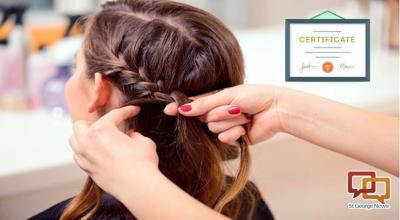
How to Get an SC Braiders License: Step-by-Step
If you plan to braid hair professionally in South Carolina, you need to understand state regulations before taking paying clients. Operating without proper credentials can lead to hefty fines from state regulators. Fortunately, obtaining an sc braiders license—formally designated as a Hair Braider Registration by the state—does not require the 1,500 hours of schooling demanded of full cosmetologists. South Carolina offers a direct, accessible pathway for natural hair practitioners who focus strictly on braiding techniques.

Understanding the SC Braiders License vs. Cosmetology
In South Carolina, hair braiding is regulated by the South Carolina Board of Cosmetology, which operates under the Department of Labor, Licensing and Regulation (LLR). For years, individuals who only wanted to braid hair were stuck in a gray zone, sometimes forced to take hundreds of hours of irrelevant training in chemical relaxers, perms, and nail care.
To support natural hair artists and protect consumer safety, South Carolina established a separate registration category for braiders. Rather than completing a multi-thousand-dollar cosmetology program, braiders must complete a targeted sanitation curriculum, pass an exam, and register with the state. While commonly called an "SC braiders license," the state paperwork officially refers to it as a "Hair Braiding Registration." Legally, having this registration permits you to charge for braiding services statewide.
Scope of Practice: What Can Registered Braiders Do?
Before investing in registration, you must know what services fall under the legal scope of practice in South Carolina. Violating these boundaries can result in your registration being revoked or facing unlicensed cosmetology charges.
Permitted Services
- Twisting, wrapping, weaving, extending, and locking: Working with natural hair using hands or basic tools.
- Adding extensions: Incorporating synthetic hair, human hair, beads, clips, or thread into braids.
- Pre-service prep: Cleansing, conditioning, and drying hair specifically to prepare it for braiding.
Prohibited Services
- Chemical processing: You cannot apply chemical relaxers, keratin treatments, permanent waves, or curl reducers.
- Coloring: You cannot apply permanent, semi-permanent, or temporary dyes, bleaches, or toners.
- Cutting and trimming: You cannot offer haircuts. While trimming stray synthetic fibers during a braiding service is standard practice, cutting natural hair for shape or style requires a cosmetology or barbering license.
- Heat styling: Using flat irons or curling wands to style hair independently of a braiding service is outside the braider scope.
Requirements for an SC Braiders License
To qualify for a hair braider registration in South Carolina, applicants must meet a handful of clear standards set by the Board of Cosmetology:
- Be at least 17 years of age.
- Hold a valid high school diploma, General Educational Development (GED) credential, or recognized equivalent.
- Complete a 6-hour health, sanitation, and infection control course approved by the SC Board of Cosmetology.
- Pass the state-administered hair braiding examination covering safety and sanitation laws.
- Submit a completed application and required fees to the SC LLR.
Step-by-Step Guide to Getting Your SC Braiders License
Follow these steps to move from an aspiring stylist to a legally compliant, registered braider in South Carolina.
Step 1: Enroll in a Board-Approved 6-Hour Course
Your first step is finding an educational provider approved by the SC Board of Cosmetology. The mandatory 6-hour course does not teach you how to braid; it teaches you how to protect your clients and yourself. Topics covered include:
- Infection control principles and prevention of communicable diseases.
- Proper disinfection and storage of combs, clips, and workstations.
- Scalp disorders, head lice, and hair conditions (alopecia, folliculitis).
- South Carolina cosmetology statutes, board regulations, and legal penalties.
These classes are often offered on weekends or online through board-authorized schools and independent educators. Always verify that your chosen provider is on the current SC LLR approved list before paying tuition.
Step 2: Pass the Registration Exam
After finishing your 6-hour class, you must sit for the state examination. In South Carolina, third-party testing services (often PSI) administer the testing process. The test focuses heavily on hygiene, sanitation standards, skin anatomy, and regulatory compliance. Maintain your course completion certificate, as you will need to present proof of training to register for your test.
Step 3: Complete the SC LLR Application
Once you pass the exam, submit your application to the South Carolina Department of Labor, Licensing and Regulation. You can apply online through the LLR electronic portal or via a paper application. You will need to provide:
- A copy of your driver's license, state ID, or passport.
- Proof of your social security number or lawful presence documentation.
- A copy of your high school diploma or GED transcript.
- Your official certificate of completion from the 6-hour course.
- Exam score report showing a passing grade.
- The non-refundable registration fee (typically around $25–$50, subject to current LLR fee schedules).
Step 4: Receive Your Registration and Display It
Applications usually take two to four weeks to process. Once approved, the LLR will issue your official registration document. By law, whenever you are working, your registration card must be conspicuously displayed at your workstation where clients can readily see it.
Salon Rules and Operating Legally in South Carolina
Holding an individual registration covers your personal authorization to braid, but it does not automatically cover the facility where you practice. Consider the following physical establishment rules:
Working in an Existing Salon
If you rent a booth or work as an employee inside an already-licensed South Carolina cosmetology salon, the facility itself is already inspected and permitted. You simply need to bring your active registration card, post it at your chair, and adhere to local salon policies.
Opening an Independent Braiding Shop
If you intend to open your own brick-and-mortar braiding studio, you must apply for a Salon License through the SC Board of Cosmetology. Your facility must pass an initial inspection ensuring compliance with plumbing, ventilation, fire safety, separate restrooms, and clean tool-disinfection stations.
Braiding from Home
Home-based braiding is subject to strict guidelines in South Carolina. You cannot simply seat clients in your kitchen or living room. To operate legally from a residence, the braiding area must generally be set up as a licensed home salon with an outside entrance entirely separate from your living quarters, a designated bathroom, and appropriate zoning clearance from your local city or county government.
Registration Renewal and Maintenance
Hair braider registrations in South Carolina must be renewed every two years, usually by March 10th of even-numbered years. Failure to renew on time will result in late penalties and temporary suspension of your legal right to practice.
Keep your contact details current in the LLR online portal. If you move or change your legal name, notify the board within 30 days to ensure you receive renewal notices and important regulatory updates.
Frequently Asked Questions
How much does it cost to get an SC braiders license?
Total startup costs are relatively low compared to traditional beauty school. The 6-hour training class typically ranges between $100 and $300 depending on the provider. Testing fees and state application fees generally total between $50 and $100. Overall, most applicants spend under $450 to become fully registered.
Can I wash a client's hair with a braiding registration?
Yes, but only as a direct, preparatory step for a braiding service. You cannot offer standalone shampoo and blowout appointments without a full cosmetology license.
Can I braid hair without a license if I don't charge money?
Yes. Braiding the hair of family members or friends for free does not fall under the jurisdiction of the Department of Labor, Licensing and Regulation. State oversight triggers the moment you exchange services for money, barter, or other compensation.
Final Thoughts
Getting your South Carolina hair braider registration opens the door to building a legitimate, profitable business without the massive debt or long timeline of cosmetology school. By finishing your 6-hour safety course, passing the state test, and registering with the SC LLR, you demonstrate professionalism to your clients and protect your livelihood against regulatory shutdowns.