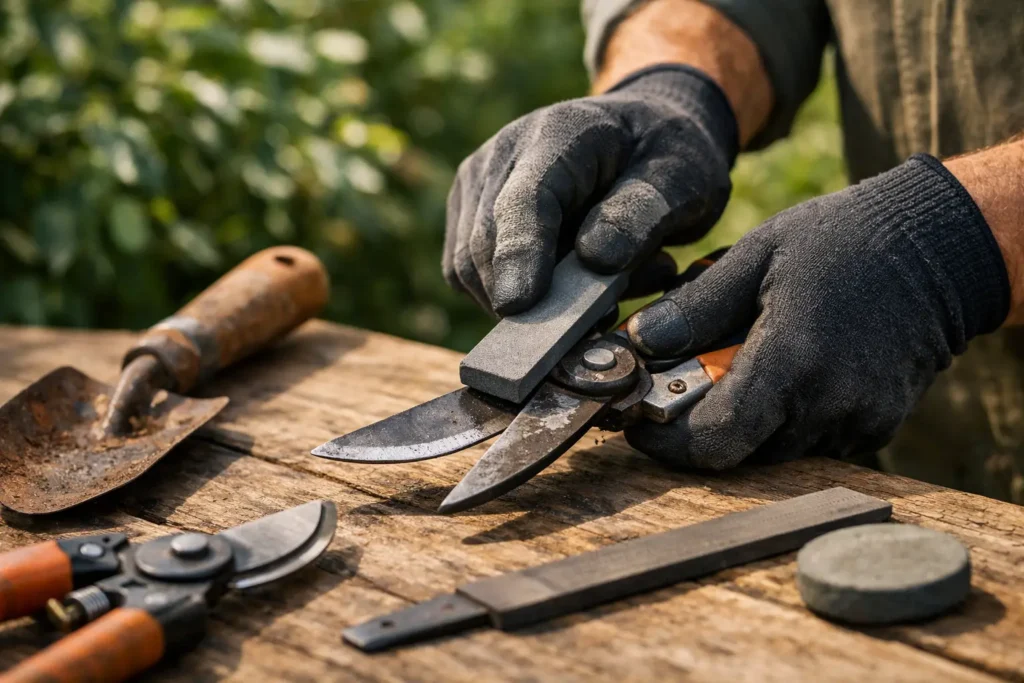
How to Sharpen Yard Tools Like a Pro
Why Sharp Yard Tools Matter

Ask any experienced gardener or landscaper about their secret weapon, and they likely won't point to expensive fertilizers or high-tech irrigation. Instead, they will point to their shed and emphasize the importance of keeping their equipment honed. When you regularly sharpen yard tools, you transform frustrating yard work into a smooth, efficient, and satisfying experience.
Dull blades crush plant stems rather than making clean cuts. This crushing action leaves ragged, bruised tissue that takes much longer to heal, opening the door for fungal diseases, bacteria, and pests. Furthermore, dull shovels and hoes require you to exert twice as much physical effort to break through soil and roots. By taking a little time to maintain a sharp edge, you protect your plants' health, save your energy, and drastically extend the lifespan of your gear.
Essential Gear for Tool Sharpening
You don't need a professional workshop to get great results. Most garden maintenance can be performed with a few basic, affordable supplies that you can easily store in a bucket or workbench drawer.
- Medium-grit sharpening stone (whetstone) or diamond file: The workhorse for putting a new edge on blades.
- Flat metal file (8-10 inch bastard file): Perfect for larger tools like shovels, hoes, and mower blades.
- Wire brush or stiff nylon brush: To scrub away dried dirt, rust, and sap.
- Light machine oil or WD-40: Used as a lubricant during sharpening and for post-maintenance rust prevention.
- Clean rags or shop towels: For wiping down metal surfaces.
- Safety glasses and heavy work gloves: Essential protection against flying metal filings and accidental slips.
Step-by-Step Guide to Sharpen Yard Tools
Different tools require slightly different approaches, but the general workflow remains the same: clean, inspect, sharpen, and protect. Here is how to handle the most common implements in your shed.
1. Cleaning and Preparation
Never attempt to sharpen a dirty tool. Caked-on soil, hardened sap, and rust will ruin your sharpening stone and prevent you from seeing the actual bevel of the blade. Start by scrubbing the metal surfaces with a wire brush and warm, soapy water. For stubborn tree sap, apply a bit of rubbing alcohol or commercial solvent. Once clean, dry the tool thoroughly with a rag to prevent flash rusting.
2. Sharpening Bypass Pruners and Loppers

Pruners and loppers do heavy lifting during spring pruning and fall cleanup. Because they feature a single bevel, sharpening them is straightforward once you find the correct angle.
- Open the pruners and secure them gently in a padded bench vise if possible, or hold them firmly on a stable workbench.
- Identify the bevel (the slanted edge) of the cutting blade. Factory bevels typically sit at a 15 to 20-degree angle.
- Hold your diamond file or sharpening stone at that exact angle. Push the file smoothly across the blade from the pivot point toward the tip. Never use a sawing motion, as this creates uneven ripples in the metal.
- Repeat this motion 5 to 10 times, maintaining consistent pressure.
- Flip the blade over and run the flat stone lightly across the back flat side just once to remove any small metal burr (known as a wire edge).
3. Sharpening Shovels and Hoes
Digging tools do not need a razor-sharp edge like a kitchen knife, but removing thick bluntness makes slicing through turf and soil effortless.
- Clamp the shovel or hoe vertically in a vise, blade facing up.
- Take your flat bastard file and angle it to match the existing bevel on the top (front) side of the shovel blade. Note: Never sharpen the bottom (back) side that faces the ground when you dig, as this will push the shovel out of the earth.
- Push the file firmly across the edge in downward strokes, moving diagonally from one corner to the other.
- Continue until the nicked, rounded edge is replaced by a clean, uniform bevel. Wipe away the metal shavings when finished.
4. Restoring Hedge Shears
Hedge shears have long blades that require smooth, sweeping cuts. Because both blades often feature bevels, you must follow the original angle carefully. Lay your flat stone flush against the bevel and sweep it along the entire length of the blade in one fluid motion. Check your work by sliding a piece of paper between the blades; they should shear cleanly without folding the paper.
Preventative Maintenance and Storage
Maintenance doesn't stop once the blade is sharp. To keep your equipment in top shape between sharpening sessions, establish a few simple post-use habits:
- Wipe after every use: Remove moisture and plant juices immediately after finishing your yard work.
- Apply oil: Rub a thin layer of machine oil or linseed oil over all metal surfaces to create a moisture barrier that stops rust.
- Clean wooden handles: Sand down splintered wooden handles occasionally and rub them with boiled linseed oil to keep them smooth and comfortable.
- Proper storage: Hang tools off the floor in a dry shed or garage. Avoid leaving them leaning against damp exterior walls.
Conclusion
Taking the time to sharpen yard tools pays massive dividends. Not only will your garden look neater with clean, healthy plant cuts, but your landscaping chores will also require significantly less physical strain. By investing just an hour or two each season into cleaning and filing your blades, you ensure your equipment stays ready to perform reliably year after year.