How to Teach Fractions with a Ruler Easily
Why Rulers Are the Ultimate Math Tool

Fractions are notoriously one of the trickiest math topics for elementary and middle school students to grasp. Abstract numbers stacked on top of each other often lead to confusion about value and size. However, children learn best when they can physically touch, manipulate, and visualize concepts. That is why learning how to teach fractions with a ruler is a game-changer for parents and educators alike.
A standard 12-inch ruler is essentially a pre-measured number line divided into clear fractional segments. By looking at the tick marks, students can instantly see that 1/2 is larger than 1/4, and that four quarters make a whole. Best of all, rulers are inexpensive, highly accessible, and turn an abstract worksheet into an interactive, real-world puzzle.
Understanding the Anatomy of a Ruler
Before diving into math equations, students need to get familiar with the physical tool. Grab a standard US ruler (or a metric one, depending on your curriculum) and examine the different line heights.
The Inch Scale and Line Hierarchy
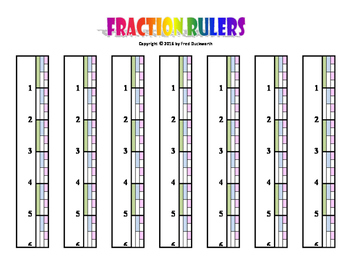
On an imperial ruler, the inch is broken down into fractional parts designated by varying line heights:
- The Whole Inch: The longest lines mark the whole numbers (0, 1, 2, 3, etc.).
- The Half-Inch: The second-longest line sits right in the middle between two whole numbers.
- Quarter-Inches: The next shorter lines divide the halves into quarters (1/4, 3/4).
- Eighths and Sixteenths: The shortest, most frequent ticks mark the 1/8 and 1/16 increments.
Spend time having your student point out and name these lines before trying to add or subtract them. Recognizing the visual pattern of the lines is the first step toward mastering fraction sense.
Step-by-Step Activities to Teach Fractions with a Ruler
Once your student understands the markings, you can move on to hands-on exercises. Here are four engaging activities designed to solidify their understanding.
1. The "Find the Fraction" Scavenger Hunt
Turn learning into a game by asking students to locate specific measurements around the house or on paper. Give them a target fraction and let them hunt.
- Ask them to find an object that is roughly 3 inches long.
- Ask them to find something measuring 4 and 1/2 inches.
- Use painter’s tape on a table, draw lines of specific fractional lengths, and have them measure to check their accuracy.
This bridges the gap between the ruler markings and physical objects in the real world.
2. Building Equivalent Fractions Visually
Equivalent fractions are a major stumbling block for many learners. A ruler makes them entirely self-evident.
Have the student find the 1/2-inch mark on the ruler. Ask them, "How many quarter-inch marks do we pass to get to the 1/2-inch mark?" They will count two. Therefore, 2/4 sits in the exact same spot as 1/2.
Next, ask them to find how many eighth-inch marks fit into that same half-inch space. They will count four, revealing that 4/8 is also equivalent to 1/2. Seeing these fractions line up vertically on the same physical point removes all the mystery.
3. Addition and Subtraction on a Number Line
Forget common denominators on paper for a moment—let the ruler do the heavy lifting.
Give your student a simple addition problem, such as 1/4 + 1/4. Have them place their finger at zero, move to the first 1/4 mark, and then jump another 1/4 mark forward. Their finger will land directly on 2/4 (or 1/2).
For subtraction, start at 3/4 of an inch and ask them to move backward by 1/4 of an inch. They will instantly see that they land on 2/4. This physical movement mirrors the mathematical operation, cementing the logic in their brains.
4. Paper Folding and Ruler Mapping
Combine kinetic learning with the ruler by using a strip of paper. Cut a strip of paper exactly 4 inches long. Ask the student to fold it in half, then in half again. When they unfold it, have them use a ruler to measure the creases.
They will discover that the creases naturally align with the fractional inch marks on their ruler. This exercise connects geometry, measurement, and fractional parts into a single cohesive project.
Tips for Success and Troubleshooting
To keep frustration low and engagement high, keep these quick tips in mind while teaching:
- Start Simple: Stick to halves and quarters before introducing eighths and sixteenths. Overwhelming students too early leads to burnout.
- Use Large-Print Rulers: Standard clear plastic rulers with bold, high-contrast markings are much easier for young eyes to read than cheap wooden ones with faded paint.
- Relate to Cooking or Construction: Remind kids that adults use rulers and fractions every day—whether they are doubling a recipe in the kitchen or measuring wood for a bookshelf. Real-world application builds motivation.
Conclusion
Teaching math does not have to involve endless worksheets and tearful study sessions. By learning how to teach fractions with a ruler, you provide children with a tangible, visual anchor for abstract concepts. When students can physically point to a half, a quarter, and an eighth, fractions stop being intimidating numbers and start making intuitive sense. Grab a ruler, clear off the table, and watch their math confidence grow.