How Uber Fare Is Calculated: The Complete Guide
Have you ever looked at your phone at the end of a trip and wondered why the price was higher—or lower—than expected? Understanding how Uber fare is calculated can help you take control of your travel budget and avoid unexpected surprises. While it might seem like a random algorithm, Uber's pricing structure relies on a predictable combination of distance, time, local supply and demand, and additional fees.

In this guide, we break down every component that goes into your final receipt, from upfront pricing to peak-hour multipliers.
The Core Components of a Standard Ride
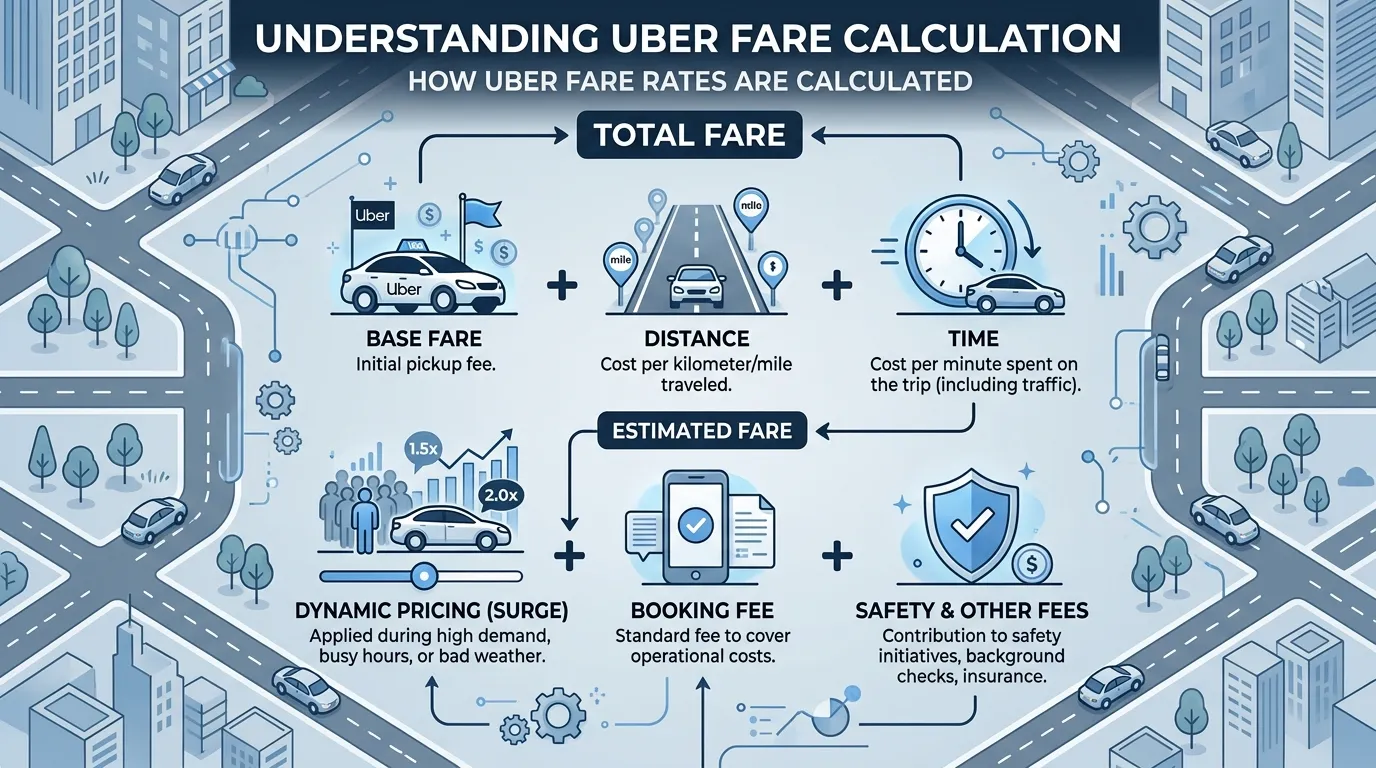
Before dynamic market factors kick in, every standard Uber ride starts with a foundational formula based on geography and physics: how far you are going and how long it takes to get there. Even as Uber has shifted toward upfront pricing for riders, these underlying variables still dictate the baseline cost.
1. Base Fare
The base fare is a flat fee charged at the very beginning of every trip. It varies depending on the city you are in and the type of vehicle you select (such as UberX, Uber Comfort, or Uber Black). This fee covers the initial cost of dispatching a driver to your pickup location.
2. Cost per Minute
Your ride's price accounts for the exact duration of the trip. From the moment your trip starts until you arrive at your destination, you pay a specific rate per minute. This compensates the driver for time spent navigating traffic, stopping at red lights, and waiting at intersections.
3. Cost per Mile
Alongside time, distance is a primary driver of cost. Uber charges a set rate for every mile traveled along the route. If your driver has to take a detour due to road closures or construction, the increased mileage will automatically be factored into the final calculation (unless you are locked into an upfront price—more on that later).
Upfront Pricing vs. Metered Fares
Video: How Ride Pricing Works | What Moves Us | Uber
Most riders today experience upfront pricing. When you enter a destination in the Uber app, the system shows you a fixed price before you hit the "Confirm" button. This gives you peace of mind, as you know the exact cost before stepping into the vehicle.
How does Uber calculate this upfront price? The app uses predictive algorithms. It analyzes historical traffic data, the estimated distance, current weather conditions, and predicted demand patterns for that specific route and time of day. If traffic ends up being much worse than predicted, you generally still pay the upfront price you agreed to. However, if you significantly change your destination or add multiple stops mid-trip, the fare will recalculate based on actual time and distance.
Dynamic Market Factors
If you have ever opened your Uber app during a rainstorm, after a concert, or on New Year's Eve, you have likely seen prices skyrocket. This is driven by variable economic forces.
Surge Pricing
When the demand for rides in a specific neighborhood outweighs the number of available drivers, Uber implements surge pricing. The app applies a multiplier (e.g., 1.5x, 2x) to the base fare to incentivize more drivers to log on and head toward the high-demand area. Once supply and demand balance out, surge pricing drops back down.
Tolls, Surcharges, and Fees
Your final receipt often includes miscellaneous charges that are separate from the driver's time and distance earnings:
- Tolls: If your route requires crossing a toll bridge or driving on a toll road, the cost of the toll is automatically added to your fare.
- Airport Fees: Airports charge pickup and drop-off fees for rideshare vehicles, which are passed directly onto the rider.
- Booking Fees: A flat fee added to every trip to support safety measures, app development, and operational costs.
- CancellationToken Fees: If you cancel a ride more than a few minutes after matching with a driver, or if the driver waits more than five minutes at your pickup spot without you showing up, a cancellation fee applies.
Tips for Lowering Your Uber Fares
Now that you know how Uber fare is calculated, you can use a few insider strategies to keep your transportation costs down:
- Compare Vehicle Options: UberX is almost always cheaper than Uber Comfort or Uber Green. Check all available tiers before booking.
- Walk a Block or Two: If you are in a dense urban center, surge pricing might only affect your exact block. Walking a short distance to a less congested area can dramatically drop your upfront price.
- Wait Out the Surge: If you are not in a rush, wait 10 to 15 minutes. Surge pricing spikes and falls very quickly as driver supply catches up with demand.
- Check Alternate Times: Traveling slightly before or after peak rush hours can help you avoid both heavy traffic and elevated pricing.
By understanding the moving parts behind your rideshare bill, you can better navigate peak pricing, choose the right ride tier, and budget your daily travel with confidence.