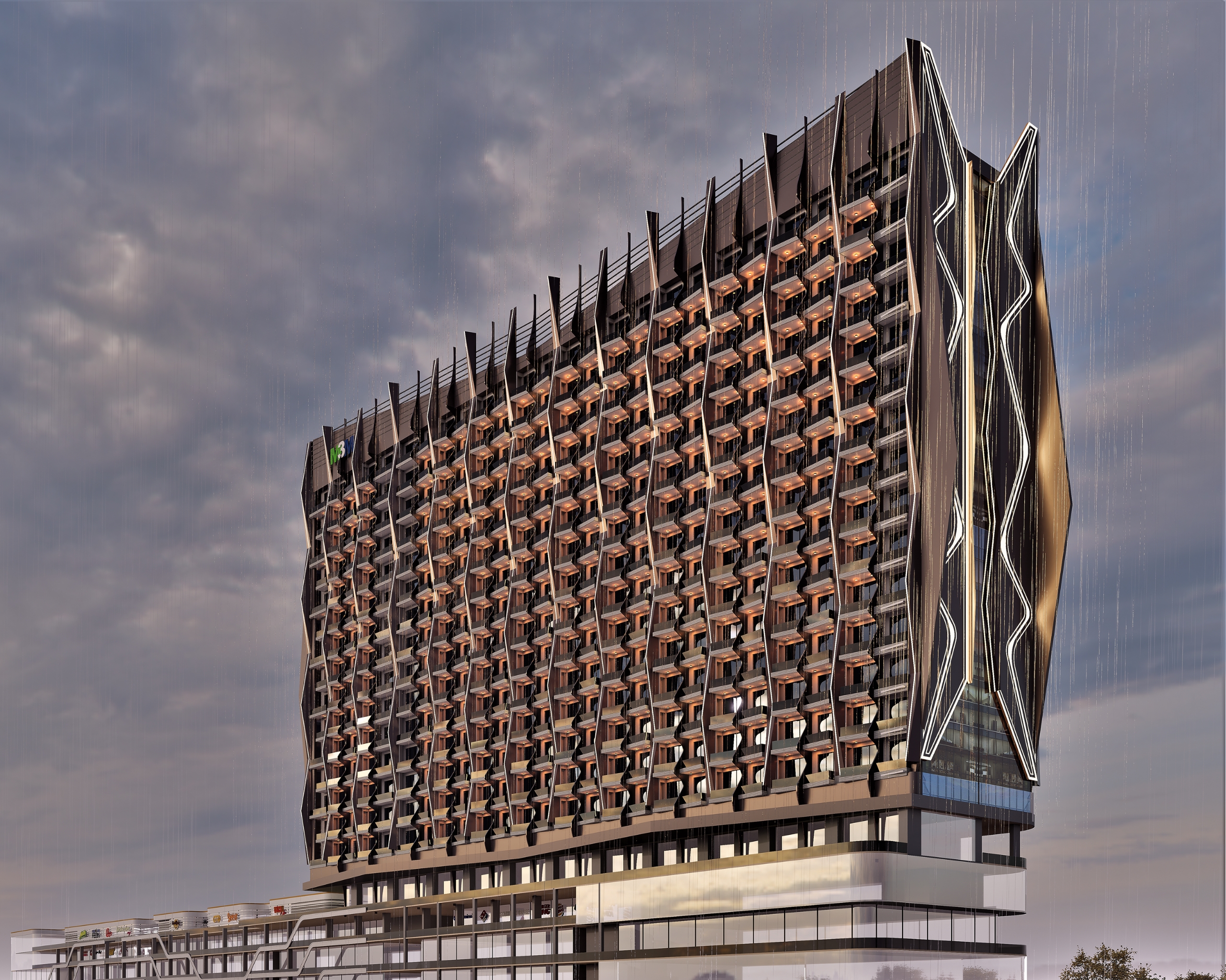
Hussain Sajwani: Building India's Urban Future
When international real estate moguls turn their attention toward South Asia, industry leaders take note. Among the most watched global magnates is DAMAC Properties founder Hussain Sajwani. Known across the Middle East and Europe for redefining ultra-luxury living and pioneering bold infrastructure investments, his expanding interest in South Asian markets signals a transformative shift. Examining Hussain Sajwani’s revealed strategy: building India’s urban future! provides a clear look at how foreign direct investment, luxury branded residences, and digital infrastructure are set to converge across India’s major metropolises.

The Economic Catalyst: Why India, Why Now?
India is undergoing one of the largest demographic and urban migrations in human history. By 2035, the country’s urban population is projected to surpass 675 million. This massive influx is placing unprecedented demand on commercial spaces, residential housing, and digital backbones.
For an investor like Sajwani, who built a multi-billion-dollar empire anticipating urban growth cycles in Dubai, London, and Miami, India represents an extraordinary frontier. The country is no longer merely an outsourcing hub; it has transformed into a global economic engine fueled by tech wealth, rising disposable incomes, and an expanding class of ultra-high-net-worth individuals (UHNWIs) demanding world-class infrastructure.
Pillar One: Redefining Ultra-Luxury and Branded Living
Historically, India's luxury real estate sector was dominated by domestic conglomerates. While these developers built high-quality homes, the concept of globally branded residences—co-designed with world-renowned fashion and automotive houses—remains relatively nascent in tier-1 Indian hubs.
Sajwani’s playbook relies heavily on experiential luxury. In Dubai, DAMAC achieved global acclaim by partnering with elite brands like Versace, Roberto Cavalli, and de GRISOGONO. Bringing this design language to cities like Mumbai, Delhi-NCR, and Bengaluru addresses an underserved niche: affluent buyers seeking turnkey global opulence backed by international hospitality standards.
- Global Aesthetics: Introducing imported finishes, parametric architecture, and internationally managed concierge services.
- Exclusivity: Low-density vertical developments tailored to modern entrepreneurs, executives, and global non-resident Indians (NRIs).
- Value Retention: Branded developments historically trade at a 25% to 35% premium over non-branded counterparts in secondary markets.
Pillar Two: Digital Real Estate and Hyperscale Data Centers
Urban futures are not built solely from concrete and glass; they run on fiber optics and data storage. Through his private investment vehicle DICO Group and its digital infrastructure arm, Edgnex Data Centres, Sajwani has allocated substantial capital toward data infrastructure across Asia and the Middle East.
India’s rapid digitalization—accelerated by unified payment interfaces, 5G rollouts, and stringent data localization regulations—has created a supply deficit in data center capacity. Sajwani’s vision recognizes that modern cities require reliable, low-latency computational hubs within or near metropolitan limits. By acquiring prime land parcels and investing in green, carrier-neutral data centers, his strategy directly supports the foundational architecture of smart cities.
Hussain Sajwani’s Revealed Strategy: Building India’s Urban Future
The overarching execution model behind this expansion avoids the pitfalls that previously trapped foreign developers in India. Rather than attempting a solitary entry, the blueprint focuses on structural efficiency, risk mitigation, and local synergy.
1. Strategic Local Joint Ventures

India’s regulatory landscape has matured significantly since the introduction of the Real Estate (Regulation and Development) Act (RERA). However, land acquisition and municipal clearances remain inherently hyper-local. Sajwani’s approach leverages joint-development agreements (JDAs) with established Indian builders. This combines DAMAC’s global brand capital, project financing, and design prowess with local execution expertise.
2. Transit-Oriented, Sustainable Design
Modern Indian urban centers suffer from chronic congestion. Future developments must integrate directly with urban transit corridors. Sajwani’s proposed urban footprint emphasizes energy-efficient buildings, localized water recycling systems, and mixed-use commercial-residential zoning that limits the need for extensive daily commutes.
3. Capitalizing on NRI Inward Investment
A crucial component of this cross-border strategy is the Indian diaspora in the Gulf Cooperation Council (GCC). Millions of Indian professionals live in the UAE and surrounding nations. Sajwani already commands high brand trust among this demographic. By launching flagship projects on Indian soil, his ventures can immediately tap into foreign inward remittances from buyers who want familiar, Dubai-grade quality in their home country.
Overcoming Market Complexities
Entering India’s real estate space is not without challenges. Foreign developers face complex tax frameworks, fluctuating input costs for raw materials, and intense competition from entrenched domestic giants like Godrej, DLF, and Prestige Group.
To navigate these dynamics, Sajwani’s strategy emphasizes agility and strict capital discipline:
- Phased Equity Deployment: Investing tranches based on clear construction and regulatory milestones rather than deploying massive upfront liquidity.
- Focus on High-Margin Verticals: Avoiding crowded affordable segments and focusing strictly on premium residences, commercial tech hubs, and specialized data assets where margins absorb localized inflation.
- Green Construction Practices: Aligning projects with IGBC (Indian Green Building Council) certifications to appeal to sustainability-conscious global investors and benefit from green financing incentives.
What This Urban Vision Means for India’s Metros
The entry of visionary global investors like Hussain Sajwani represents an inflection point for Indian real estate. It forces the domestic market to elevate its construction timelines, architectural innovation, and post-handover property management.
Furthermore, the integration of hyperscale digital centers with prime residential corridors establishes a blueprint for genuine smart cities—places where high-earning talent can live, work, and collaborate within a world-class physical and digital ecosystem.
As this multi-faceted blueprint unfolds across key metropolitan centers, it serves as a testament to India's ascending global economic status. Through capital, brand equity, and forward-looking infrastructure planning, Sajwani’s initiatives are poised to leave a lasting imprint on the skyline and digital fabric of modern India.