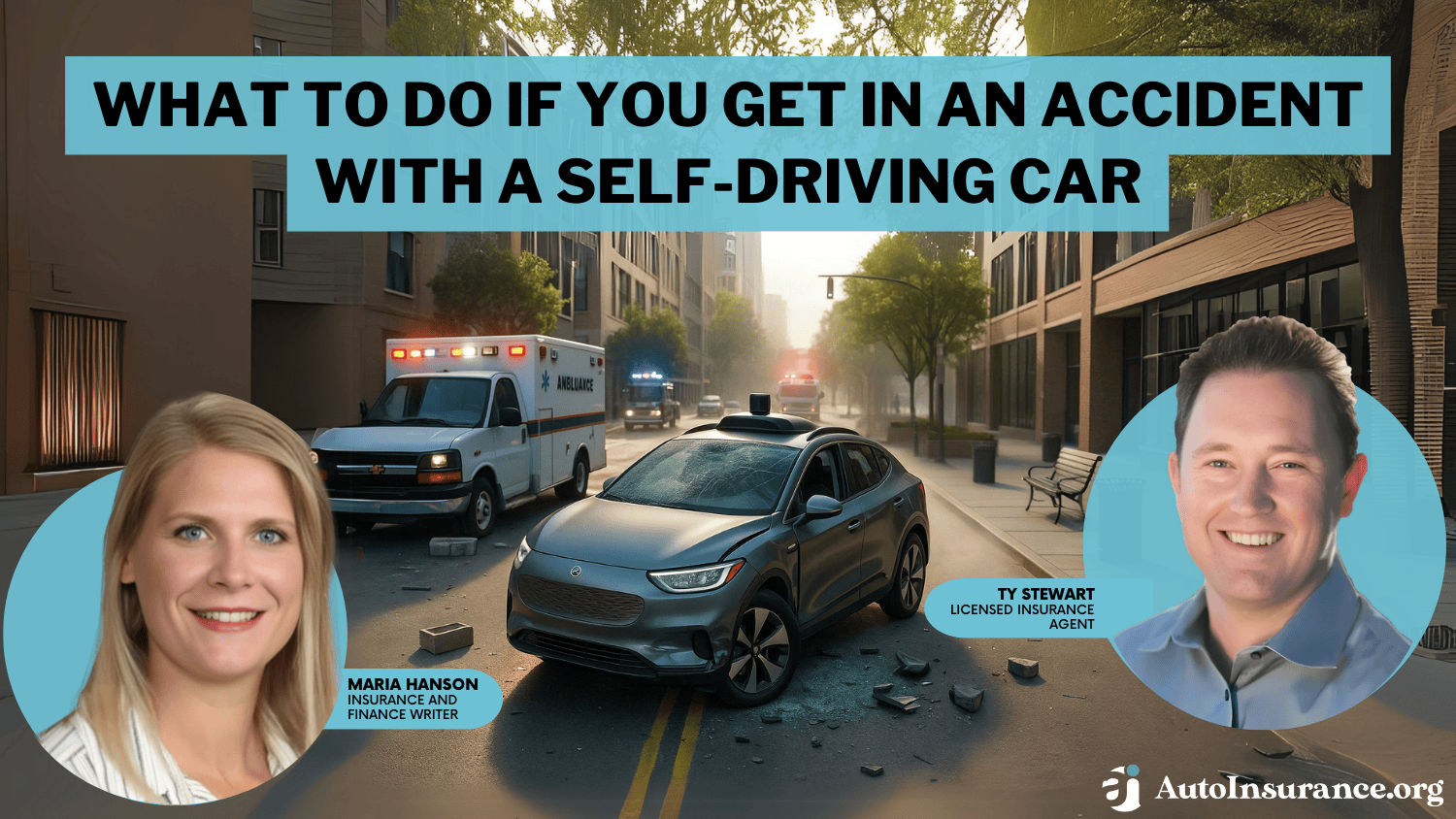
I-95 Jacksonville Accidents: Can Self-Driving Cars Help?
Whenever traffic grinds to a halt past the Fuller Warren Bridge or emergency vehicles swarm an interchange on the Southside, local commuters know the story all too well. Following yet another catastrophic I 95 Jacksonville accident: are self-driving cars the answer? Debate rages among traffic safety engineers, civil litigators, and everyday motorists who brave Duval County’s most unpredictable corridor each day.

Interstate 95 through Jacksonville serves as the vital commercial and commuter spine of Northeast Florida. It is also one of the region's deadliest stretches of asphalt. As advanced driver-assistance systems (ADAS) and fully autonomous vehicle (AV) prototypes log millions of test miles across the Sunbelt, proponents claim that software could virtually eliminate the behaviors that cause these pileups. Critics, however, argue that our technology is nowhere near ready for the volatile realities of high-speed Florida highway travel.
The Perils of Interstate 95 Through Duval County
To understand why the debate is so fierce, one must look at the specific operational hazards of I-95 in Jacksonville. Spanning from the St. Johns County line up to the Georgia border, this corridor combines dense commuter congestion, heavy interstate freight traffic, and chronic construction zones, particularly around the I-10 interchange and the I-295 beltway junctions.
According to data from the National Highway Traffic Safety Administration (NHTSA) and the Florida Department of Highway Safety and Motor Vehicles (FLHSMV), human error plays a primary role in more than 90% of serious motor vehicle crashes. On I-95, these errors manifest in distinct ways:
- Aggressive Speed Differentials: Commuters dodging between commercial tractor-trailers at speeds frequently exceeding 80 mph create narrow margins for error.
- Sudden Deceleration Bottlenecks: Sightline limitations near bridges and sweeping ramps cause shockwave braking, triggering multi-vehicle rear-end collisions.
- Distracted Driving: Smartphone use remains rampant, turning a split-second delay in braking into a fatal impact.
- Severe Weather Shifts: Sudden, torrential subtropical downpours instantly reduce visibility to near zero and cause hydroplaning on worn road surfaces.
I 95 Jacksonville Accident: Are Self-Driving Cars The Answer? Debate Rages
The core question driving transportation policy in Florida is whether algorithms can outperform human intuition on high-stress corridors. While automated systems do not get tired, intoxicated, or distracted by text messages, the chaotic environment of an interstate crash scene poses profound challenges to machine perception.
The Case for Autonomous Intervention: Eliminating the Human Factor
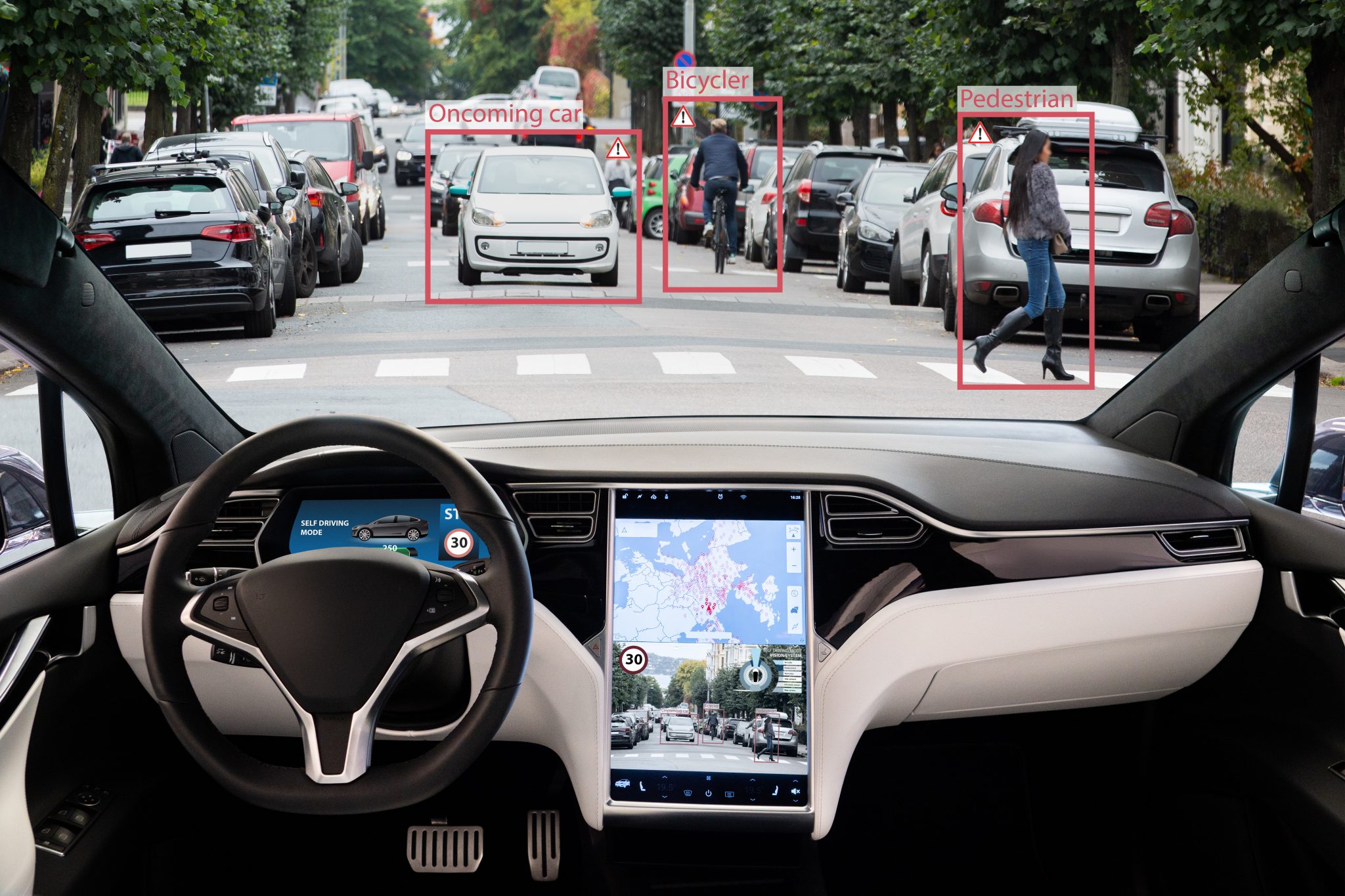
Advocates for autonomous mobility, including many automotive technologists and federal safety researchers, point out that machine reaction times are measured in milliseconds, not seconds. A commercial autonomous system utilizing a sensor fusion suite—integrating LiDAR, millimeter-wave radar, and high-resolution optical cameras—can track dozens of vehicles simultaneously across a 360-degree radius.
On a corridor like I-95, autonomous technology could theoretically prevent accidents through several proactive mechanisms:
- Guaranteed Following Distances: Unlike human drivers who tailgate at 75 mph, autonomous algorithms maintain mathematically safe stopping distances regardless of traffic pressure.
- Sensor Redundancy: Radar systems can "see" through fog, smoke, and light spray far better than the human eye, detecting stopped vehicles ahead long before a human driver perceives danger.
- Vehicle-to-Everything (V2X) Communication: If an accident occurs near the J. Turner Butler Boulevard exit, upstream vehicles equipped with V2X can receive instantaneous digital warnings, gently slowing traffic miles ahead to prevent secondary pileups.
The Technical Hurdles: Florida Weather, Construction, and High-Speed Dynamics
Conversely, skeptics caution against treating autonomy as a panacea. The skepticism is rooted in real-world technical limitations that Florida's climate and infrastructure routinely expose.
First is the issue of tropical squalls. While radar penetrates moisture, heavy rain scatter degrades optical cameras and attenuates LiDAR laser beams. When lane markings are submerged under standing water or obscured by road spray from an 18-wheeler, even the most sophisticated neural networks can experience sensor degradation, forcing abrupt disengagements.

Second, Jacksonville’s relentless highway expansion creates unpredictable work zones. Shifted lanes, temporary concrete barriers, missing striping, and erratic construction equipment are notorious edge cases for autonomous driving systems. When human drivers navigate these areas, they rely on contextual intuition, eye contact with flaggers, and adaptive spatial awareness—traits artificial intelligence has yet to master at highway speeds.
Jacksonville as an Autonomous Testing Ground
This debate is not theoretical for Duval County residents; Northeast Florida is already ground zero for autonomous transit experimentation. The Jacksonville Transportation Authority (JTA) has spent years developing its Ultimate Urban Circulator (U2C) program, converting the legacy Skyway into an integrated network of autonomous shuttles operating in downtown Jacksonville.
Furthermore, Florida has some of the most permissive autonomous vehicle laws in the nation. Under Florida House Bill 311 (enacted in 2019), fully autonomous vehicles without human safety operators behind the wheel are legally permitted to operate on public roads, provided they meet minimum insurance and federal equipment standards.
However, running low-speed shuttles in dedicated urban right-of-ways is fundamentally different from integrating Level 4 or Level 5 autonomous vehicles into the high-velocity, high-consequence environment of I-95. A software glitch at 15 mph in a downtown transit lane results in a fender bender; a misclassification at 70 mph on the Trout River Bridge can trigger a catastrophic chain reaction.
Liability and the Transition Era: Who Pays When an Algorithm Crashes?
As self-driving features become standard in consumer vehicles—from Tesla’s Full Self-Driving (Supervised) to Mercedes-Benz’s Drive Pilot and GM’s Super Cruise—the legal system faces unprecedented questions following any major I-95 accident.
Historically, motor vehicle liability centered on driver negligence: speeding, failure to yield, or driving while impaired. In an accident involving autonomous or semi-autonomous systems, liability shifts into complex product liability litigation:
- Was the human driver sufficiently alerted to take over control before impact?
- Did the vehicle manufacturer adequately disclose operational design domains (ODDs)?
- Did a software update introduce an edge-case failure in object detection?
- Did infrastructure failure, such as missing lane lines from road repaving, contribute to the collision?
During the decades-long transition era—where human drivers, semi-autonomous cars, and fully driverless commercial fleets share the same lanes—interstate safety may temporarily become more volatile rather than less, as humans misunderstand the limitations of their vehicle's automation.
Navigating I-95 Safely Today
While the long-term potential of autonomous transport holds promise for eliminating the root causes of fatal collisions, self-driving fleets will not solve Jacksonville's immediate safety crisis tomorrow. For now, survival on I-95 depends on human accountability and proven defensive driving habits:
- Increase Following Distance: Maintain at least a three- to four-second gap behind the vehicle ahead, expanding to six seconds during rainstorms.
- Treat ADAS as Driver Assist, Not Autopilot: Level 2 features like adaptive cruise control and lane-centering require hands on the wheel and complete visual attention at all times.
- Anticipate Interchange Bottlenecks: Slow down ahead of known choke points, including the Fuller Warren Bridge, the Martin Luther King Jr. Parkway exit, and the I-295 interchanges.
- Never Stop in Active Lanes: If involved in a minor collision without serious injuries, Florida law requires drivers to move their vehicles off the travel lanes to the shoulder to prevent fatal secondary crashes.
The debate over whether autonomous vehicles will rescue I-95 from its grim collision statistics will continue as technology matures and legislation evolves. Until automated fleets can prove their resilience against Florida's torrential weather and chaotic highway dynamics, the responsibility for preventing the next tragedy remains firmly in human hands.