ICD-10 Left Leg Wound: Coding Guide & Codes
Understanding ICD-10 Coding for Left Leg Wounds

Accurately documenting and coding an icd 10 left leg wound is essential for proper patient care, seamless insurance reimbursement, and precise medical record-keeping. Because the human leg encompasses multiple anatomical structures—from the thigh and knee down to the lower leg, ankle, and foot—medical coders must be exceptionally precise. A generic code is rarely sufficient; payers require specific details about the type of wound, exact anatomical location, depth, and whether there are complicating factors like foreign bodies or infections.
This guide breaks down the most commonly used ICD-10 categories for left leg injuries, helping healthcare providers and medical coders select the most accurate code for every clinical scenario.
Key Factors in Selecting the Right Code
Before diving into specific alphanumeric codes, it helps to understand the hierarchy and criteria used in the ICD-10-CM classification system for traumatic injuries. When evaluating a left leg wound, you must document:
- Anatomical Site: Is the wound on the thigh, lower leg (calf/shin), knee, ankle, or foot?
- Laterality: ICD-10 almost always requires specifying left versus right. For our purposes, the seventh character or specific code definition will designate the left side.
- Type of Wound: Laceration, puncture, open bite, or abrasion.
- Depth and Complications: Does the wound involve muscle, tendon, or bone? Is there a foreign body present?
- Encounter Type: Initial encounter, subsequent encounter, or sequela (late effect).
Common ICD-10 Codes for Open Wounds of the Left Lower Extremity
Open wounds of the lower limbs fall primarily under category S81 (for the lower leg) and S71 (for the hip and thigh). Below are the most frequently utilized codes grouped by anatomical sub-region.
Left Thigh Wounds (S71)
Injuries occurring above the knee are coded under category S71. You must specify whether the wound is a laceration, puncture, or open bite.
- S71.012A: Laceration without foreign body, left thigh, initial encounter
- S71.022A: Laceration with foreign body, left thigh, initial encounter
- S71.042A: Puncture wound without foreign body, left thigh, initial encounter
Left Lower Leg Wounds (S81)
The lower leg (the region between the knee and the ankle, including the calf and shin) is classified under the S81 category. These make up a large percentage of outpatient and emergency department wound care visits.

- S81.812A: Laceration without foreign body, left lower leg, initial encounter
- S81.822A: Laceration with foreign body, left lower leg, initial encounter
- S81.842A: Puncture wound without foreign body, left lower leg, initial encounter
- S81.852A: Open bite, left lower leg, initial encounter
Left Ankle and Foot Wounds (S91)
If the wound extends below the shin to the ankle or top of the foot, coders must shift to the S91 category.
- S91.012A: Laceration without foreign body, left ankle, initial encounter
- S91.312A: Laceration without foreign body, left foot, initial encounter
Understanding the 7th Character Extensions
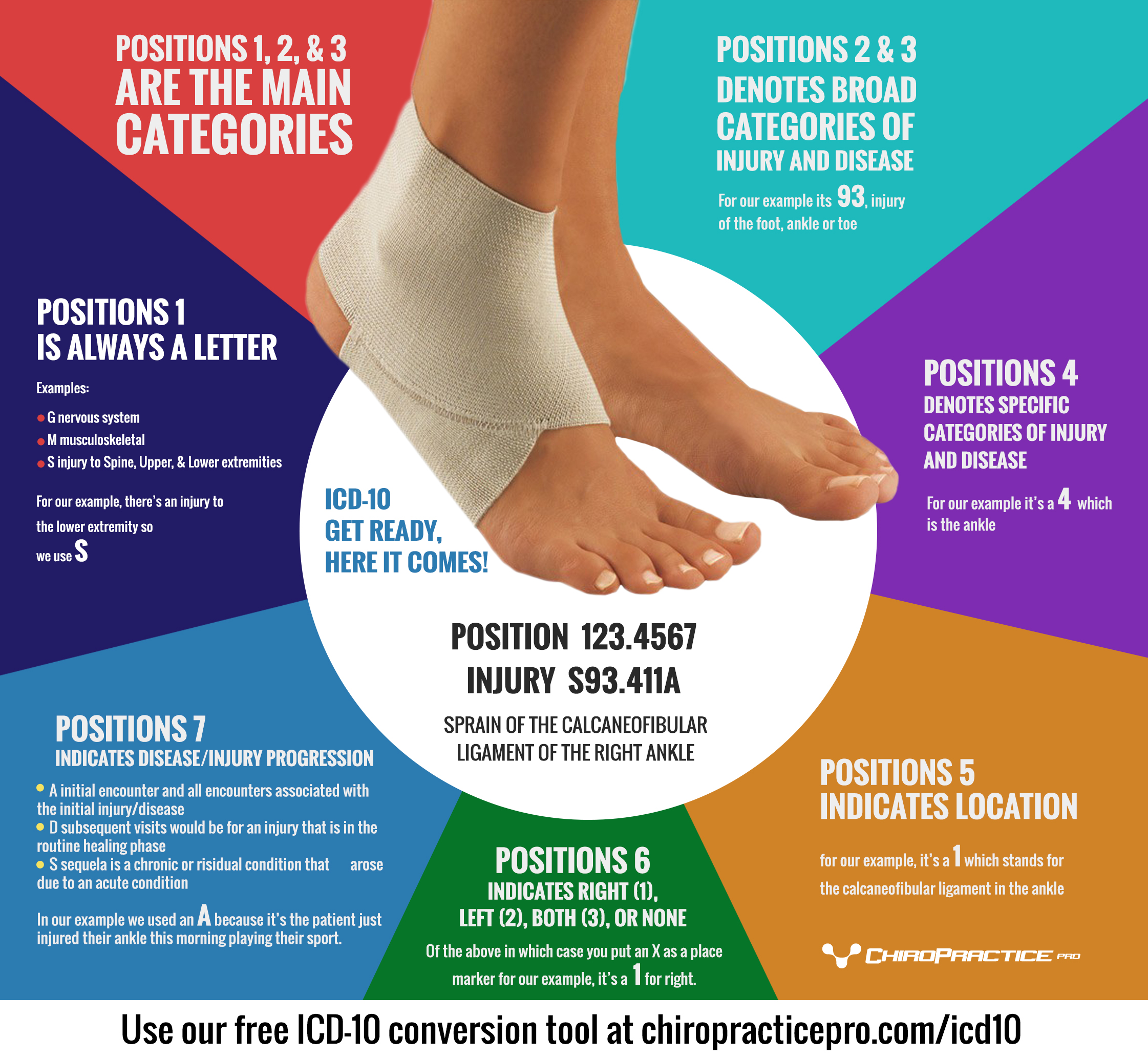
A critical component of injury coding in ICD-10 is the use of the 7th character. Without the correct extension, the claim will likely be rejected. These characters indicate the phase of treatment:
- A - Initial encounter: Used while the patient is receiving active treatment for the condition (e.g., surgical repair, suture placement, initial evaluation and management in the ER).
- D - Subsequent encounter: Used during the recovery phase when the patient is receiving routine care for the healing wound (e.g., suture removal, routine dressing changes, check-ups).
- S - Sequela: Used for complications or conditions that arise as a direct result of a previous injury (e.g., chronic scarring, joint contracture, or a delayed infection months after the initial trauma).
Note: Many ICD-10 categories require placeholder characters (like 'X') to maintain structural integrity before the 7th character can be appended. Always verify the specific code requirements in the tabular list.
Coding Chronic Wounds and Ulcers
Not all leg wounds are traumatic. If a patient presents with a chronic non-healing wound—such as a diabetic ulcer, pressure ulcer, or venous stasis ulcer on the left leg—traumatic open wound codes (S-codes) are incorrect. Instead, clinicians and coders must utilize category L97 (Non-pressure chronic ulcer of lower limb) or L89 (Pressure ulcer).
Key Elements for Chronic Ulcer Coding:
- Anatomical Location: Specify the exact site (e.g., calf, ankle, heel, mid-foot).
- Severity and Depth: ICD-10 codes for chronic ulcers often require specifying whether the breakdown is limited to skin breakdown, exposes fat layer, causes necrosis, or involves muscle, tendon, or bone.
- Laterality: Ensure the documentation clearly distinguishes between left and right lower extremities.
Documentation Best Practices for Accurate Coding
To avoid claim denials and ensure clinical accuracy, medical providers should focus on detailed documentation habits:
- Be Specific About Location: Instead of writing "leg wound," document "2cm laceration to the anterior left shin."
- Note Complicating Factors: Explicitly state whether glass, metal, or dirt was removed from the wound. This justifies the selection of "with foreign body" codes.
- Update the Encounter Phase: Ensure that follow-up visits transition from the 'A' character to the 'D' character as the patient moves from active treatment to routine healing.
- Distinguish Trauma vs. Disease: Clearly differentiate between acute traumatic injuries (cuts, dog bites, punctures) and chronic pathologies (ulcers, skin breakdown from venous insufficiency).
By following these guidelines and referencing the current ICD-10-CM manual, healthcare teams can ensure precise coding for every left leg wound encounter.