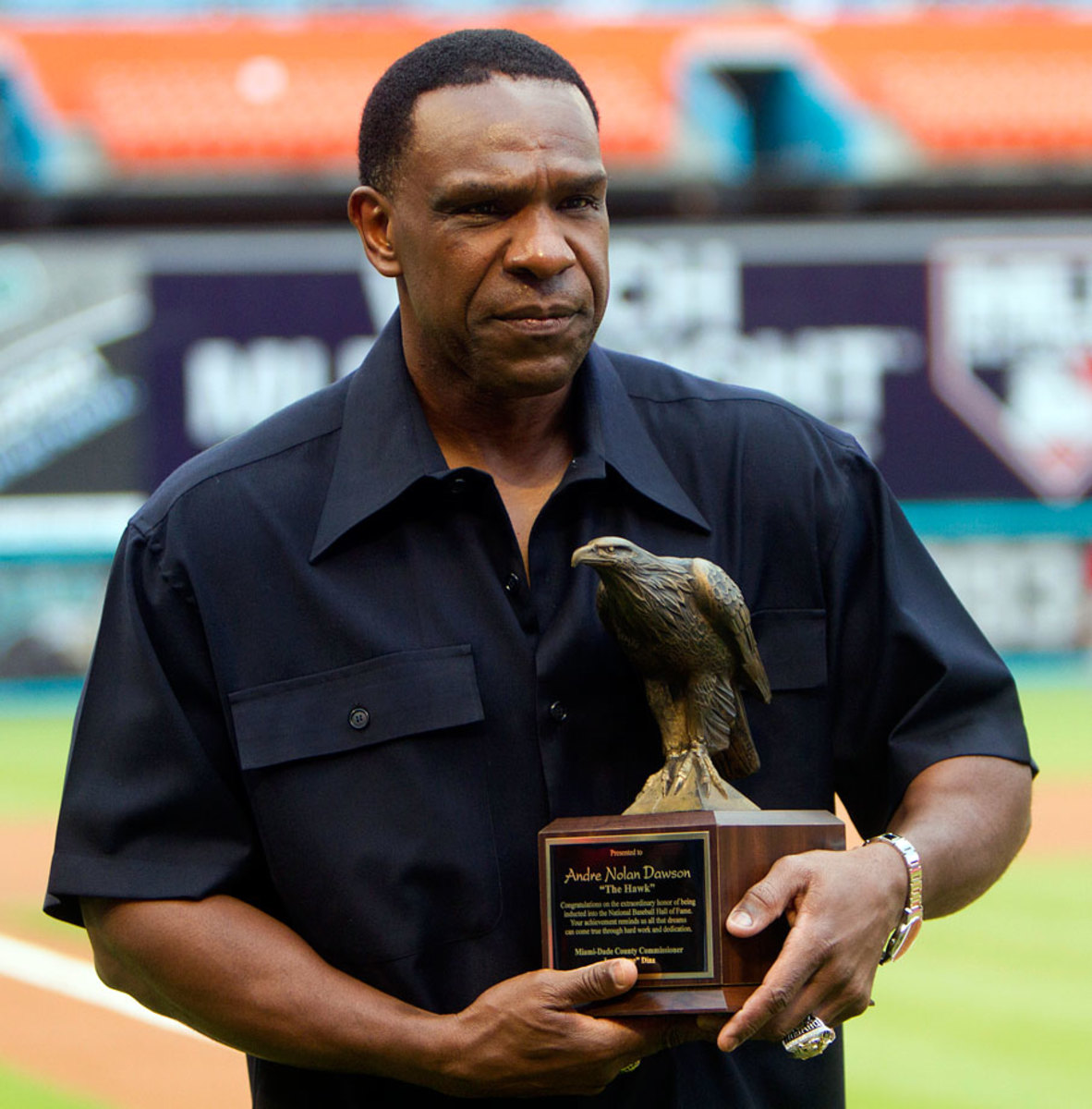
Inside Hawk Andre Dawson’s Rise to Baseball Royalty
Long before he stood on the stage in Cooperstown, New York, Andre Dawson commanded respect across Major League Baseball with an intense glare from the batter’s box and a lethal five-tool skill set. Known throughout the sporting world simply as "The Hawk"—a moniker gifted by an uncle who marveled at his predatory instincts in the outfield—Dawson brought a rare blend of explosive power, lightning speed, and gold-standard defense to the diamond. Hawk Andre Dawson’s rise from an unheralded Florida college draft pick to National League MVP and Hall of Famer remains one of the most compelling stories of perseverance in baseball history.

Roots of Resilience: Miami and Florida A&M
Born in Miami, Florida, in 1954, Dawson was the eldest of eight children. His athletic gifts were apparent early, but adversity struck before his professional journey even began. During his senior year at Southwest Miami High School, Dawson suffered a severe knee injury while playing football. The injury was serious enough to scare away major college baseball recruiters who feared his speed and durability were permanently compromised.
Undeterred, Dawson enrolled at Florida A&M University, a historically Black university in Tallahassee. Under legendary Rattlers coach Costa Kittles, Dawson blossomed. He transformed into an offensive centerpiece, batting .352 in his final collegiate season. Scouts noticed the predatory focus in his eyes and the effortless pop in his bat. In the 1975 MLB Draft, the Montreal Expos selected Dawson in the 11th round with the 250th overall pick. At the time, few realized Montreal had just uncovered the future face of their franchise.
Hawk Andre Dawson’s Rise in Montreal
Dawson wasted little time proving his draft position was a colossal oversight by 23 other teams. After blitzing through minor league stops in Lethbridge, Burlington, and Denver, he made his major league debut in late 1976. By 1977, he secured Montreal's everyday starting center field job and electrified the National League.
During his 1977 campaign, Dawson slashed .282 with 19 home runs, 65 RBIs, and 21 stolen bases, edging out Steve Henderson to win the National League Rookie of the Year Award. But his value went far beyond raw hitting stats. With a rifle arm and remarkable closing speed, he turned the cavernous outfield of Olympic Stadium into a fortress.
Over the next decade, Dawson anchored some of the best rosters Montreal ever assembled:
- The 1981 Postseason Run: Dawson finished as the NL MVP runner-up, driving the Expos to within one win of their first World Series appearance.
- Power-Speed Combination: In 1983, Dawson put together an iconic campaign, belting 32 home runs, driving in 100 runs, and swiping 21 bags while earning his fourth consecutive Gold Glove Award.
- Defensive Dominance: Opposing baserunners routinely froze on hits to right-center field, wary of Dawson’s legendary throwing arm, which yielded double-digit outfield assists year after year.
The Toll of Olympic Stadium’s Concrete Turf
What makes Dawson’s rise in Montreal truly remarkable is the physical pain that accompanied it. The artificial surface installed inside Olympic Stadium was notorious across the league—a thin carpet laid directly over concrete. For an outfielder who played with relentless abandon, the turf acted like a wrecking ball on his lower body.
Dawson underwent multiple knee surgeries during his Montreal tenure. Cartilage wore away to bone, and mornings required extensive physical therapy just to get his legs moving. Despite agonizing pain, Dawson refused to take maintenance days, earning the eternal devotion of teammates and fans for his sheer toughness.
The "Blank Check" Gamble and Wrigley Field Magic
By the end of the 1986 season, Dawson knew his career would end prematurely if he continued playing on Montreal’s artificial surface. He needed natural grass, and he had his sights firmly set on the Chicago Cubs and Wrigley Field.

However, the winter of 1986–1987 coincided with a period of collusion among MLB team owners, who artificially suppressed free-agent salaries and refused to offer competitive contracts to star players. Facing a stagnant market, Dawson and his agent, Dick Moss, made an unprecedented move during spring training in 1987.
Dawson walked into the office of Cubs General Manager Dallas Green and handed him an autographed, blank contract. The terms were simple: the Cubs could write in whatever salary they deemed fair, as long as Dawson was allowed to play on Wrigley's grass.
Skeptical but intrigued, Green filled in a base salary of just $500,000—a massive pay cut for a star of Dawson's caliber. The Hawk responded with one of the greatest revenge seasons the sport has ever witnessed.
The Historic 1987 MVP Campaign
Rejuvenated by Wrigley's welcoming dimensions and soft sod, Dawson put together an awe-inspiring performance in 1987:
- 49 Home Runs: Dawson tied for the major league lead, launching majestic tape-measure blasts into the bleachers.
- 137 RBIs: Led the major leagues by a wide margin.
- NL Most Valuable Player: Dawson made history by becoming the first player from a last-place team to win the MVP award, proving that true excellence transcends team standings.
Chicago embraced Dawson instantly. Bleacher bums bowed in reverence when he took his position in right field, chanting "Hawk! Hawk! Hawk!" as he solidified his place as a Chicago sports icon.
A Rare Member of Baseball’s Elite Clubs
Dawson played until 1996, adding productive chapters with the Boston Red Sox and Florida Marlins before hanging up his spikes. Over his 21-season career, he amassed numbers that only the absolute giants of the game have matched.
Dawson finished his career with 2,774 hits, 438 home runs, 1,591 RBIs, and 314 stolen bases. He remains one of only a handful of players in Major League Baseball history to record at least 400 home runs and 300 stolen bases, alongside Willie Mays, Barry Bonds, and Alex Rodriguez. When paired with his eight Gold Glove Awards, Dawson’s resume puts him in rare company as a complete, two-way superstar.
Cooperstown Immortality
Despite his undeniable achievements, Dawson’s journey to the Hall of Fame required patience. Modern sabermetric analysis initially scrutinized his low walk totals, causing his candidacy to linger on the BBWAA ballot for nine years. Yet those who played against him understood the reality: Dawson was a game-changer who struck fear into opposing pitchers and managed elite production on two reconstructed knees.
In 2010, the call finally came. Dawson was inducted into the National Baseball Hall of Fame, donning an Expos cap to honor the team that discovered him. Hawk Andre Dawson’s rise from Miami’s sandlots to the plaques of Cooperstown stands as an enduring blueprint of professionalism, physical courage, and unyielding will.