Inside John Malkovich’s $65 Million Fortune
When industry analysts and celebrity finance outlets evaluate John Malkovich’s $65 Million estimated net worth, they are not just looking at a tally of Hollywood paychecks. They are examining one of the most remarkable financial resilience stories in entertainment history. Malkovich, revered for his commanding screen presence and theatrical eccentricity, built a vast fortune, watched it vanish almost overnight in one of history’s most infamous financial frauds, and subsequently reconstructed his wealth through relentless creative output and smart commercial diversification.
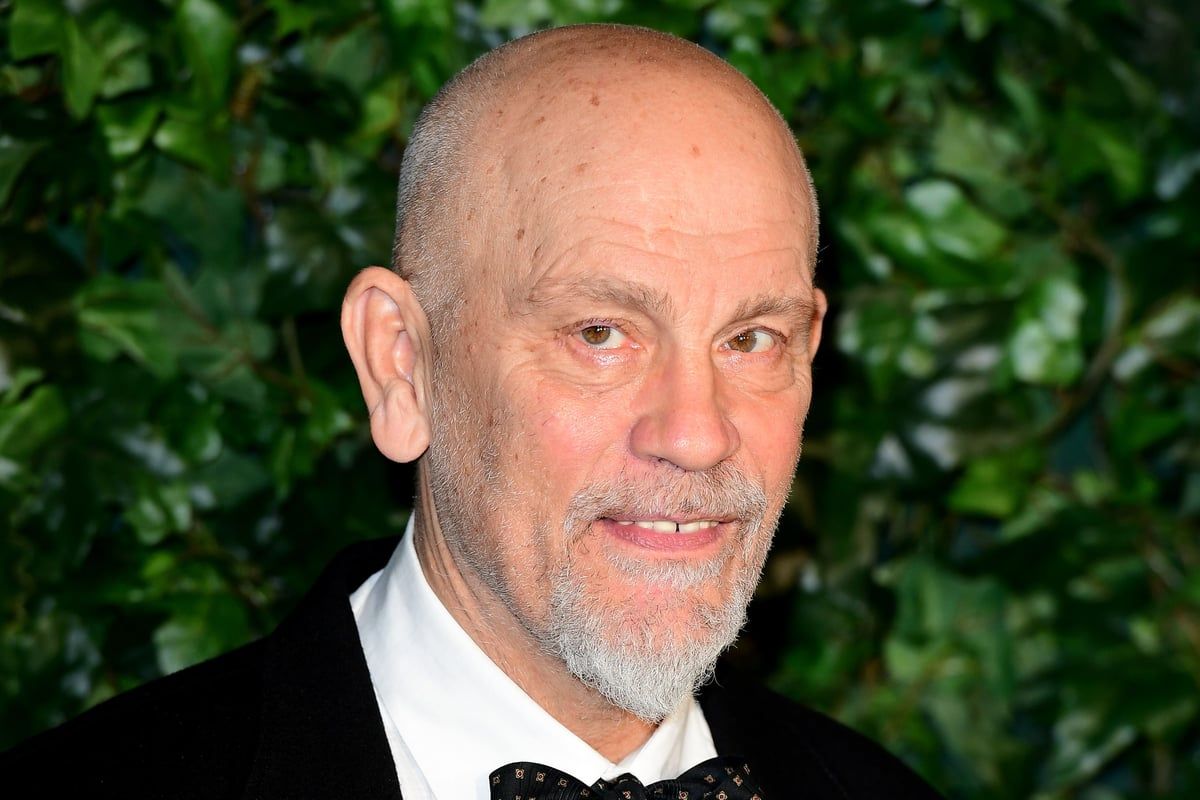
Today, Malkovich remains an enduring cultural icon whose financial footprint stretches far beyond acting. From award-winning independent film production to avant-garde fashion design and luxury real estate, his financial portfolio reflects the same daring unpredictability that defines his performances.
The Anatomy of John Malkovich’s $65 Million Valuation
While exact figures for private wealth always involve estimations, the calculation surrounding John Malkovich’s financial standing generally hovers between $50 million and $70 million, with $65 million serving as the most cited benchmark. This figure is rooted in decades of high-level work across multiple creative sectors rather than a single blockbuster payout.
Unlike action stars who command standard $20 million upfront salaries per film, Malkovich has pursued a hybrid compensation model throughout his career. This balance includes:
- Prestige Studio Roles: Substantial base fees for high-profile studio projects such as In the Line of Fire, Con Air, Burn After Reading, and Red.
- Television and Streaming Commitments: Lucrative recurring and starring roles in modern episodic series, including Billions, The New Pope, and Netflix’s Space Force.
- Backend Equity and Royalties: Profit participation points on critically acclaimed lower-budget projects and ongoing residual checks from a catalog spanning more than 100 screen appearances.
- Commercial Production Overhead: Executive and producing credits through his co-founded production banner, Mr. Mudd.
The 2008 Catastrophe: Wiped Out by Bernie Madoff
To understand the true weight of Malkovich’s current wealth, one must examine the devastating collapse of his finances in late 2008. Malkovich was among the high-profile victims of Bernard L. Madoff’s multibillion-dollar Ponzi scheme, which unraveled during the height of the global financial crisis.
Malkovich had entrusted his life savings to financial advisors who funneled his liquid capital into Madoff’s fraudulent investment funds. When federal authorities arrested Madoff in December 2008, Malkovich’s liquid assets were wiped clean. In federal bankruptcy filings, Malkovich later submitted a personal claim for approximately $2.2 million in direct cash losses, though secondary exposure through diversified feeder funds cost him considerably more.
Rather than retreating or declaring personal bankruptcy, the actor made a conscious psychological choice to view the catastrophe practically. He famously remarked that he did not view himself as a tragic figure, noting that he had simply made a bad investment choice in an industry where millions of everyday people were suffering far worse economic devastation.
Rebuilding from the Ground Up: The Work Ethic Era
The Madoff disaster forced Malkovich into an intensive work cycle that ultimately laid the foundation for his modern fortune. Entering his late 50s—an age when many celebrated actors begin scaling back their schedules—Malkovich took on an extraordinary volume of work.
Between 2009 and 2019, Malkovich appeared in more than 30 feature films, directed high-profile European stage productions, appeared in commercial campaigns for global brands, and took on character arcs in major television dramas. His willingness to work internationally—in France, Italy, the United Kingdom, and Eastern Europe—allowed him to capitalize on global tax incentives and direct co-production funds, significantly accelerating his financial recovery.
Behind the Camera: The Mr. Mudd Production Empire

A substantial portion of Malkovich’s financial stability stems not from his face on the poster, but from his name in the credits as a producer. In 1998, Malkovich co-founded the independent production company Mr. Mudd alongside producers Lianne Halfon and Russell Smith.
Mr. Mudd quickly proved that it could produce critical darlings that also yielded outsized financial returns:
- Ghost World (2001): A cult classic that cemented the company’s reputation for supporting distinctive, non-traditional narratives.
- Juno (2007): The crown jewel of Mr. Mudd’s commercial catalog. Produced on an estimated budget of roughly $7 million, the film grossed over $232 million worldwide, generating enormous backend profits for its production team.
- The Perks of Being a Wallflower (2012): A critical and commercial success that reinforced the company’s viability in the coming-of-age market.
By controlling intellectual property and holding production equity, Malkovich ensured a recurring stream of distribution royalties and executive fees that cushioned the erratic nature of acting incomes.
Ventures in Fashion, Stage, and Real Estate
Malkovich’s pursuits outside traditional entertainment also contribute to his overall asset sheet. An avid textile collector and passionate draftsman, he launched his own high-end menswear line, Technobohemian, in 2010. While boutique fashion lines rarely produce studio-sized windfalls, Technobohemian operated as a profitable specialty label distributed throughout select European boutiques and direct-to-consumer digital channels.
Additionally, Malkovich’s global lifestyle has involved strategic real estate holdings. Over the decades, he has owned substantial residential properties, including historic residences in the Luberon valley in Provence, France, luxury apartments in Europe, and real estate holdings in the United States. While he has liquidated various assets over time, his real estate portfolio has provided long-term capital appreciation that counterbalanced market volatility.
Malkovich’s Financial Philosophy
In various interviews, Malkovich has offered an unusually candid perspective on wealth. He has consistently argued that money affords two things above all else: artistic freedom and comfort. Having experienced total financial disruption firsthand, his approach to capital accumulation is remarkably detached.
"I had to go back to work. So I worked," he once explained when asked about rebuilding his fortune. He chose never to view money as a measure of his intrinsic worth or creative success. Ironically, this detached pragmatism enabled him to accept unconventional roles—such as playing an exaggerated caricature of himself in commercial campaigns or starring in niche indie projects—that kept his profile high and his commercial value steady.
Key Financial Takeaways from Malkovich’s Journey
The narrative surrounding John Malkovich’s fortune offers valuable insights into professional survival and money management:
- Human Capital Outlasts Liquid Assets: When fraudulent funds took his cash reserves, Malkovich’s skill set, professional reputation, and work ethic remained intact, allowing him to regenerate his income rapidly.
- Diversification Mitigates Downside: Maintaining interests in production, international stage directing, and episodic television protected him from depending entirely on domestic theatrical box office numbers.
- A Pragmatic Response to Crisis: Rather than spending years in debilitating litigation or emotional paralysis, Malkovich focused his energy on production, proving that immediate action is often the most effective remedy for financial shock.
Ultimately, John Malkovich’s multi-million dollar status is not an accident of Hollywood privilege. It is the hard-won outcome of a seasoned artist who encountered financial ruin, picked up his tools, and worked his way back to the top of his industry.