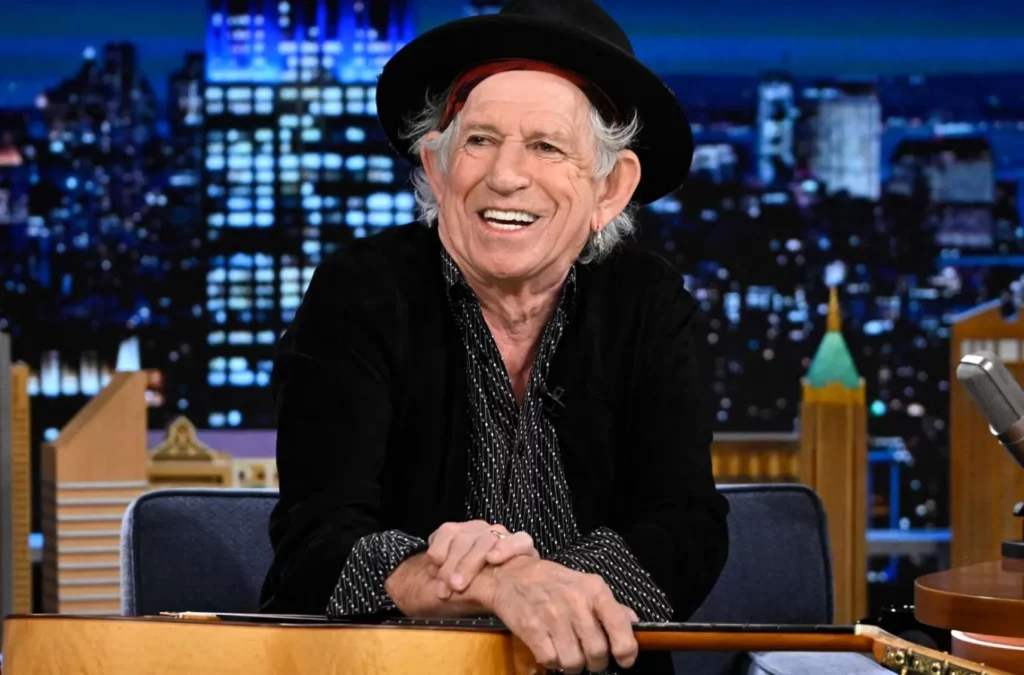
Inside Keith Richards’ $300 Million Fortune
When people think of Keith Richards, they picture a hurricane of guitar riffs, swagger, and the enduring spirit of rock and roll rebellion. Yet, behind the pirate persona and the legendary escapades lies a deeply shrewd financial mind. Today, **Inside Keith Richards’ $300 Million Fortune: How Music Rules and Math Go Hand in Hand!**, we find a masterclass in longevity, publishing rights management, and the unyielding power of compound interest applied to songwriting.

While many rock stars of the 1960s and 1970s squandered their fortunes on poor management, fast living, and bad contracts, Richards and his partner in crime, Mick Jagger, treated their art as a serious business. Understanding how a staggering $300 million fortune was amassed reveals that rock music is just as much about mathematics as it is about rhythm and blues.
The Anatomy of a $300 Million Rock Fortune
Accumulating a net worth estimated around $300 million does not happen by accident. For Richards, the wealth generation is a multi-stream engine powered by decades of relentless touring, lucrative merchandise, and—most importantly—intellectual property.
Touring as a Financial Powerhouse
The primary driver of the Rolling Stones' modern wealth is their live performances. Long after other bands of their generation have retired, the Stones continue to sell out stadiums worldwide. Ticket prices, VIP packages, and corporate sponsorships generate tens of millions of dollars per tour leg.
Because Richards owns a substantial stake in the touring entity, every chord he strikes on stage translates directly into a massive payout. In the modern music economy, where streaming services pay fractions of a cent per play, the live stage is where legacy acts truly capitalize on their historical footprint.
Publishing Rights and Royalties
While touring brings in huge chunks of cash in real-time, songwriting is the gift that keeps on giving. Richards, alongside Jagger, penned some of the most recognizable anthems in rock history, including "Satisfaction," "Brown Sugar," and "Start Me Up."
Video: Keith Richards Lifestyle | Net Worth, Fortune, Car Collection, Mansion...

- Performance Royalties: Every time a Rolling Stones song is played on the radio, in a commercial, or over the speakers at a sports stadium, performance rights organizations collect and distribute royalties.
- Mechanical Royalties: Physical sales of vinyl records, CDs, and digital downloads yield a percentage cut directly to the songwriters.
- Sync Licensing: Allowing classic tracks to appear in Hollywood films and television shows commands massive licensing fees, adding steady streams of passive income.
How Music Rules and Math Go Hand in Hand!
The intersection of art and arithmetic is where Richards' financial durability truly shines. Creativity gives birth to the music, but mathematics preserves and multiplies it. Consider the numbers behind a global catalog spanning six decades.
Songwriting royalties operate on precise percentages, publishing splits, and long-term amortization schedules. Richards understood early on that owning your masters and holding onto your publishing publishing shares is non-negotiable. By refusing to sign away his copyright ownership during the predatory contracting eras of early rock and roll, he ensured that the math worked heavily in his favor as the catalog appreciated over time.
Compound Interest and Asset Diversification
A $300 million fortune cannot simply sit in a checking account; it must be managed with financial precision. Richards and his business advisors have navigated decades of shifting tax codes, currency fluctuations, and global economic downturns.
Real estate holdings in places like the UK, the United States, and private retreats serve as stable, appreciating assets. Meanwhile, conservative portfolio management ensures that the liquid cash generated from tours and royalties is reinvested to outpace inflation. It is a quiet, disciplined financial strategy that stands in stark contrast to the chaotic lifestyle projected on stage.
The Legacy of Sound and Numbers
Keith Richards remains a living legend not just because he survived the excesses of the 20th century, but because he outsmarted the industry that often chews up and spits out its greatest talents. His journey proves that longevity in the arts requires more than raw talent—it demands an intuitive grasp of business fundamentals.
Ultimately, inside Keith Richards’ $300 million fortune lies a blueprint for modern artists. By blending creative genius with absolute control over intellectual property and sound financial stewardship, Richards turned five decades of rock and roll into an indestructible financial empire.