Insider Tips for Reciting Our Father in Heaven Spanish Style
For English speakers attending a bilingual Mass, participating in a family Rosary, or traveling through Latin America and Spain, reciting the Lord's Prayer in Spanish—the Padre Nuestro—is a deeply moving spiritual experience. Yet simply reading the translated words off a missalette often feels clunky and unnatural. To capture the prayer's genuine liturgical flow, you need practical insider tips for reciting Our Father in heaven Spanish style, moving past textbook phonetic drills into the living rhythm of the global Spanish-speaking Church.
The Traditional Text: What You Need to Know First
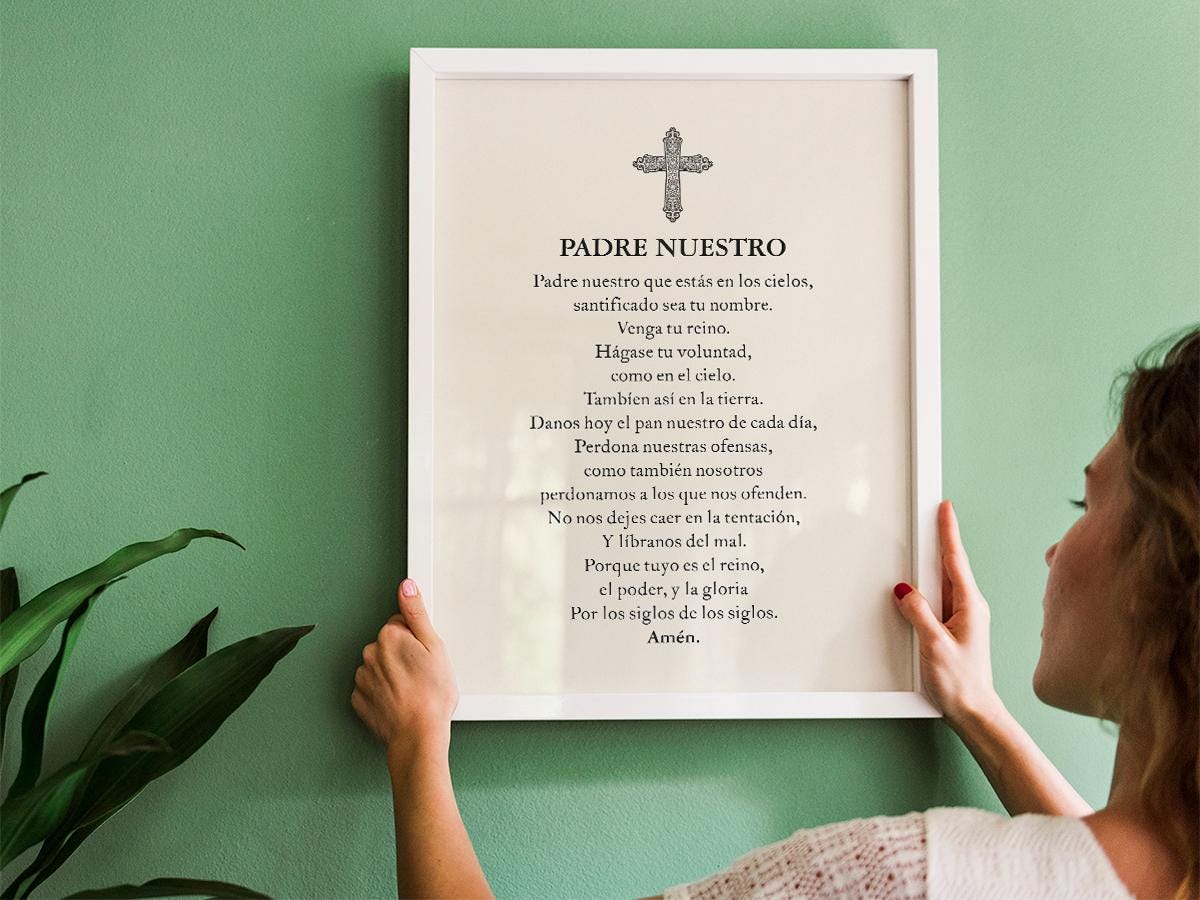
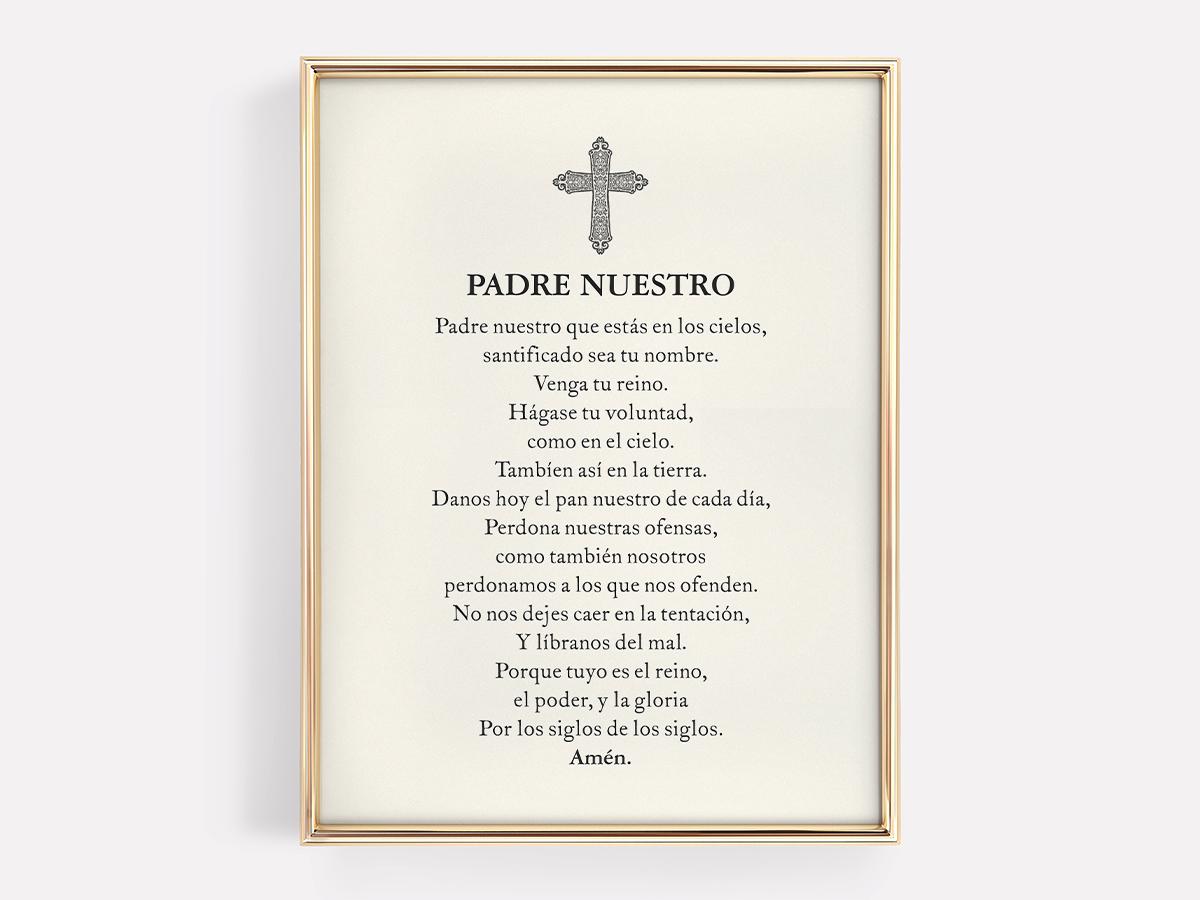
Before refining your delivery, it helps to anchor yourself in the standard Spanish liturgical text used across Catholic dioceses throughout Latin America and the United States. While subtle historical variations exist between Peninsular (European) Spanish and American Spanish, this version represents the universal standard encountered in most parishes:
Padre nuestro, que estás en el cielo,
santificado sea tu Nombre;
venga a nosotros tu reino;
hágase tu voluntad en la tierra como en el cielo.
Danos hoy nuestro pan de cada día;
perdona nuestras ofensas,
como también nosotros perdonamos a los que nos ofenden;
no nos dejes caer en la tentación,
y líbranos del mal. Amén.
In Spain, you will occasionally hear "perdona nuestras deudas, como también nosotros perdonamos a nuestros deudores", mirroring older biblical translations, but the version above remains the most widely recognized communal recitation worldwide.
Understanding the Rhythmic Nature of Spanish Prayer
English is a stress-timed language, meaning speakers lengthen stressed syllables and compress unstressed ones. Spanish, conversely, is syllable-timed. Every syllable receives an approximately equal duration, creating a staccato, percussive cadence that sounds almost musical when recited in unison.
When praying the Padre Nuestro in an English-speaking congregation, individuals often pause at different points. In a Spanish-speaking parish, the congregation breathes and speaks as one single, rhythmic wave. Achieving that authentic delivery requires synchronizing your natural pauses with traditional communal cadence.
Insider Tips for Reciting Our Father in Heaven Spanish Style
To recite the prayer with the warmth, reverence, and fluid cadence of a native speaker, keep these fundamental adjustments in mind:
1. Master the Sinalefa (Vowel Linking)
The single most important secret to sounding natural in Spanish is the sinalefa—the blending of the final vowel of one word into the initial vowel of the next. English speakers tend to insert glottal stops between words, which breaks the prayer's melodic contour.
- "que estás en el cielo": Rather than pronouncing five distinct words (que - es-tás - en - el - cie-lo), blend the vowels together into a smooth stream: ques-tás-e-nel-cie-lo.
- "venga a nosotros": The double 'a' merges into one sustained vowel sound: ven-ga-no-so-tros.
- "hágase tu voluntad en la tierra": Connect voluntad and en effortlessly: vo-lun-ta-den-la-tie-rra.
2. Keep Vowels Short and Pure
English vowels tend to drift into diphthongs. An English "o" frequently ends with an implicit "w" sound ("oh-oo"), and an "e" drifts into an "ay" sound. In Spanish prayer, every vowel must remain crisp, pure, and unchanging from start to finish:
- A is always open and bright (like "father").
- E is always short and precise (like "bed"), never drawn out into "bay."
- I is sharp (like "machine").
- O is rounded and clipped (like the first sound in "omlet"), never "oh."
- U is smooth (like "flute").
3. Honor the Proparoxytone (Esdrújula) Accents
The Spanish Padre Nuestro contains several prominent palabras esdrújulas—words accented on the third-to-last syllable. These words give the prayer its majestic, liturgical cadence:
- Hágase (HA-ga-se, not ha-GA-se)
- Perdónanos (per-DO-na-nos, not per-do-NA-nos)
- Líbranos (LI-bra-nos, not li-BRA-nos)
Hit these accented syllables with crisp vocal conviction, then let the remaining two syllables taper off gently. This prevents the dragging sensation common among non-native reciters.
4. Soften the Intervocalic Consonants
Spanish consonants are much softer than their English counterparts. The letters D, B, and V become gentle fricatives when nestled between vowels:
- In "santificado" and "cada día", the 'd' sounds closer to the voiced "th" in the English word feather than the hard English 'd' in door. Place the tip of your tongue lightly behind your upper front teeth rather than snapping against the alveolar ridge.
- In "voluntad", the final 'd' is barely whispered. In liturgical prayer, native speakers soften it almost to an airy sigh rather than an explosive terminal click.
5. Silence the Letter 'H' Completely
In Spanish, the letter 'h' is entirely mute. In the petition "hágase tu voluntad", do not exhale an English "h" sound. The word begins directly on the pure vowel "A" (AH-gah-seh). Similarly, hoy sounds simply like oy.
Common Pitfalls and How to Overcome Them
Even seasoned students of the Spanish language can stumble over subtle devotional conventions. Avoid these frequent missteps:
- Rushing the Double 'R': The word tierra requires a clean alveolar trill. If you cannot yet trill your 'r', use a clear, single tap (like the 'tt' in the American pronunciation of butter) rather than forcing an English back-of-the-throat 'r'. A clean tap sounds far more natural than a heavy English throat sound.
- Splitting Diphthongs: Words like cielo, reino, and tierra contain diphthongs that belong in a single syllable. Cie-lo is two syllables, never three (see-eh-lo). Rei-no is two syllables (ray-no), not three.
- Over-Emphasizing the Final Doxology: In Protestant traditions, the doxology ("For thine is the kingdom...") is recited immediately after "deliver us from evil." In Catholic liturgical settings, the congregation stops at "y líbranos del mal. Amén." During Mass, the priest offers an embolism (an intervening prayer), after which the faithful respond: "Tuyo es el reino, tuyo el poder y la gloria, por siempre, Señor." Be observant of the liturgical context so you do not jump ahead prematurely.
A Practical Daily Practice Routine
Internalizing these nuances requires muscle memory rather than intellectual study. Spend five minutes each day working through the prayer line by line:
- Listen to Authentic Chants: Look up recordings of the Padre Nuestro recited in monastic communities or sung in choral arrangements. Pay close attention to how the voices link syllables across word boundaries.
- Whisper-Read for Vowel Purity: Recite the prayer in a stage whisper. Removing vocal chord vibration forces your mouth, tongue, and lips to articulate pure vowels and soft consonants accurately.
- Pray at Half-Speed: Slow down the tempo intentionally. When you recite slowly, you can monitor your tongue position on words like santificado and ensure you aren't slipping into English vowel glides.
Conclusion: Praying with the Heart
Technical precision is an act of respect, but reverence is the ultimate goal. When you integrate these phonetic adjustments and master the natural communal cadence, reciting the Padre Nuestro ceases to be an exercise in mental translation. It becomes an effortless, heartfelt act of communion with centuries of Hispanic devotion and millions of believers worldwide.


