Interpreting Net Worth by Age in 2024
When evaluating your financial health, it is easy to fall into the trap of comparing your bank account to headline-grabbing statistics. However, looking at raw numbers without context can be misleading. Understanding the definitive guide to interpreting net worth by age in 2024 allows you to measure genuine progress, account for macroeconomic shifts like inflation and interest rates, and set realistic milestones for your financial journey.

What is Net Worth and Why Does Age Matter?
Net worth is simply the total value of everything you own (your assets) minus everything you owe (your liabilities). Assets include cash savings, retirement accounts, real estate equity, investments, and valuable personal property. Liabilities encompass mortgages, student loans, credit card debt, and auto loans.
Age is a critical variable in this equation because wealth accumulation is not a sprint; it is a compounding marathon. A 25-year-old just entering the workforce has had very little time to compound investments or pay down principal on a home, whereas a 55-year-old has experienced decades of market growth, career progression, and asset amortization. Therefore, net worth benchmarks must be segmented by age brackets to provide meaningful insight.
Federal Reserve Data: Averages vs. Medians
When economists analyze wealth, they typically rely on data from the Federal Reserve’s Survey of Consumer Finances. To interpret this data accurately, you must understand the difference between two primary metrics:
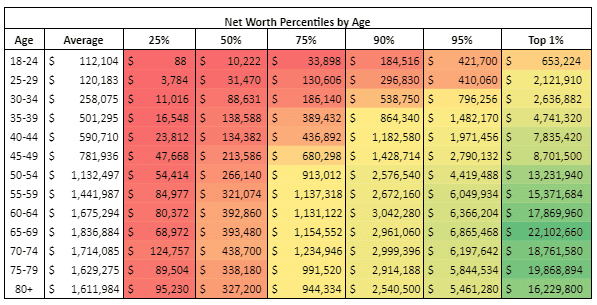
- Average (Mean) Net Worth: This is calculated by adding up all household net worths in an age bracket and dividing by the total number of households. Averages are often heavily skewed upward by ultra-high-net-worth individuals.
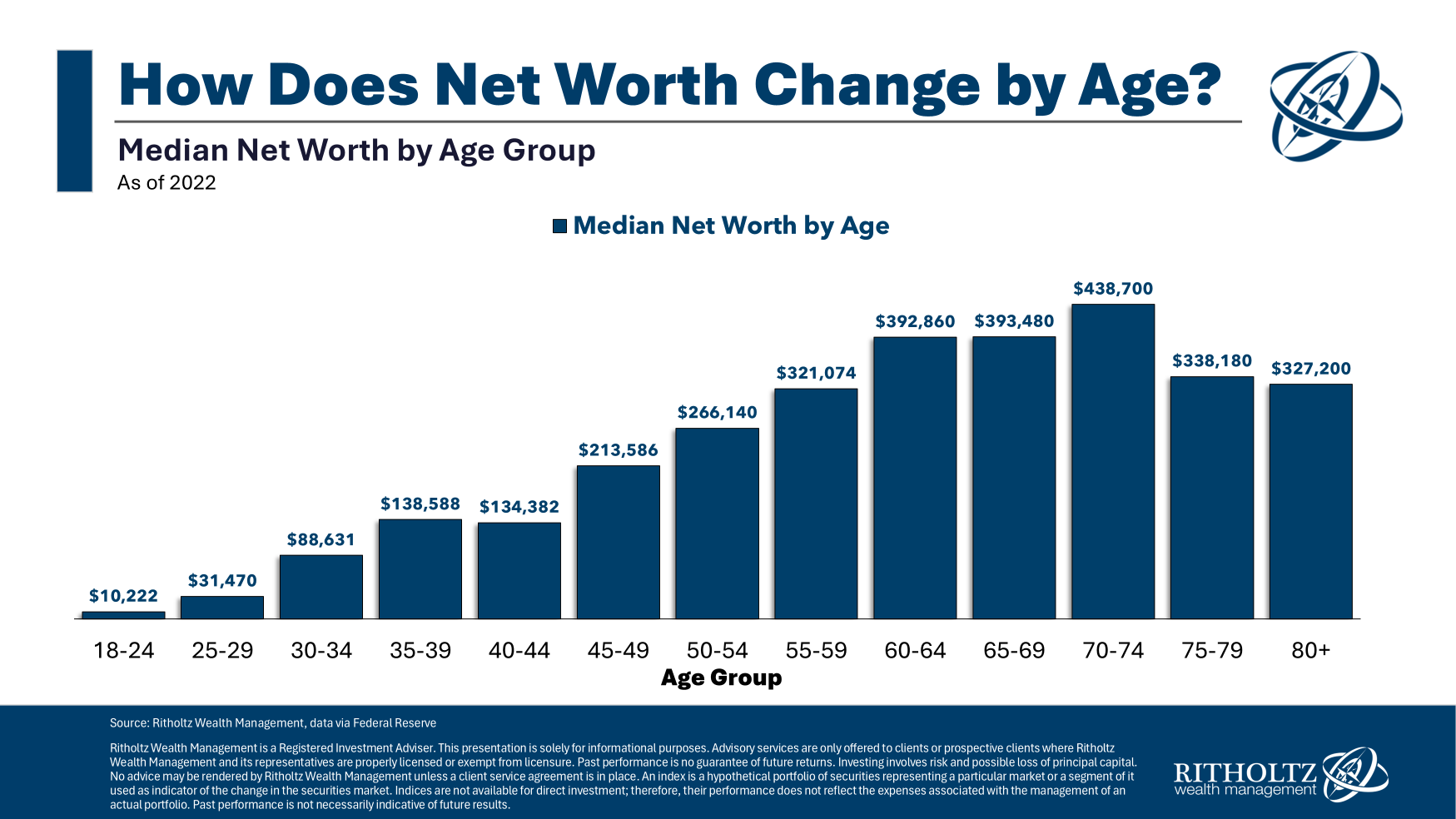
- Median Net Worth: This represents the exact midpoint of the data set—half of the population has more, and half has less. The median is almost always a much more realistic reflection of the typical household's financial standing.
The Definitive Guide to Interpreting Net Worth by Age in 2024
To help you contextualize your personal balance sheet, let us break down what financial health looks like across different stages of adulthood using recent economic trends and Federal Reserve baseline projections.
Under 35: The Foundation-Building Years
Focus: Debt management, building an emergency fund, and starting to invest early.
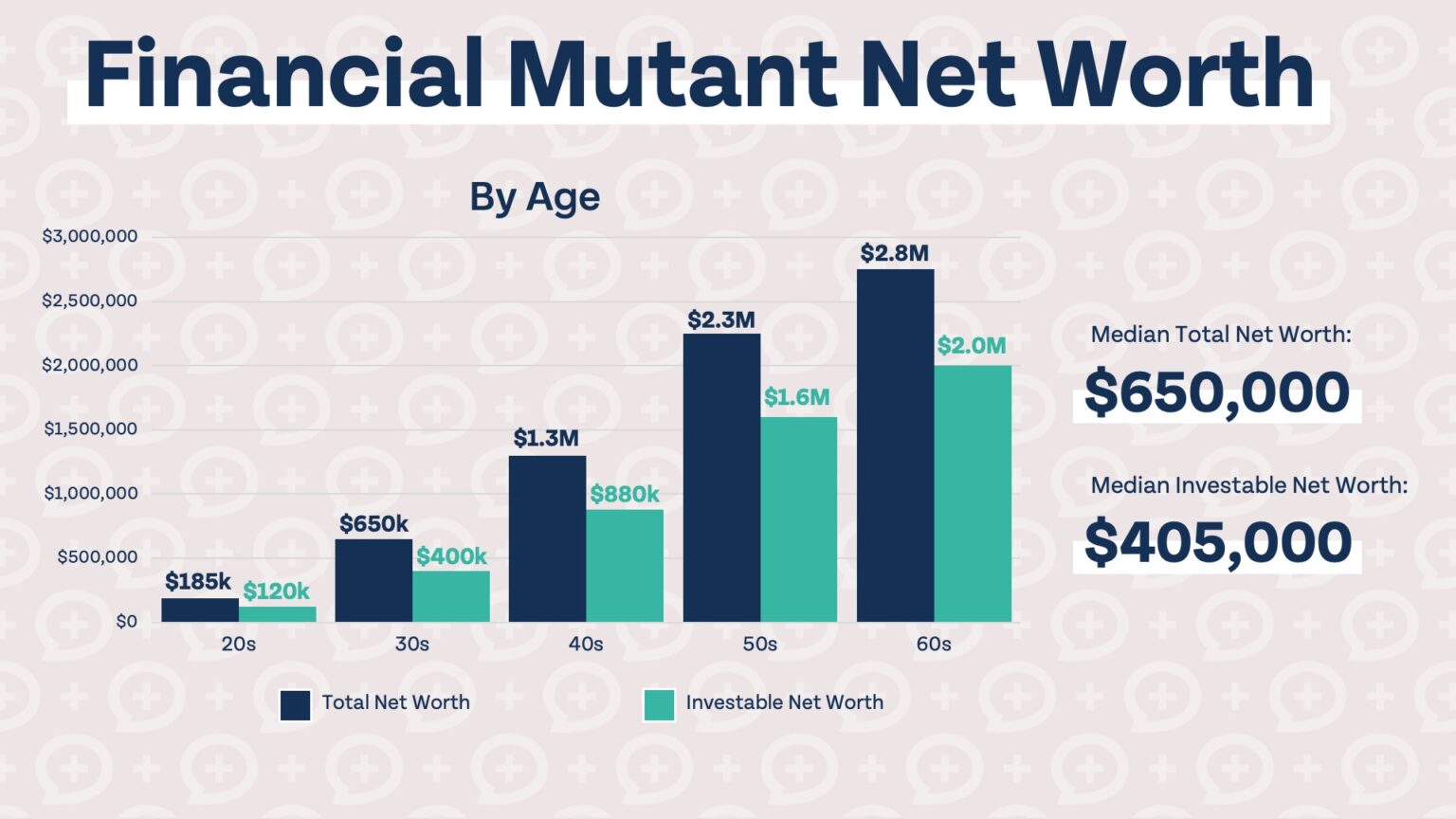
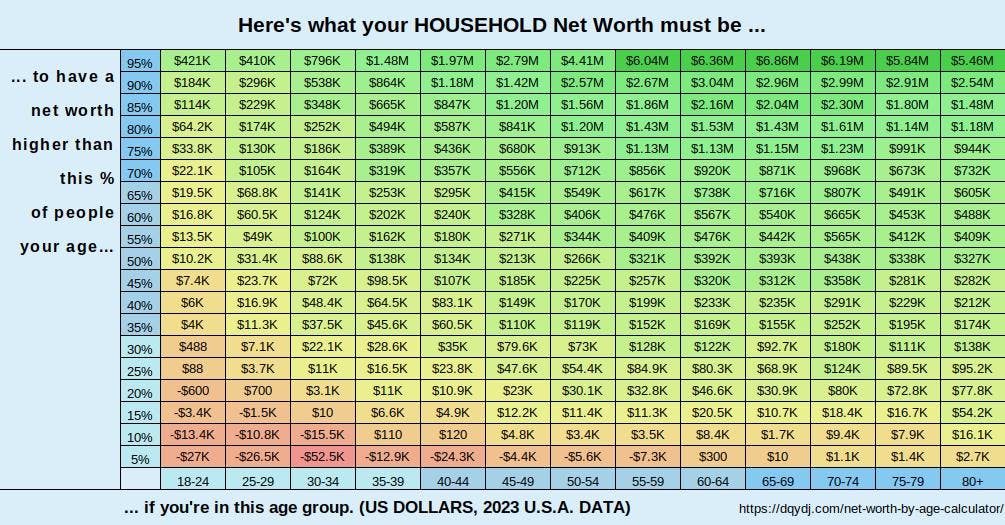
For those under 35, a negative or near-zero net worth is entirely normal. Many individuals in this cohort are fresh out of college, carrying significant student loan burdens, and have yet to purchase real estate. The median net worth for this group typically hovers around $15,000 to $39,000, while the average can be upwards of $130,000 due to early inheritors or high earners in technology and finance.
If your net worth is low or negative in this bracket, do not panic. Your primary asset right now is your earning potential and time. Focus on capturing employer matches on 401(k) plans and avoiding high-interest consumer debt.
Ages 35–44: The Acceleration Phase
Focus: Career advancement, homeownership, and consistent retirement contributions.
By the time individuals reach their late 30s and early 40s, financial habits begin to yield visible results. The median net worth for this age group generally ranges between $90,000 and $140,000, with averages pushing past $430,000.
In this decade, home equity often becomes a major driver of net worth. As monthly mortgage payments pay down the principal and local real estate markets appreciate, net worth climbs steadily. Juggling family expenses, childcare, and mortgage payments makes budgeting crucial during these years.
Ages 45–54: Peak Earning and Mid-Career Growth

Focus: Maximizing retirement savings, tuition planning, and scaling investments.
The 45–54 age bracket represents the peak earning years for many professionals. The median net worth jumps significantly to roughly $160,000 to $250,000, while the average can exceed $800,000.
At this stage, compound interest starts doing the heavy lifting. Investment portfolios should be well-established. However, individuals in this group often face financial crosswinds, such as funding college education for teenagers while simultaneously trying to aggressively catch up on retirement savings if they started late.
Ages 55–64: The Pre-Retirement Horizon
Focus: Retrenching expenses, asset protection, and retirement tax planning.
As retirement approaches, net worth usually hits its zenith. The median net worth for households aged 55 to 64 sits around $260,000 to $300,000, with averages scaling past $1.1 million.
This is a critical period for risk management. A severe market downturn right before retirement can disrupt long-term plans. Many pre-retirees begin shifting their asset allocation toward a more conservative posture and ensuring their primary residence is close to being paid off.
Ages 65 and Older: Preservation and Drawdown
Focus: Sustainable withdrawal rates, healthcare planning, and estate management.
For retirees and those aged 65 plus, the median net worth remains robust at around $265,000 to $400,000, with averages remaining above $1 million. In retirement, net worth may plateau or slowly decline as individuals draw down their accumulated assets to fund their living expenses.
How to Use These Benchmarks Constructively
If your net worth falls below the median for your age group, view it as motivation rather than a verdict on your self-worth. Everyone's financial timeline is unique. Career pivots, health emergencies, local cost-of-living differences, and familial obligations can drastically alter your path.
Instead of chasing arbitrary age-based milestones, focus on personal velocity:
- Are you saving a consistent percentage of your income each month?
- Is your high-interest debt decreasing over time?
- Are your investments diversified and aligned with your timeline?
Actionable Strategies to Boost Your Net Worth in 2024
Regardless of where your current balance sheet stands, you can accelerate your wealth-building trajectory by implementing a few foundational rules:
- Automate Your Savings: Treat your savings and investment contributions like non-negotiable bills. Set up automatic transfers on payday so you never see the cash in your checking account.
- Optimize Your Housing Costs: Housing is typically the largest expense in any household. Keeping your housing costs below 30% of your gross income frees up capital for wealth-generating assets.
- Fight Lifestyle Inflation: As your income grows with promotions or job changes, resist the urge to immediately upgrade your car, clothes, or apartment. Direct the pay raise straight into investments.
- Review and Rebalance Annually: Take inventory of your assets and liabilities at least once a year. Tracking your progress creates accountability and highlights areas where fees or bad habits are draining your wealth.
Ultimately, interpreting net worth by age is simply a tool to help you course-correct. By focusing on steady, incremental habits rather than superficial comparisons, you can build lasting financial security in 2024 and beyond.