IRS Form 4868 Guide: How to File for a Tax Extension
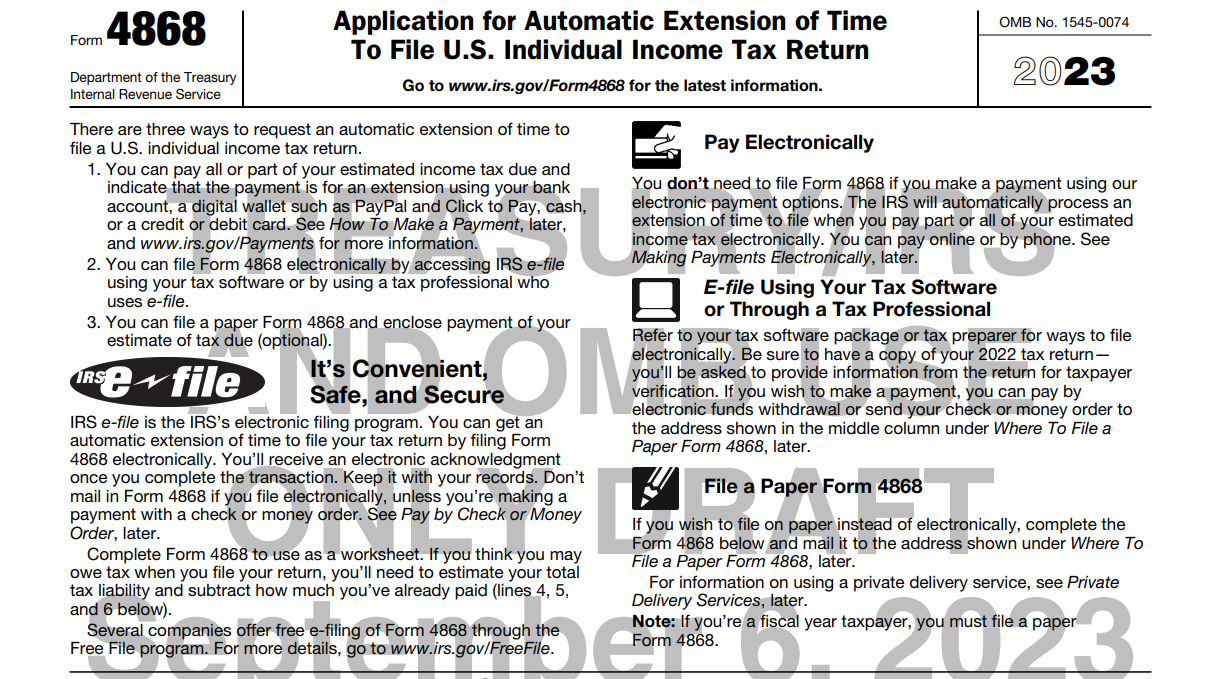
Life happens, and sometimes you simply cannot gather all your financial documents by the April tax filing deadline. Fortunately, the IRS provides a straightforward way to buy yourself more time without facing immediate late-filing penalties. By submitting the 4868 form (Application for Automatic Extension of Time To File U.S. Individual Income Tax Return), you can secure an extra six months to complete your paperwork.
Filing for an extension is a common practice used by millions of taxpayers every year. However, it is vital to understand that an extension of time to file is not an extension of time to pay your taxes. Getting this distinction right can save you hundreds of dollars in unnecessary interest and penalties.
What Is IRS Form 4868?
IRS Form 4868 is the official document used by individuals to request an automatic six-month extension to file their federal income tax return (Form 1040 or Form 1040-SR). When approved, your new filing deadline typically shifts from mid-April to mid-October.
The term 'automatic' is key here. As long as you submit the form correctly and on time, the IRS generally grants the extension without requiring you to provide a reason or an excuse for why you need more time.
Extension to File vs. Extension to Pay
The single biggest misconception about the 4868 form is that it delays your tax bill. It does not. An extension gives you more time to send your paperwork, but it does not give you more time to pay any taxes you owe.
If you estimate that you will owe money to the IRS, you should pay as much of that estimated liability as possible by the original April deadline. Failing to do so triggers two main financial consequences:
- Failure-to-Pay Penalty: Usually charged at 0.5% of your unpaid taxes per month.
- Interest: Charged on both the unpaid tax amount and any accumulated penalties, compounding daily until paid in full.
By estimating your tax liability and paying it upfront—even if you file the paperwork later—you can minimize or completely avoid these charges.
Who Can Use the 4868 Form?
Most individual taxpayers can use this form to extend their filing window. This includes U.S. citizens and resident aliens living in the United States, as well as those living abroad.
You can use the form whether you plan to file a paper return or use commercial tax preparation software. If you are a calendar-year taxpayer, the standard extended deadline moves from April 15 to October 15.
How to Complete and File Form 4868
Filing for an extension is remarkably simple. You have three primary methods for submitting your request to the IRS.
1. Electronic Filing (E-File)
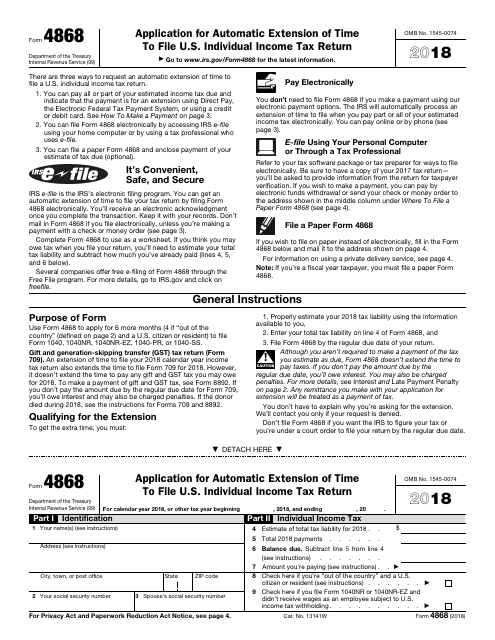
The fastest and most reliable way to submit the 4868 form is electronically. You can do this through several channels:
2. Filing by Mail
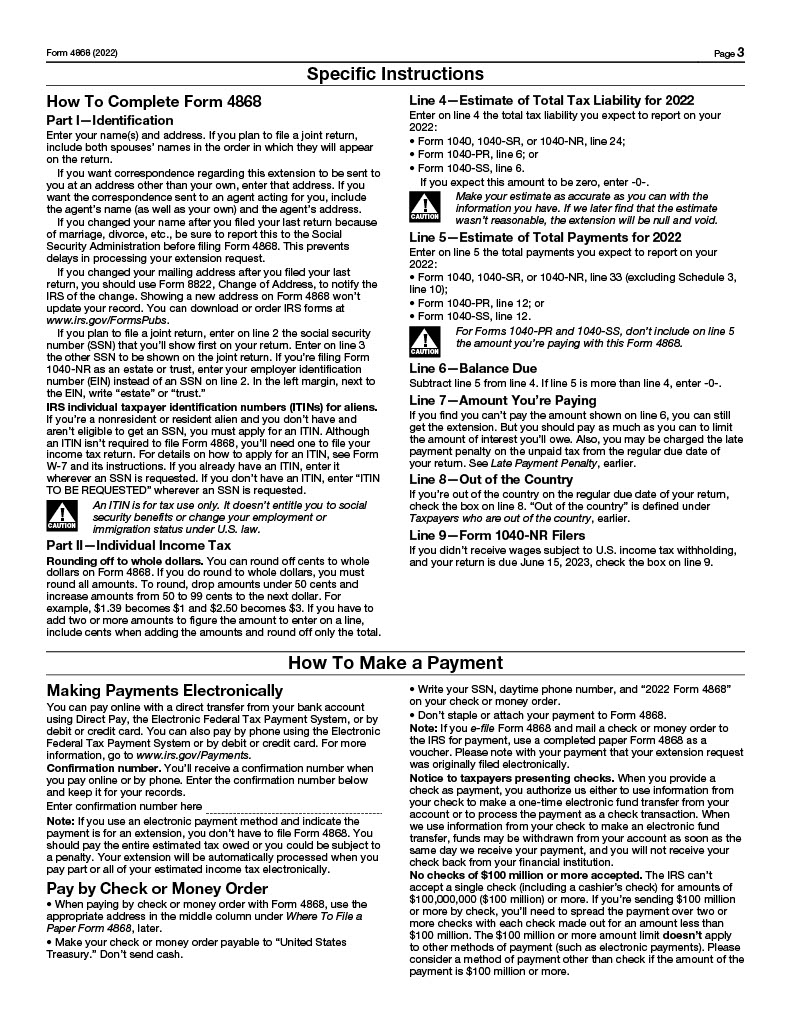
If you prefer traditional methods, you can download a paper copy of the 4868 form from the IRS website, fill it out by hand, and mail it to the address listed in the instructions. The correct mailing address depends on your state of residence and whether you are enclosing a payment.
If you mail a paper form, ensure it is postmarked on or before the original April tax deadline. It is also wise to use certified mail with a return receipt so you have proof of the timely filing.
Information Required on the Form
Whether you file online or on paper, the information required is minimal:
- Your name, address, and Social Security Number (SSN). If you are filing jointly, include your spouse's information as well.
- An estimate of your total tax liability for the year.
- The total tax payments you have already made (such as federal income tax withheld from paychecks or quarterly estimated payments).
- The balance you owe (subtracting your payments from your estimated liability).
Special Rules and Exceptions
While the standard extension grants six months, certain groups receive different timelines or automatic accommodations.
Taxpayers Living Abroad
If you are a U.S. citizen or resident alien living outside the United States and Puerto Rico, and your main place of business is abroad, you automatically receive a two-month extension to June 15 without filing anything. However, you can still file Form 4868 to push that deadline further to October 15.
Disaster Areas
If you live in a federally declared disaster area, the IRS often automatically postpones tax-filing and tax-payment deadlines for residents in that zone. Check the 'Tax Relief in Disaster Situations' page on the IRS website to see if your specific county or zip code qualifies for a broader extension.
Summary Checklist
Before submitting your extension request, review this quick checklist to ensure a smooth process:
- Estimate your total tax liability as accurately as possible.
- Make a payment for any estimated balance due to avoid penalties.
- Submit Form 4868 electronically or via mail before the April deadline.
- Mark your calendar for the new October deadline to file your complete return.
Taking a few minutes to file the 4868 form prevents rushed mistakes on your tax return and protects you from costly failure-to-file penalties.