IRS Schedule D Tax Deductions and Credits Explained
Understanding IRS Schedule D Tax Deductions and Credits Explained

When tax season arrives, investors often face a maze of forms designed to report income generated outside of standard wages. If you sold stocks, bonds, real estate, or other capital assets during the tax year, you will likely need to become familiar with Form 1040 and its accompanying attachments. While many taxpayers look for direct tax credits, understanding IRS Schedule D tax deductions and credits explained properly can significantly impact your final tax liability by allowing you to write off investment losses.
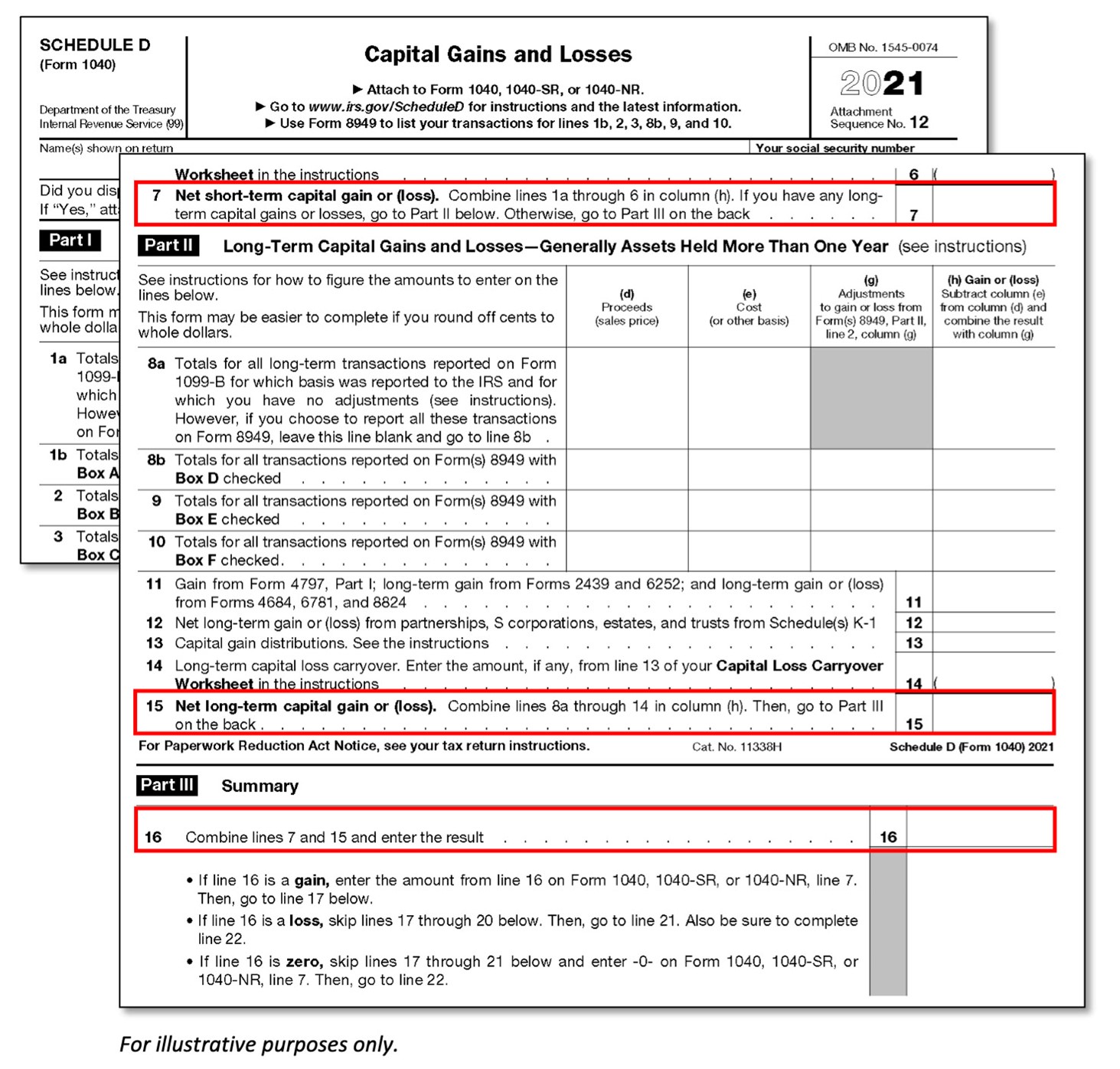
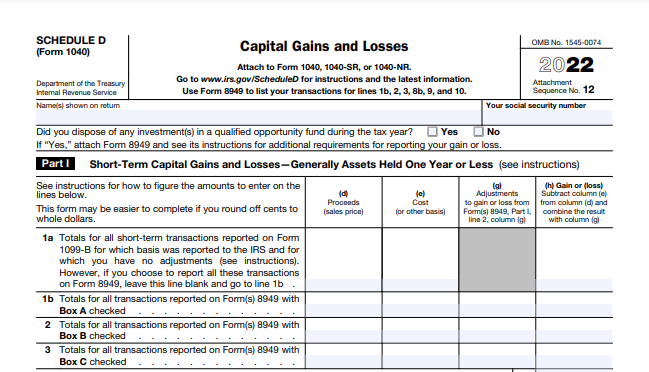
Schedule D is officially titled 'Capital Gains and Losses.' It serves as the primary mechanism for summarizing the profits and losses you realized from selling capital assets. While Schedule D itself is technically used to report gains and calculate deductible losses rather than generate direct tax credits, the net result directly influences your adjusted gross income (AGI) and, consequently, how much tax you owe.
What is Schedule D and Who Needs It?
Schedule D is a two-part tax form used by individual taxpayers, partnerships, and corporations to report the sale or exchange of capital assets. You cannot simply fill out Schedule D on its own; it relies heavily on data collected from another critical form: Form 8949.
You generally need to file Schedule D if you experienced any of the following during the tax year:
- You sold stocks, mutual funds, or exchange-traded funds (ETFs) for a profit or loss.
- You sold real estate that was not your primary residence under specific exclusion rules.
- You disposed of digital assets, such as cryptocurrencies, for cash or other property.
- You received a capital gain distribution from a mutual fund, even if you reinvested the dividends.
- You have a capital loss carryover from a previous tax year.
Short-Term vs. Long-Term Capital Gains and Losses
To correctly navigate Schedule D, you must separate your transactions into two distinct categories: short-term and long-term. The IRS taxes these two categories at very different rates, making proper classification essential for tax planning.
Short-Term Capital Assets
An asset is considered short-term if you held it for one year or less before selling or disposing of it. Short-term gains are taxed at your ordinary federal income tax bracket, which can range from 10% to 37% depending on your total taxable income. Because these rates are often higher, short-term trading strategies require careful tracking of any corresponding losses to offset the tax burden.
Long-Term Capital Assets
An asset qualifies as long-term if you held it for more than one year before selling it. The federal government rewards long-term investing by taxing these gains at preferential rates of 0%, 15%, or 20%, depending on your filing status and taxable income. High earners may also be subject to the 3.8% Net Investment Income Tax (NIIT).
How Capital Losses Work as Deductions
While most people focus on the gains, the true power of Schedule D lies in how it handles investment losses. If your investments decline in value and you sell them, you realize a capital loss. The IRS allows you to use these losses to offset your capital gains dollar-for-dollar.
The netting process follows a specific order:

- Net your short-term gains and short-term losses to find your total short-term position.
- Net your long-term gains and long-term losses to find your total long-term position.
- Combine the net short-term and net long-term results. If both are losses or if one offsets the other, you arrive at your net capital position for the year.
The $3,000 Capital Loss Deduction Limit
What happens if your total capital losses exceed your capital gains? After offsetting all of your capital gains for the year, you can use up to $3,000 of your remaining net capital losses to offset your ordinary income, such as wages, salaries, or business income. For married individuals filing separately, this limit is capped at $1,500.
If your net losses exceed the $3,000 annual limit, you do not lose the remaining balance. Instead, you can carry the excess loss forward into future tax years indefinitely until the deduction is completely exhausted.
Connecting Schedule D to Tax Credits and Other Deductions
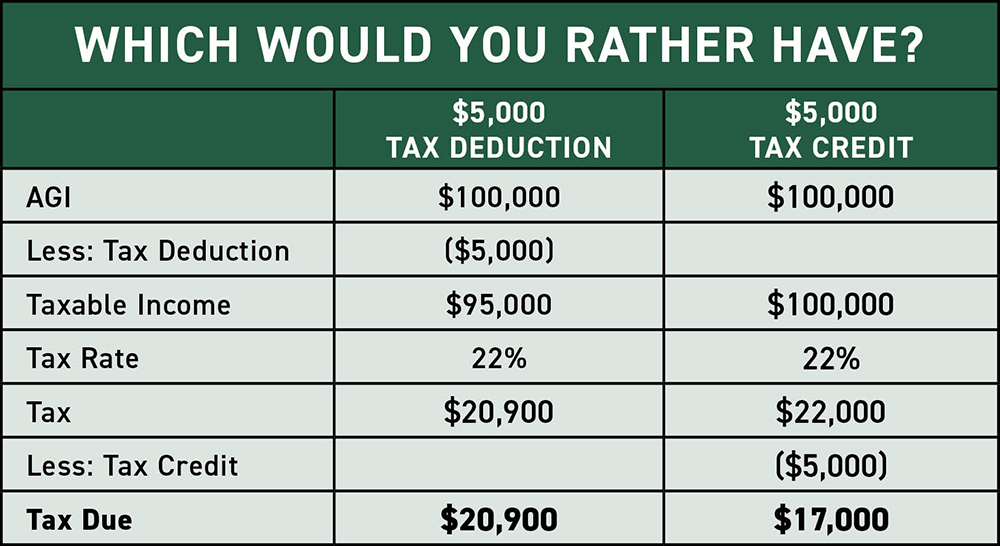
Strictly speaking, Schedule D calculates gains and losses rather than direct tax credits like the Child Tax Credit or the Earned Income Tax Credit. However, managing your capital gains and losses effectively can indirectly qualify you for various income-tested credits and deductions.
By lowering your Adjusted Gross Income (AGI) through strategic loss harvesting on Schedule D, you might successfully reduce your income below the phase-out thresholds for valuable tax benefits, including:
- Education tax credits, such as the Lifetime Learning Credit.
- Deductions for student loan interest.
- Eligibility to contribute to Roth IRAs or deduct Traditional IRA contributions.
- Lower Medicare Part B and Part D premiums, which are tied to modified adjusted gross income.
Common Mistakes to Avoid When Filing Schedule D
Taxpayers frequently make errors when transferring data from brokerage statements to tax software or paper forms. Avoiding these pitfalls ensures your return is processed smoothly without triggering an IRS audit or delay.
Forgetting Cost Basis Adjustments
Your cost basis is the original purchase price of the asset plus any commissions or fees. Sometimes, brokerages report a cost basis to the IRS that does not account for corporate actions, wash sales, or historical adjustments. Failing to report the correct cost basis can lead to paying taxes on phantom gains.
Violating the Wash-Sale Rule
If you sell a security at a loss and buy the same or a 'substantially identical' security within 30 days before or after that sale, the IRS disallows the loss for that tax year. This is known as the wash-sale rule. Trying to claim a disallowed loss on Schedule D is a common trigger for IRS notices.
Conclusion
Mastering IRS Schedule D is essential for any investor looking to optimize their annual tax liability. By accurately tracking your short-term and long-term transactions, leveraging capital losses to offset gains, and utilizing the $3,000 ordinary income deduction, you can keep more of your hard-earned investment returns. Always consult with a qualified certified public accountant (CPA) or tax professional to ensure your specific financial situation complies with current tax laws.