Is It Illegal to Touch a Manatee? Laws & Fines
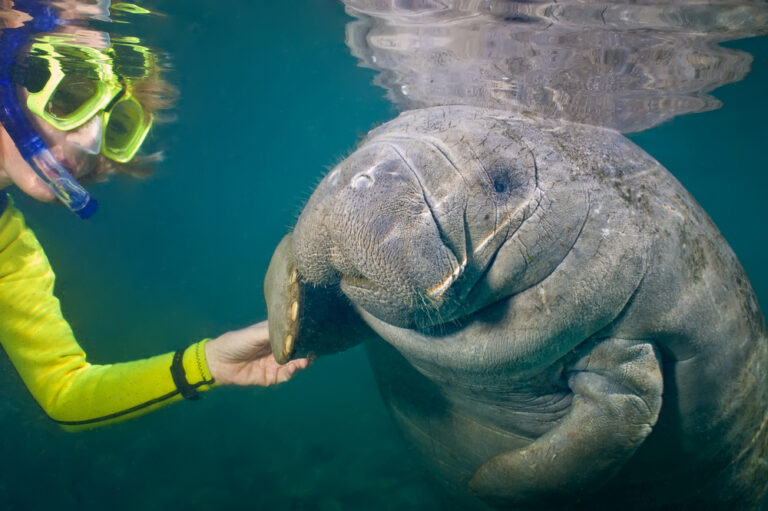
Gliding through Florida’s warm coastal springs, the gentle Florida manatee is one of the most beloved aquatic mammals in North America. Because these slow-moving creatures appear docile, curious, and remarkably approachable, many swimmers, paddleboarders, and divers find themselves asking: is it illegal to touch a manatee? The short and definitive answer is yes. In nearly all circumstances, touching, petting, chasing, or disturbing a manatee violates both state and federal wildlife protection laws.

Understanding the exact legal framework, the reasons behind these strict protections, and what constitutes unlawful contact can help you appreciate these magnificent animals safely without risking steep fines or jail time.
The Legal Reality: Is It Illegal to Touch a Manatee?
Under both United States federal law and Florida state law, touching a manatee is classified as an illegal act of harassment or unlawful "take." Manatees are protected by three major pieces of legislation designed to prevent human interference from driving their populations toward extinction.
1. The Marine Mammal Protection Act (MMPA) of 1972
At the federal level, all marine mammals—including the West Indian manatee—fall under the protection of the MMPA. This law prohibits the "take" of any marine mammal in U.S. waters. The statute defines a "take" broadly: to harass, hunt, capture, or kill, or attempt to harass, hunt, capture, or kill any marine mammal.
The law breaks harassment down into two levels:
- Level A Harassment: Any act that has the potential to injure a marine mammal or marine mammal stock in the wild.
- Level B Harassment: Any act that has the potential to disturb a marine mammal by causing disruption of natural behavioral patterns, including migration, breathing, nursing, breeding, feeding, or sheltering.
Reaching out to pet, rub, or hold onto a resting or swimming manatee clearly qualifies as Level B harassment because it alters the animal's natural behavior.
2. The Endangered Species Act (ESA) of 1973
Although the U.S. Fish and Wildlife Service (USFWS) reclassified the West Indian manatee from "endangered" to "threatened" in 2017 due to population gains, the animal retains the exact same legal safeguards under the ESA. Under federal code, harming, harassing, pursuing, or wounding a threatened species carries heavy federal consequences.
3. The Florida Manatee Sanctuary Act of 1978
Florida state law (Florida Statute 379.2431) provides an extra layer of defense. It states that it is unlawful for any person at any time, by any means, or in any manner intentionally or negligently to annoy, molest, harass, or disturb any manatee. Florida law makes it explicitly clear that physical contact initiated by a human constitutes disturbance.
Penalties for Touching or Harassing a Manatee
The authorities take human interactions with manatees very seriously. Violating manatee protection laws is not treated like a simple parking ticket; it carries criminal penalties.
- Federal Penalties: A conviction under the Endangered Species Act or Marine Mammal Protection Act can result in civil fines up to $50,000, criminal fines up to $100,000, and up to one year in federal prison.
- State Penalties: Under Florida law, harassing a manatee is a second-degree misdemeanor. A conviction can bring a fine of up to $500 and up to 60 days in a county jail. Repeat offenses lead to harsher punishments.
Law enforcement agencies, including the Florida Fish and Wildlife Conservation Commission (FWC) and the USFWS, regularly monitor popular manatee zones via patrol boats, undercover officers, and drone surveillance. Public reports accompanied by smartphone photos or social media videos frequently lead to criminal investigations and formal charges.
What Actions Count as Harassment?
Many well-meaning wildlife lovers do not realize that interactions they consider friendly are harmful and illegal. Law enforcement classifies all of the following behaviors as harassment:

- Petting or scratching: Reaching out with hands, feet, or gear to rub a manatee.
- Riding or grabbing: Attempting to hold onto a manatee’s back, flippers, or tail.
- Poking or prodding: Using hands, swim fins, paddles, or poles to wake a resting manatee or get its attention.
- Feeding or offering fresh water: Giving manatees lettuce, vegetables, or water from a garden hose alters their foraging patterns and conditions them to approach docks and boats, where they face deadly propeller strikes.
- Separating a mother and calf: Swimming between a mother and her young or isolating an individual from its herd.
- Chasing or surrounding: Pursuing a swimming manatee with a vessel, paddleboard, or while snorkeling, or boxing it into a corner so it cannot escape.
- Cornering resting animals: Entering designated manatee sanctuaries or cordoned-off resting zones.
What If a Manatee Approaches and Touches You?
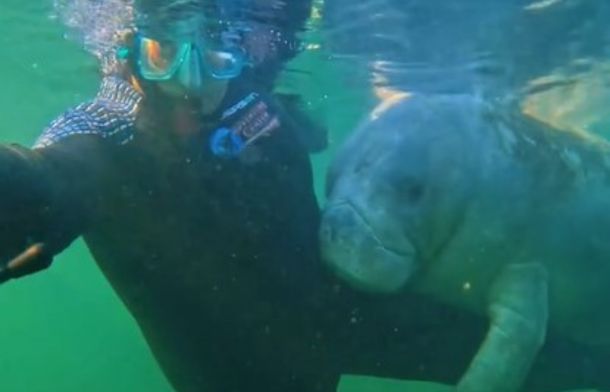
Manatees are naturally curious animals. Occasionally, while you are snorkeling or floating peacefully in places like Crystal River or Homosassa Springs, a manatee may swim right up to you, bump your leg, or inspect your gear. What should you do?
Wildlife officials advocate for a practice known as passive observation. If a manatee approaches you:
- Do not reach out: Keep your hands to yourself. Fold your arms across your chest or keep them resting flat in the water.
- Remain still: Avoid sudden, jerky movements or loud splashing, which can startle the animal.
- Do not pursue: If the manatee swims away, let it go. Do not swim after it.
- Give it space: Allow the manatee to dictate the encounter and move away freely whenever it chooses.
If an animal brushes against you while you are motionless, you have not broken the law. The violation occurs when you initiate contact, pursue the animal, or alter your position to prolong physical contact.
Why Touching Manatees Causes Real Harm
Some people assume a quick, gentle pat does no damage to a 1,000-pound animal. In reality, human touch causes subtle, long-term biological and behavioral problems for manatee populations:
1. Disruption of Essential Rest and Thermoregulation
Manatees have slow metabolisms and very little insulating blubber. In the winter, they rely on natural warm-water springs (which stay around 72°F / 22°C) to survive cold snaps. Exposure to water colder than 68°F can cause lethal "cold stress syndrome." When humans swim up and disturb resting manatees, the animals are forced to swim away, expending precious energy and sometimes fleeing into colder waters where their lives are threatened.
2. Habituation and Loss of Wild Wariness
When manatees become comfortable around humans, they lose their natural fear of people and watercraft. Habituation teaches manatees that approaching boats, marinas, and crowded docks is safe or rewarding. Because watercraft collisions remain the single largest human-related cause of manatee mortality, habituated manatees are at significantly higher risk of injury or death from boat hulls and propellers.
3. Calf Abandonment
Mother manatees are protective, but excessive human disturbance can cause intense stress. If crowds of swimmers surround a mother and calf, the mother may panic and flee, inadvertently abandoning her nursing calf.
How to Responsibly View Manatees in the Wild
You can still enjoy breathtaking encounters with wild manatees while staying entirely within the law. Follow these simple guidelines whenever you are on or in the water:
- Keep your distance: Stay at least 20 feet away from manatees whenever possible.
- Practice quiet surface observation: Float quietly at the surface of the water using a snorkel. Avoid free diving down to resting manatees, as diving down is viewed as predatory behavior.
- Use polarized sunglasses: If you are boating, polarized glasses help you spot manatees beneath the surface glare so you can idle and steer clear.
- Respect posted speed zones: Always obey slow-speed and no-wake zones in manatee habitats.
- Report distressed animals: If you see an injured, orphaned, or harassed manatee, contact the Florida Fish and Wildlife Conservation Commission immediately at 1-888-404-FWCC (3922) or dial *FWC on your mobile phone.
Enjoying Wildlife Through Respect
It is strictly illegal to touch a manatee, and these laws exist for the direct survival of the species. By admiring these gentle creatures from a respectful distance and embracing passive observation, you help ensure that future generations can witness manatees thriving peacefully in their natural habitats.