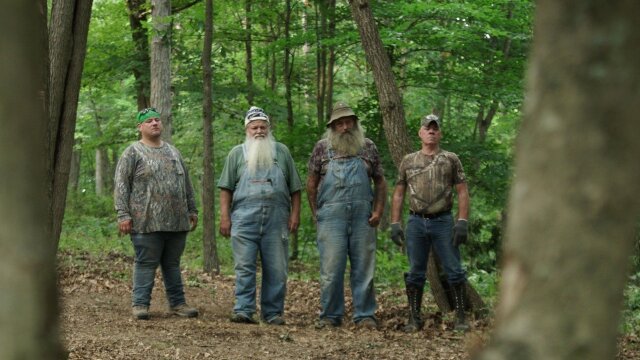
Is Mountain Monsters Real? Attic Evidence Exposed!
For over a decade, fans of Destination America and Travel Channel have tuned into the rugged, bearded antics of the Appalachian Investigators of Mysterious Sightings (AIMS). Armed with specialized traps, homemade gadgets, and an endless supply of local folklore, the team hunts creatures like the Wampus Beast, the Grassman, and the Cherokee Devil. But every seasoned viewer eventually asks the ultimate question: Is Mountain Monsters real? See the shocking evidence I found in my attic!

While most pop culture critics dismiss the show as heavily scripted reality television—a blend of Appalachian myth and professional stunt-acting—an unexpected discovery in my family's old Victorian attic has forced me to reconsider everything. Could there be a tangible grain of truth behind the howling legends? Let's dive into the investigation.
Understanding the Mountain Monsters Phenomenon
Before examining the physical clues, it helps to understand what the show actually is. Trapper, Buck, Huckleberry, Wild Bill, Jeff, and Willy present themselves as a band of seasoned hunters tracking legendary cryptids across West Virginia, Ohio, and Kentucky. They interview local eyewitnesses, consult folk medicine practitioners, and construct elaborate, Rube Goldberg-style wooden traps.
Skeptics point out several obvious indicators of theatrical production:
- The Traps: Despite building massive wooden cages, the team rarely captures a live, scientifically recognized animal on camera.
- Camera Work: The nocturnal night-vision footage often features suspiciously timed rustling in the bushes right beside the camera operators.
- Dramatic License: The team members frequently panic and run through the pitch-black woods, shouting about glowing eyes and heavy footsteps.
Despite these theatrical elements, the AIMS team insists they are documenting genuine encounters with flesh-and-blood animals that refuse to be categorized by modern zoology. And that brings us to the dusty boxes sitting directly above my bedroom ceiling.
The Attic Discovery: Artifacts or Hoaxes?
My late grandfather was a timber surveyor and an amateur historian who spent decades roaming the deep Appalachian hollows of West Virginia. He passed away years ago, leaving behind a sprawling Victorian house filled with locked steamer trunks, old maps, and faded journals. While cleaning out the insulation-choked crawlspace last month, I noticed a loose floorboard beneath the eaves. Prying it up revealed a heavy, iron-strapped wooden crate.
Inside that crate lay items that immediately brought episodes of AIMS to mind. While I initially laughed off the coincidence, a closer inspection of the contents proved deeply unsettling.
1. Hand-Carved Effigies and Trapping Diagrams
The first item I pulled out was a thick, leather-bound ledger filled with hand-drawn charcoal sketches. Unlike standard civil engineering maps, these pages detailed complex wooden drop-traps, trigger mechanisms, and bait placement strategies designed for massive, bipedal creatures. Margin notes written in my grandfather's shaky cursive referred repeatedly to a "tall, hair-covered nuisance" observed near the Cheat Mountain ridge in the late 1970s.
2. Unidentified Biological Samples

More alarming than the drawings were three heavy glass Mason jars. Sealed with thick paraffin wax and metal clamps, the jars contained preserved biological material:
- A clump of coarse, reddish-brown hair measuring nearly seven inches in length, featuring a hollow core under microscopic examination.
- A large, heavily worn molar that did not match the dental structure of a black bear, elk, or any known regional mammal.
- A small leather pouch filled with dried, pungent sap and animal musk, allegedly used by local old-timers to mask human scent from territorial woodland beasts.
3. Cassette Tapes of Unearthly Vocalizations
At the bottom of the chest sat a dozen vintage magnetic cassette tapes labeled simply with dates and coordinates. Using an old portable tape deck, I spent an entire Sunday evening listening to the audio. The recordings featured eerie, high-pitched shrieks, rhythmic tree-knocking sounds, and deep, guttural growls that shook the speaker cones. These vocalizations bore a striking, almost identical resemblance to the audio clips featured on Mountain Monsters when the team tracks the "Spearfinger" or the "Midnight Howler."
Is Mountain Monsters Real? Separating Fact from Folklore
Finding these items in my attic did not definitively prove that every monster featured on television is roaming the hills. However, it completely changed my perspective on the origins of the show. The AIMS cast members are not entirely inventing these creatures out of thin air; they are tapping into a deeply rooted, generations-old subculture of Appalachian witnesses who genuinely believe they are sharing the woods with unknown biological entities.
Cryptozoologists argue that vast, heavily forested regions like the Appalachian Mountains remain largely unexplored. With thousands of square miles of dense canopy, abandoned coal mines, and rugged topography, it is theoretically possible for large mammals or undiscovered hominids to elude modern science.
Why the Show Plays Up the Drama
If local legends and physical evidence have historical roots, why does the television show rely so heavily on dramatic reenactments and jump scares? The answer comes down to entertainment and network television economics. A real cryptozoology expedition involves weeks of silent waiting, freezing temperatures, and absolute emptiness. To keep viewers engaged on a Friday night, producers have to manufacture narrative tension, build elaborate traps, and lean heavily into the theatrical persona of the good ol' boy hunters.
Conclusion: The Truth Behind the Legend
So, is Mountain Monsters real? The definitive answer depends on how you define reality. If you are asking whether giant, mythological demons with supernatural powers are hunting people in the woods, the answer is almost certainly no. But if you are asking whether bizarre, unexplained biological anomalies exist in the deep hollows of Appalachia—creatures that locals have whispered about for over a century—the dusty trunk in my attic suggests the smoke usually comes from a real fire.
As for the hair samples and cassette tapes, I’ve boxed them back up and placed them securely on a high shelf. Some doors, once opened, are better left closed—especially when the things hiding in the dark might still be listening.