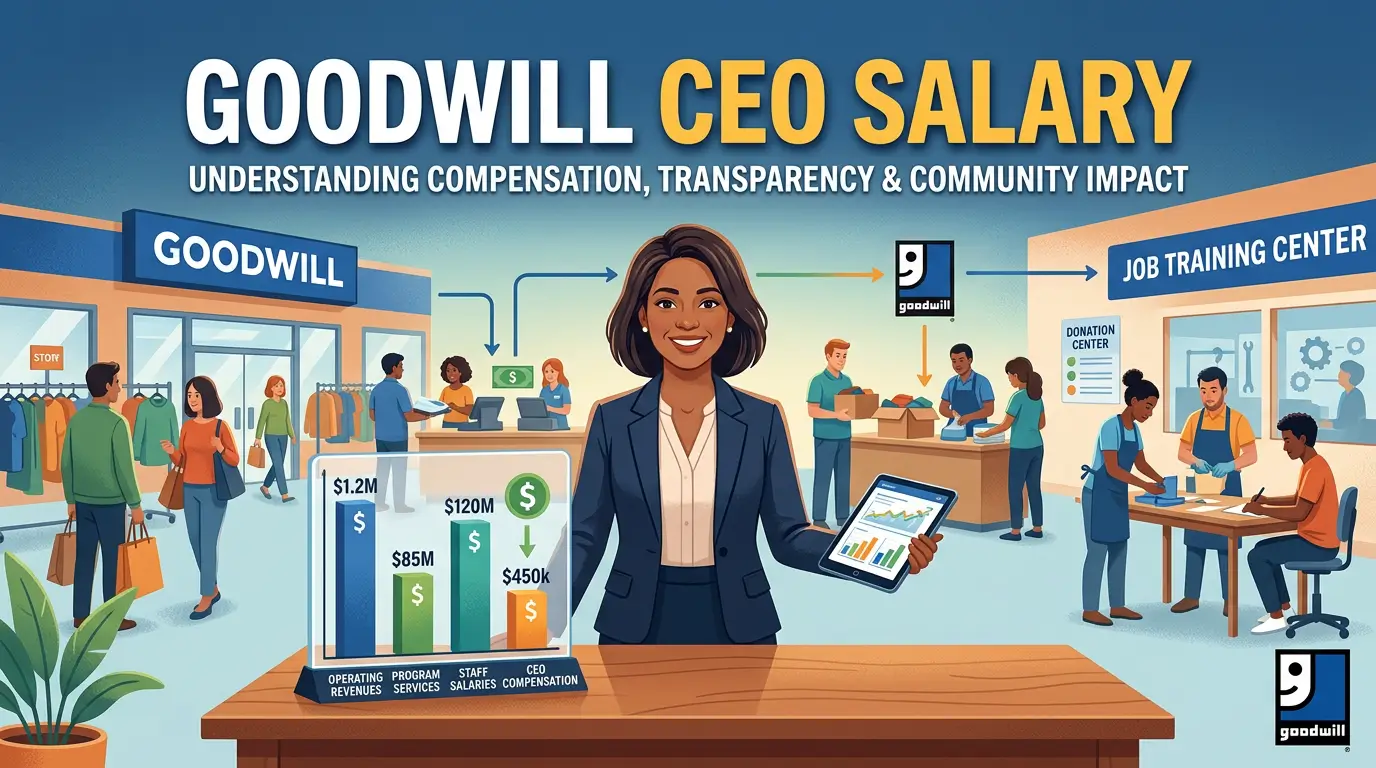
Is the Goodwill CEO Getting a Staggering Paycheck?
Every few months, a familiar graphic resurfaces on social media feeds across the country. It warns consumers to stop donating used clothes and household goods to Goodwill, claiming that a billionaire CEO named “Mark Curran” pockets millions of dollars in personal profit while refusing to help the poor. This viral claim leaves donors asking a crucial question: Is the Goodwill CEO getting a staggering paycheck? The shocking truth behind executive compensation at the legacy nonprofit is far different from what internet rumors suggest.
Understanding executive compensation at Goodwill requires peeling back layers of viral misinformation, looking directly at public tax filings, and understanding how one of North America’s largest nonprofit networks actually operates.
The Viral Myth: Who Is Mark Curran?
The viral posts that drive public outrage usually cite an executive named Mark Curran, claiming he earns $2.3 million per year (or higher, depending on the meme) and keeps 100% of store profits. There is only one problem: Mark Curran has never run Goodwill.
Goodwill was founded in 1902 in Boston by the Reverend Edgar J. Helms, a Methodist minister who collected used goods from wealthy households and trained immigrants and people with disabilities to repair and mend them. The organization has been a registered 501(c)(3) nonprofit since its inception.
Internet fact-checkers like Snopes, Reuters, and the Associated Press have repeatedly debunked the “Think Before You Donate” meme. Yet, the myth persists because executive pay in the nonprofit sector remains poorly understood by the general public.
How Goodwill Is Structured: A Federation, Not a Monolith
To evaluate whether Goodwill leadership is overpaid, you first have to understand how the organization is built. Goodwill is not a single corporation with one supreme chief executive overseeing thousands of retail thrift shops. Instead, it operates as a federation.
- Goodwill Industries International (GII): This is the national member association based in Rockville, Maryland. It provides support services, accreditation, brand stewardship, and advocacy for member agencies.
- Local Independent Affiliates: There are more than 150 independent, autonomous Goodwill member organizations across the United States and Canada. Each local affiliate is its own 501(c)(3) charity with its own distinct board of directors, budget, geographic territory, and executive team.
Because of this decentralized structure, there is no single “Goodwill CEO” collecting revenue from all retail thrift locations across the globe.
Is the Goodwill CEO Getting a Staggering Paycheck? The Shocking Truth Behind Executive Compensation
Since Goodwill is a 501(c)(3) public charity, its financial records are not secret. Every affiliate and the national headquarters must file an annual Form 990 with the Internal Revenue Service (IRS), detailing total revenue, program expenses, and the compensation of officers, directors, and key employees.
Compensation at Goodwill Industries International
The CEO of Goodwill Industries International (GII) is Steven C. Preston, who took leadership of the international office in 2019. Preston previously served as the Secretary of the U.S. Department of Housing and Urban Development (HUD) and head of the Small Business Administration (SBA).
According to GII’s publicly available IRS Form 990 filings, the international CEO’s annual base salary and benefits package typically ranges between $500,000 and $750,000, depending on performance benchmarks and health/retirement contributions. While this is certainly a significant salary, it is nowhere near the multi-million-dollar corporate packages circulated in viral posts, and it represents a small fraction of the national network’s total revenue.
Compensation at Local Goodwill Affiliates
What about the CEOs of regional Goodwill branches? Because each local organization operates independently, executive pay varies widely based on local market size, geographic cost of living, and operational scope:

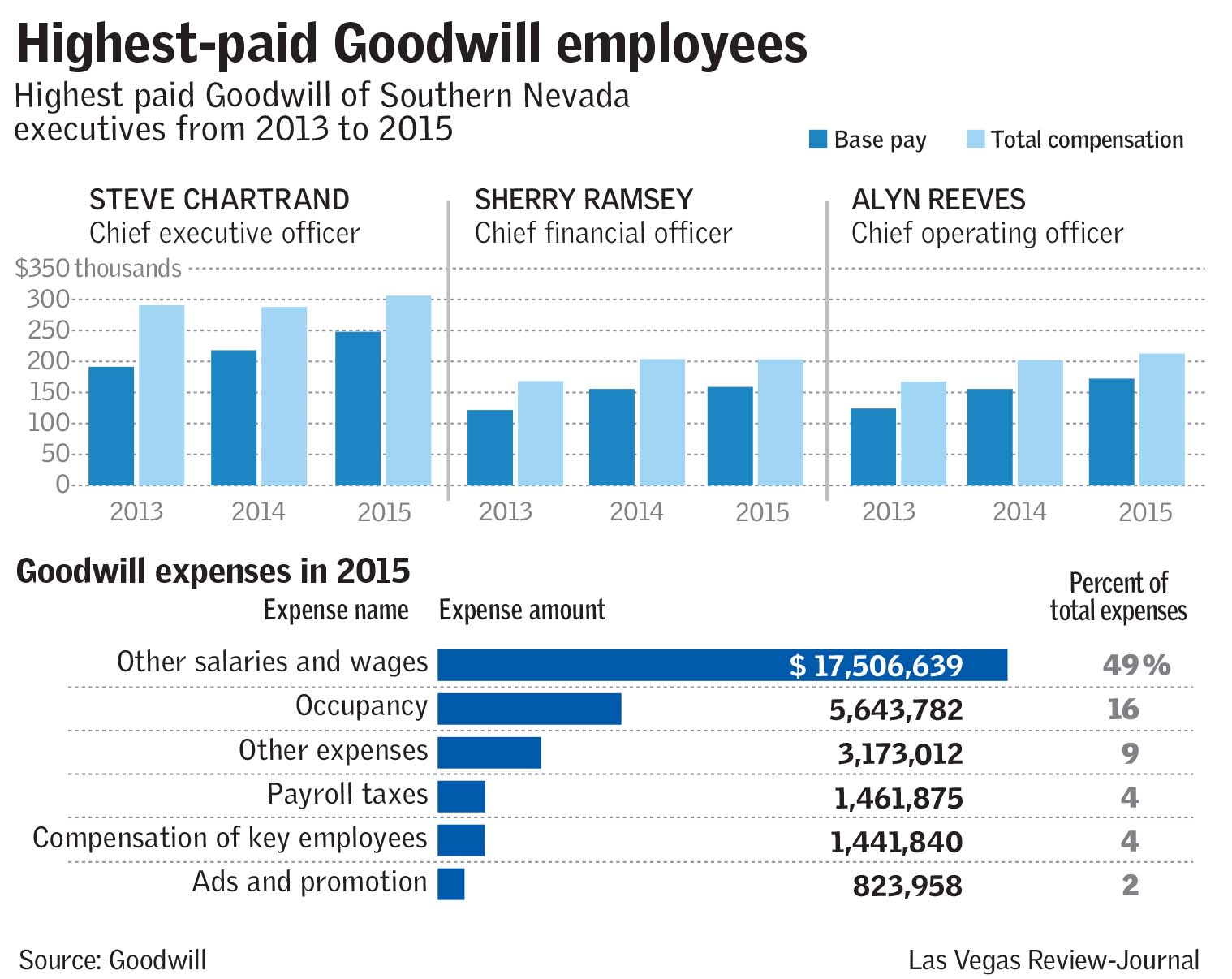
- Mid-to-Large Regional Affiliates: In major metropolitan regions like Goodwill of Central and Northern Arizona or Goodwill of Southern California—which operate dozens of retail locations, commercial contracts, and community education hubs—CEOs often earn between $450,000 and $900,000 annually. In a handful of the largest regions with annual revenues exceeding $200 million, total compensation packages occasionally cross the $1 million mark.
- Smaller Regional Affiliates: In rural or smaller metro areas, local Goodwill executive directors commonly earn between $150,000 and $300,000 per year.
Each affiliate’s volunteer board of directors determines executive compensation by commissioning independent market studies of comparable nonprofit and for-profit retail and human services organizations in their respective regions.
Why Do Nonprofit Executives Make Six-Figure Salaries?
To many donors who drop off bags of clothing or buy secondhand books, learning that any nonprofit leader earns $500,000 can feel jarring. However, charity watchdogs such as Charity Navigator and GuideStar (Candid) emphasize that running a massive, complex enterprise requires competitive leadership.
A typical regional Goodwill organization is not just a thrift store; it is an intricate hybrid of a logistics firm, a large-scale retail chain, and a social services provider. Regional leaders oversee:
- Thousands of employees across dozens of retail stores, donation centers, and warehouses.
- Complex supply chain networks processing tens of millions of pounds of donated goods annually.
- Federally funded workforce development programs, career training centers, and adult education academies.
- Annual operating budgets that routinely exceed $50 million to $200 million.
If boards set executive salaries far below market rates, talented executives with operational, legal, and financial expertise often migrate to for-profit corporations, leaving complex social missions vulnerable to mismanagement.
Where Does the Money Actually Go?
The primary concern behind questions about executive salaries is whether donations actually fund charitable work. The standard benchmark established by nonprofit watchdogs requires charities to spend at least 65% to 75% of their total revenues directly on program services, rather than administrative overhead or fundraising.
Goodwill exceeds this standard across most of its network. According to collective network data, Goodwill channels an average of 85% to 88% of all revenue directly into employment placement services, job training programs, and community initiatives. These programs serve people with disabilities, individuals re-entering society after incarceration, veterans transitioning to civilian careers, and workers seeking credentialed skills in fields such as healthcare, IT, and advanced manufacturing.
The Section 14(c) Wage Debate
While the Mark Curran meme is outright fiction, Goodwill has faced legitimate public criticism regarding wages for workers with disabilities. Under Section 14(c) of the Fair Labor Standards Act (FLSA), passed in 1938, certified employers were permitted to pay sub-minimum wages to individuals with severe disabilities based on their productivity levels.
Historically, a minority of regional Goodwill affiliates held 14(c) certificates. This practice drew heavy criticism from disability rights advocates who argued that all workers deserve fair pay. In response, Goodwill Industries International publicly took a stand encouraging affiliates to eliminate 14(c) usage. Today, virtually all Goodwill affiliates have eliminated sub-minimum wage certificates, transitioning all workers to standard minimum wage or higher while advocating for federal legislative reform.
How to Verify Charity Salaries Yourself
You do not need to rely on social media rumors to evaluate how a charity spends its money. You can inspect any nonprofit’s executive compensation yourself using free, public tools:
- Charity Navigator: Provides overall accountability, transparency, and financial health scores, as well as the exact percentage of expenses dedicated to programs versus administrative overhead.
- Candid (formerly GuideStar): Offers downloadable copies of IRS Form 990 filings for any registered 501(c)(3) organization.
- The Organization’s Annual Report: Most local Goodwill organizations publish comprehensive annual impact reports on their websites detailing audited financial statements and mission outcomes.
The Bottom Line
Executive compensation at Goodwill is comparable to other large-scale nonprofits of similar size, budget, and operational complexity. While leaders of major regional branches do earn healthy, upper-tier management salaries, they are answerable to independent community boards and IRS oversight. Far from hoarding billions, the vast majority of revenue generated by Goodwill thrift stores funds tangible job creation, skills training, and community development across North America.