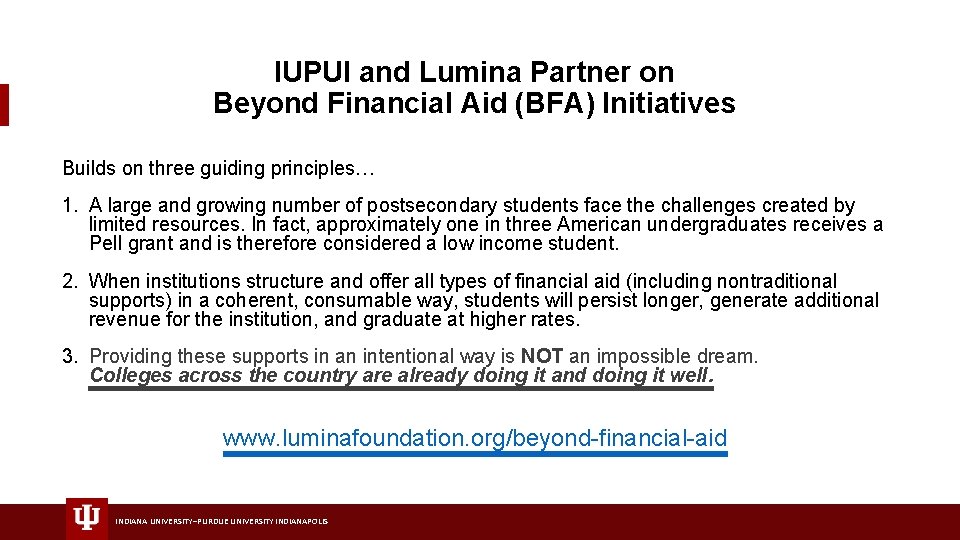
IUPUI Office of Financial Aid: Student Guide
Financing a college education is one of the most critical steps in any student’s academic journey. Whether you are a prospective freshman, a transfer student, or a returning scholar, navigating grants, loans, and scholarships can feel overwhelming. The IUPUI office of financial aid—now operating as the Office of Student Financial Services at IU Indianapolis—serves as the primary resource for students seeking financial assistance, clarity on awards, and billing support.
Following the formal transition of IUPUI into two distinct institutions (Indiana University Indianapolis and Purdue University in Indianapolis) in mid-2024, students frequently wonder how financial aid management has changed. This guide breaks down everything you need to know: how aid works, crucial filing deadlines, scholarship opportunities, and how to get in touch with advisors.
Understanding the Transition: IUPUI to IU Indianapolis
For decades, Indiana University-Purdue University Indianapolis operated under a joint administrative structure. As of July 2024, the campus officially transitioned. If you are enrolled in an Indiana University program in Indianapolis, your aid is administered by IU Indianapolis Student Financial Services.
While the administrative name has evolved, the core mission remains the same: helping students access federal, state, and institutional funding so they can graduate with manageable debt. The systems, online portals, and in-person advisors continue to offer comprehensive support for undergraduate, graduate, and professional programs.
Types of Financial Aid Available
The financial aid office helps students package several forms of assistance. Understanding the distinctions between these aid types helps you prioritize options that do not require repayment.
1. Gift Aid: Grants and Scholarships
Gift aid is funding you do not have to pay back, making it the most desirable form of college financing.
- Federal Grants: Needs-based awards such as the Federal Pell Grant and the Federal Supplemental Educational Opportunity Grant (FSEOG) are determined through your Free Application for Federal Student Aid (FAFSA).
- State Grants: Indiana residents may qualify for the Frank O’Bannon Grant, the 21st Century Scholarship, or the Next Generation Hoosier Educators Scholarship.
- Institutional Merit & Need Scholarships: The university offers various merit awards for incoming freshmen, competitive departmental scholarships, and transfer awards. Many are awarded automatically upon admission, while others require separate applications via the IU Scholarships portal.
2. Self-Help Aid: Work-Study and Loans
Self-help aid requires students to work for the funds or repay them over time.
- Federal Work-Study (FWS): A program providing part-time on-campus or community-based employment to students who demonstrate financial need. Earnings are paid directly to the student via biweekly paychecks rather than applied directly to tuition.
- Federal Direct Loans: These include Subsidized loans (where the government pays interest while you are in school at least half-time) and Unsubsidized loans (where interest accrues immediately).
- Federal Direct PLUS Loans: Credit-based federal loans available to graduate students and biological or adoptive parents of dependent undergraduate students.
- Private Student Loans: Offered through private lenders, banks, or credit unions. Financial aid advisors strongly encourage exhausting federal student loan eligibility before exploring private alternatives due to federal borrower protections and income-driven repayment plans.
Important Deadlines and School Codes
Securing financial assistance requires staying on top of critical calendar dates. Missing a deadline can drastically reduce the amount of aid you receive, particularly for state and institutional funds.
Video: Financial Services Orientation

- File the FAFSA Annually: The FAFSA opens each year (typically on October 1, though recent federal redesigns have shifted initial rollouts to December/January). Always submit your application as early as possible.
- State Priority Deadline: For Indiana state aid consideration, submit your FAFSA on or before April 15. Missing this deadline can forfeit significant state grants.
- Federal School Code: When completing the FAFSA, enter the official Federal School Code for IU Indianapolis: 001814. (Note: Students enrolling in Purdue programs in Indianapolis should use Purdue’s main West Lafayette code: 001825).
- Verification Deadlines: If the Department of Education selects your FAFSA for verification, submit all requested tax transcripts and household verification worksheets to the financial aid office immediately to avoid processing delays.
How to Contact the IUPUI Office of Financial Aid
Students can connect with financial aid specialists through multiple channels depending on their schedule and preference. Whether you have questions regarding your award letter, billing discrepancies, or Satisfactory Academic Progress (SAP), help is readily available.
Physical Location and Hours
The primary student services center is centrally located on campus:
- Location: Campus Center (CE), Suite 250, 420 University Blvd., Indianapolis, IN 46202
- Hours: Monday through Friday, 8:00 AM – 5:00 PM (Hours may vary during holidays, breaks, and peak registration weeks).
Phone and Digital Support
- Phone: (317) 274-3454
- Online Case System: Current students can submit secure inquiries through the One.IU portal.
- Virtual Appointments: One-on-one virtual advising sessions are available for students and families needing deep-dive reviews of special circumstances, dependency overrides, or complex aid packaging.
Maintaining Your Financial Aid Eligibility
Receiving aid is only the first step; maintaining it requires adhering to strict academic and credit-hour regulations known as Satisfactory Academic Progress (SAP). Federal regulations require the office to evaluate your academic standing annually.
To remain in good standing for federal and state assistance, you must satisfy three key benchmarks:
- GPA Requirement: Maintain the required cumulative Grade Point Average (typically a minimum of 2.0 for undergraduates).
- Completion Rate (Pace): Successfully complete at least 67% of all cumulative credit hours attempted. Dropping or withdrawing from classes after the refund period counts against your completion pace.
- Maximum Timeframe: Complete your degree program within 150% of the published credit length (for example, within 180 attempted credit hours for a standard 120-credit bachelor’s degree).
If unexpected life events—such as serious medical conditions or family emergencies—cause you to fall below these requirements, you can file a SAP Appeal through the financial aid portal, supported by appropriate documentation.
Key Tips to Maximize Your College Aid
To reduce out-of-pocket costs and minimize post-graduation debt, keep these practical tips in mind:
- Monitor Your One.IU Account: Review the “View Financial Aid” and “To Do List” tasks in One.IU regularly. Unresolved checklist items can delay your aid disbursement.
- Request a Professional Judgment Review: If your family experienced a significant drop in income, job loss, high unreimbursed medical expenses, or divorce after filing the base-year tax return used on the FAFSA, notify the office. Advisors can adjust your data elements through a Special Circumstances Appeal.
- Search the IU Scholarship Portal Every Year: Many students mistakenly believe scholarships are only for high school seniors. Continuing students are eligible for hundreds of endowed and departmental scholarships every spring.
- Borrow Only What You Need: You do not have to accept the maximum loan amount offered. Calculate your tuition, fees, books, and living expenses, then accept only the portion of loans required to cover true necessities.
Final Thoughts
Navigating university expenses does not have to be a solo effort. By staying informed about deadlines, understanding the requirements for maintaining awards, and communicating regularly with financial counselors, you can make the most of every dollar available to you. Reach out to the financial aid staff early whenever you have questions or anticipate changes to your financial situation.