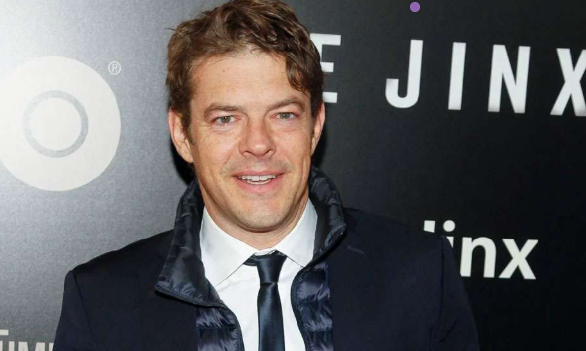
Jason Blum Net Worth Shock: Behind the Billion-Dollar Rise
Hollywood finance rarely produces true statistical anomalies, but the conversation surrounding the Jason Blum Net Worth Shock: Behind the Grindhouse Great’s Billion-Dollar Rise! highlights one of the most profitable disruptions in modern cinema history. While legacy studios regularly lose tens of millions on bloated tentpoles, producer Jason Blum turned a scrappy, grindhouse-style business model into an enterprise that has generated over $5.7 billion at the global box office.

Today, industry trackers estimate Jason Blum’s personal net worth at approximately $200 million to $300 million. However, the true shock lies in the valuation of his production empire, Blumhouse Productions, and the asymmetric profit margins that fuel his personal fortune. Here is how a former Miramax executive engineered a financial revolution by thinking small and scoring big.
The $15,000 Catalyst: How It All Began
Before Blum became a household name among cinephiles, he was searching for a repeatable formula that bypassed the traditional studio meat grinder. In the mid-2000s, director Oren Peli showed Blum a rough cut of an experimental haunted-house movie filmed on a consumer camcorder for roughly $15,000.
That movie was Paranormal Activity. While other executives saw amateur footage, Blum saw unprecedented upside. He secured theatrical distribution through Paramount Pictures after an intense bidding war. The result was a watershed moment in cinematic accounting: the film grossed $193.4 million worldwide, making it one of the most profitable films ever made relative to its production budget.
The Blumhouse Production Model: Micro-Budgets, Macro-Profits
Most studio executives respond to massive hits by increasing budgets. Blum did the exact opposite. He formalized a rigid production framework designed to eliminate downside risk entirely while leaving the ceiling wide open:
- Strict Budget Caps: Original films are capped between $3 million and $6 million, with sequels rarely exceeding $10 million to $15 million.
- Director Autonomy in Exchange for Scale: Filmmakers accept union-scale minimum upfront salaries in exchange for final cut and meaningful backend participation (gross points).
- Universal First-Look Partnership: Universal Pictures handles distribution and marketing costs, shielding Blumhouse from direct theatrical overhead.
- Location and Time Constraints: Productions limit shooting schedules to three to four weeks, minimize location changes, and restrict speaking roles to keep costs lean.
This operational discipline means a Blumhouse release can break even on domestic home entertainment or international streaming licenses alone. Any domestic theatrical ticket sales translate almost immediately into pure profit.
Jason Blum Net Worth Shock: Behind the Grindhouse Great’s Billion-Dollar Rise!
The core reason behind the fascination with Jason Blum's wealth is the contrast between his production methods and his financial standing. In an era where superhero blockbusters demand $250 million production budgets and $150 million marketing spends, Blum behaves like a modern Roger Corman—yet reaps rewards comparable to Steven Spielberg.
Because Blum finances development independently and maintains tight control over his library, his equity stake in Blumhouse remains exceptionally high. When films like Jordan Peele’s Get Out ($4.5 million budget, $255 million gross) or Split ($9 million budget, $278 million gross) explode into cultural touchstones, Blum collects a substantial share of first-dollar gross profits.
The financial shock is not simply that Blum is wealthy; it is that he accumulated this capital with near-zero box office downside. While traditional moguls suffer career-threatening losses when a single tentpole bombs, a complete failure for Blumhouse results in a negligible write-down that is routinely erased by the next weekend's release.
Key Franchises That Minted the Fortune

Blumhouse is not a one-hit wonder; it is a serialized hit machine. A handful of core franchises account for the bulk of the studio's multi-billion-dollar cumulative box office:
- The Purge Universe: Five films and a television series made for a combined $53 million have grossed over $535 million worldwide.
- Insidious: Partnering with James Wan and Leigh Whannell, this five-film supernatural series cost roughly $42 million in total production and generated more than $730 million globally.
- The Halloween Revival: Blum secured rights to the iconic Michael Myers franchise, producing a trilogy directed by David Gordon Green that pulled in nearly $500 million against modest budgets.
- Five Nights at Freddy's (2023): Proving the model translates across generations, this adaptation of the popular video game grossed $297 million worldwide against a $20 million budget—despite a day-and-date streaming release on Peacock.
The Atomic Monster Merger: Crossing the Billion-Dollar Threshold
In January 2024, Blumhouse finalized a blockbuster merger with James Wan’s Atomic Monster. The combination united two of the most lucrative production labels in entertainment history.
Wan brought colossal intellectual property, including The Conjuring universe, Annabelle, and M3GAN. The combined entity operates under a unified umbrella with an enterprise valuation well in excess of $1 billion. This merger drastically enhanced Jason Blum’s net worth by consolidating market share: the duo now controls a virtual monopoly over mid-budget commercial horror in North America.
Asset Breakdown: How Blum Deploys His Capital
While Blum’s primary wealth engine remains his ownership equity in Blumhouse and its underlying production library, his personal balance sheet includes significant tangible assets:
- Real Estate Holdings: Blum owns high-value residential properties across the United States, including a historic Brooklyn townhouse purchased for nearly $10 million and a celebrated architectural estate in Los Angeles.
- Contemporary Art Collection: An avid collector, Blum has directed millions into works by notable contemporary painters and sculptors.
- Television and Gaming Ventures: Blumhouse Television produces acclaimed unscripted and scripted content (such as The Jinx and The Loudest Voice), while Blumhouse Games focuses on indie horror video game publishing.
The Strategic Blueprint: Lessons from Blum's Ascent
Jason Blum’s financial trajectory offers clear strategic takeaways for creators, entrepreneurs, and investors alike:
1. Embrace Negative Asymmetry: Cap your downside rigorously, but never cap your upside. By keeping budgets negligible, Blum survives frequent misses while retaining massive equity in runaway hits.
2. Align Incentives Through Shared Equity: By offering backend gross points to top-tier directors and actors instead of unearned upfront fees, Blum ensures every creative partner is personally invested in the project’s commercial performance.
3. Master Distribution Before Production: Blum never shoots blindly without knowing how the finished product will reach audiences. His ironclad distribution pact with Universal ensures guaranteed shelf space without burdening his production house with distributor debt.
Jason Blum did not conquer Hollywood by playing the studio game better than the legacy players; he conquered it by rewriting the rules entirely. His rise stands as proof that radical fiscal discipline can yield the highest margins in entertainment.