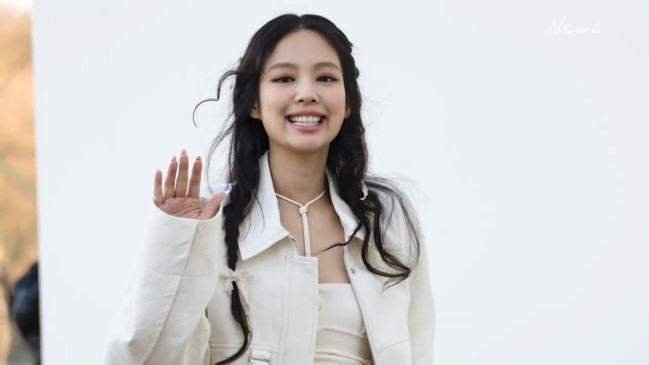
Jennie Kim’s “Freedom” Betrayal: Why Hate Shook the Industry
Few figures in modern entertainment operate under as intense a microscope as BLACKPINK’s Jennie Kim. For years, every creative choice, outfit, and public appearance she made sparked global conversations. Yet, when she decided to assert total control over her career and self-expression, the discourse shifted from admiration to severe hostility. The intense cultural clash surrounding Jennie Kim’s “Freedom” Betrayal—Why Her Hate Shook the Industry! became a defining case study in the volatile relationship between manufactured idol expectations and genuine artist autonomy.

The Illusion of the Pristine Idol
In the traditional K-pop ecosystem, artists are not merely musicians; they are curated public figures tied to rigorous behavioral standards. Since her debut under YG Entertainment in 2016, Jennie was branded as the ultimate "It Girl." She commanded luxury brand ambassadorships, topped domestic music charts, and served as the visual blueprint for fourth-generation idols. However, that elevated status came at a steep price: an implicit contract that demanded complete conformity to audience desires.
Whenever Jennie stepped outside the strictly defined borders of that contract, public friction was immediate. Unlike Western pop stars who are encouraged to lean into controversy and personal reinvention, K-pop idols often face immediate, severe pushback for deviating from modesty, humility, and perpetual accessibility.
The Catalyst: Acting, Expression, and HBO’s The Idol
The turning point in public discourse occurred when Jennie took her first solo acting role in HBO’s provocative series The Idol (2023). Playing the character Dyanne, Jennie engaged in choreography and dialogue that aligned with prestige American television rather than the sanitized aesthetics of South Korean music shows.
The reaction from conservative fans and online communities was immediate and fierce. Critics labeled her artistic risk a calculated departure from her roots, while bad-faith commentators framed her pursuit of creative liberation as an active abandonment of the fans who built her career. The vitriol reached far beyond ordinary entertainment critique, devolving into moral policing across international forums.
Breaking Corporate Chains: The Founding of Odd Atelier
The friction intensified at the end of 2023 when BLACKPINK renewed their group contracts with YG Entertainment but chose not to renew their individual management deals. Jennie moved quickly, becoming the first member to announce her own independent management label, Odd Atelier (OA).
While Western media praised this move as a masterclass in business acumen, segments of the domestic fan base interpreted it as disruptive. The narrative of "abandoning the nest" quickly took hold among detractors:
- Concerns Over Group Unity: Critics voiced unfounded panic that individual ventures would dilute BLACKPINK's collective brand power.
- Perceived Disloyalty: Online communities questioned her departure from the agency that trained and debuted her.
- Unprecedented Independence: Running an agency at age 27 placed Jennie outside the traditional agency-artist hierarchy, a power dynamic the industry rarely sees from female performers.
Jennie Kim’s “Freedom” Betrayal—Why Her Hate Shook the Industry!

The severity of the reaction caught cultural critics by surprise. Why did an artist choosing autonomy cause such a deep societal tremor? The answer lies in how deeply invested consumer culture is in idol ownership. When an artist explicitly demonstrates that they do not belong to an agency or an audience, it shatters the parasocial fantasy.
The hate directed at Jennie shook entertainment executives because it laid bare a major commercial reality: the globalization of K-pop has created two fundamentally incompatible audiences. On one side stands an international consumer base that demands authentic, mature, and self-directed pop stars; on the other stands a traditional domestic and regional core that views radical self-direction as a breach of modesty.
The Double Standard Applied to Female Performers
Jennie’s experience also highlighted systemic gender disparities within Korean entertainment. While male idols who transition into rugged, provocative, or independent roles are frequently lauded for their maturity and business savvy, female idols face acute scrutiny for taking the exact same steps.
- Agency Control: Male artists who launch boutique labels are framed as visionaries; female artists making the same move are often accused of being self-indulgent or hasty.
- Physical Expression: When male idols perform sensual choreography, it is praised as fan service; when Jennie embraced Western choreography in The Idol, it was treated as a scandal.
- Public Demeanor: Throughout her career, Jennie has faced recurring accusations of having an "attitude problem" simply for maintaining a calm, introverted public resting expression—a standard rarely applied to her male peers.
Industry Repercussions: Redefining Idol Contracts and Agency Control
Despite the concentrated online hate campaigns, Jennie’s refusal to retreat marked a permanent turning point for South Korea’s music industry. By launching Odd Atelier and subsequently signing a solo partnership with Columbia Records, she established a viable blueprint for artist longevity.
Other idols watched closely. Jennie proved that maintaining group solidarity while managing an independent solo career was not only possible, but commercially advantageous. Her 2024 solo single "Mantra" debuted to strong global numbers, proving that the vocal minority online did not represent the general music-listening public.
The Legacy of Jennie’s Defiance
The narrative of Jennie Kim’s supposed "betrayal" ultimately tells us far more about the anxieties of the entertainment industry than it does about Jennie herself. As Korean pop culture solidifies its place on the global stage, its structural conventions are being actively dismantled by the very stars who made it famous.
Jennie Kim did not betray her audience by demanding freedom; she exposed the fragility of an industry built on absolute compliance. By weathering the storm and continuing to chart her own course, she has helped ensure that the next generation of female artists will not have to ask for permission to be themselves.