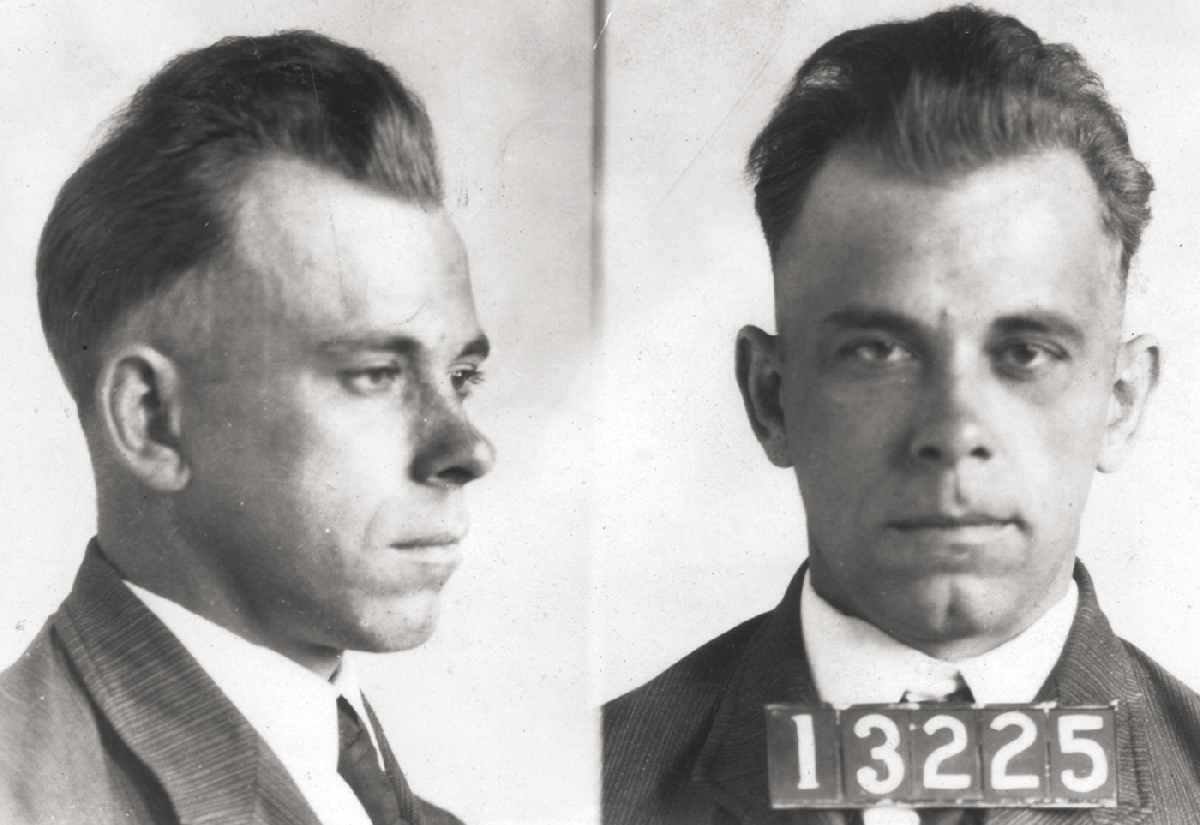
John Dillinger's Net Worth: The Million-Dollar Myth
When people think of the Great Depression's most notorious outlaws, images of high-rolling mobsters, flashy suits, and hidden stashes of cash immediately come to mind. Among them, John Dillinger stands as an American icon. Hollywood films and pulp magazines have long perpetuated the legend of a criminal mastermind who accumulated staggering fortunes by looting midwestern banks. However, digging past the cinematic glamor reveals a fascinating reality about the million-dollar myth busted: what’s the real net worth of John Dillinger?
Understanding the true financial status of Public Enemy Number One requires looking beyond the sensationalized headlines of 1934. When the FBI finally gunned down Dillinger outside Chicago's Biograph Theater, his pockets held a fraction of what the public assumed. To uncover the truth, we must examine his actual take, his spending habits, and the economics of Depression-era crime.
The Legend of Dillinger's Wealth
During the height of his crime spree between June 1933 and July 1934, Dillinger and his gang ripped through Indiana, Ohio, Wisconsin, and South Dakota. They targeted small-town banks, local payrolls, and even police arsenals. In an era before federal deposit insurance, a successful bank raid could net tens of thousands of dollars in cash, bonds, and jewelry.
Newspapers of the 1930s eagerly fueled the myth. Eager to sell copies, reporters amplified the gang's hauls, turning every $10,000 robbery into a legendary treasure chest. Because Dillinger managed to evade law enforcement for over a year while driving fast cars, staying in upscale apartments, and funding plastic surgery, the public naturally assumed he was sitting on a massive, hidden fortune.
The Ledger of Crime: What Did He Actually Steal?
Historians and federal investigators who pieced together the gang's ledger arrived at a much more modest figure. While the exact total is difficult to calculate down to the last penny due to shifting gang rosters and unreported amounts, modern estimates put the total amount stolen by the Dillinger gang at roughly $300,000 over their entire active run.
Adjusted for inflation, $300,000 in 1934 equates to roughly $6.8 million today. While this sounds like a substantial sum, that number must be contextualized:
- Divided Among Accomplices: Dillinger did not work alone. His loot was routinely split among gang members like Baby Face Nelson, Harry Pierpont, and Homer Van Meter.
- High Operational Costs: Running from the FBI was an expensive business. Safehouses, fast getaway cars, firearms, ammunition, and bribes drained funds rapidly.
- Plastic Surgery and Medical Care: Dillinger paid top dollar for underground medical procedures, including botched plastic surgery designed to alter his fingerprints and facial features.
The Bankrupt Lifestyle: Why Dillinger Died Broke
Video: What Happened to the Real John Dillinger? | History's Greatest Mysteries (S6)

The primary reason the million-dollar myth collapses is Dillinger’s own spending habits. Unlike modern drug kingpins or corporate embezzlers, Dillinger had no concept of long-term investment, real estate acquisition, or offshore accounts. He lived entirely in the present, fueled by adrenaline and a desire for immediate gratification.
Dillinger was a notorious gambler and a frequent visitor to racetracks and underground casinos. He enjoyed luxury hotels, fine clothing, and high-end whiskey. When he wanted to relax, he spent lavishly in Chicago's nightclubs. Money burned through his pockets almost as fast as it entered them.
The Final Audit: What Was Found on Him in 1934?
The ultimate proof of Dillinger's true financial standing lies in the inventory taken by the FBI and local police immediately after his death on July 22, 1934.
When federal agents searched the mortuary and his final living quarters, they did not discover secret offshore bank accounts, buried treasure chests, or suitcases stuffed with hundreds of thousands of dollars. Instead, they found:
- A small amount of loose cash in his pockets—roughly $7.70 (about $175 today).
- A few personal items, including a watch and a comb.
- A rental car and a rented room with minimal belongings.
Even when accounting for the money his girlfriend, Evelyn "Billie" Frechette, and other associates managed to hide or spend, Dillinger's cumulative lifetime savings were essentially zero.
Why the Myth Persists
The myth of Dillinger's vast wealth persists because it fits neatly into the folklore of the Great Depression. To a struggling public devastated by economic collapse, a charming outlaw who could walk into a bank and walk out wealthy represented a twisted form of Robin Hood justice—even if Dillinger never actually gave his stolen cash to the poor.
Ultimately, John Dillinger was not a financial mastermind building an empire. He was a thrill-seeking fugitive whose criminal career was remarkably short, expensive, and ultimately unprofitable in the long run. He traded his freedom—and eventually his life—for a lifestyle of fleeting luxuries, leaving behind a legacy built much more on notoriety than net worth.