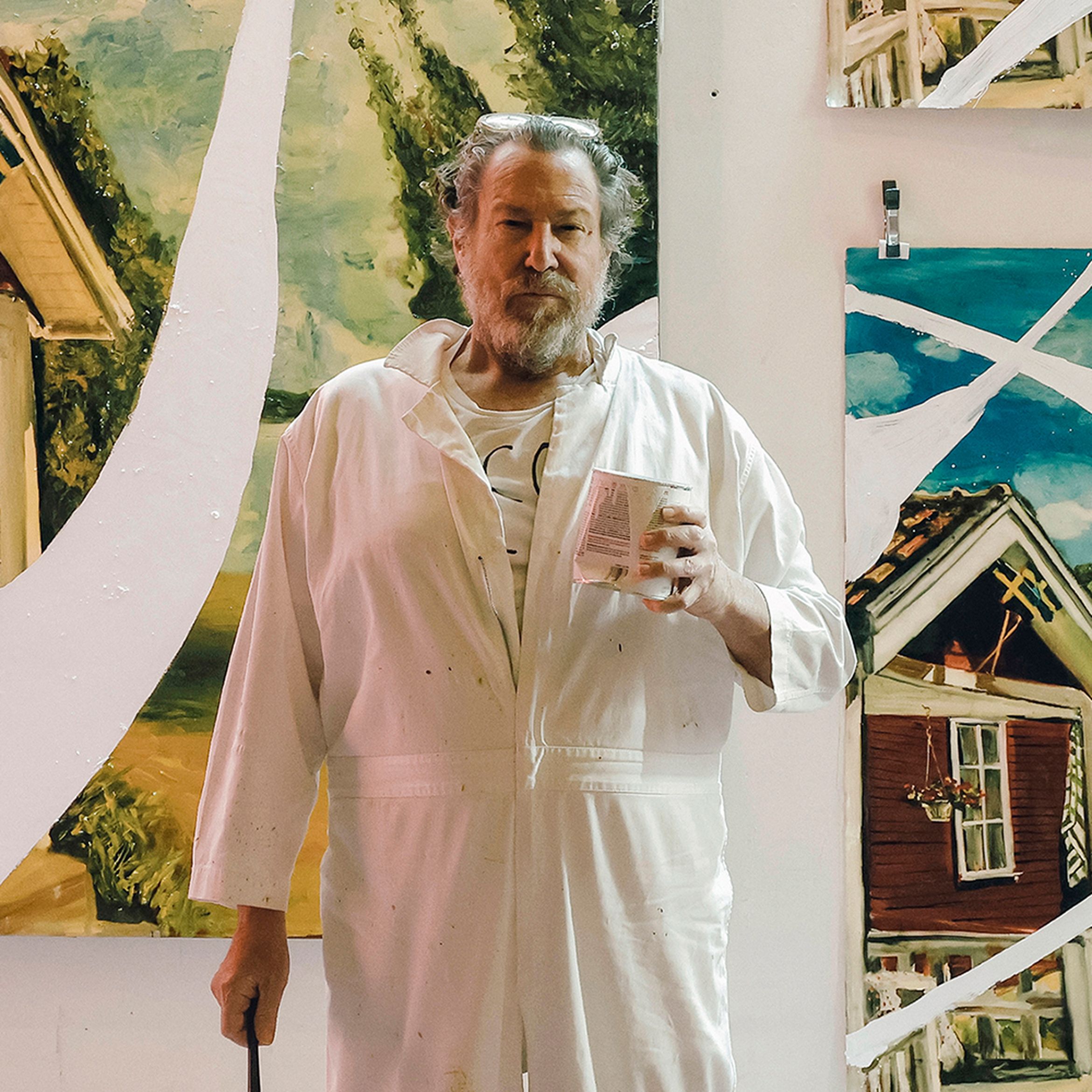
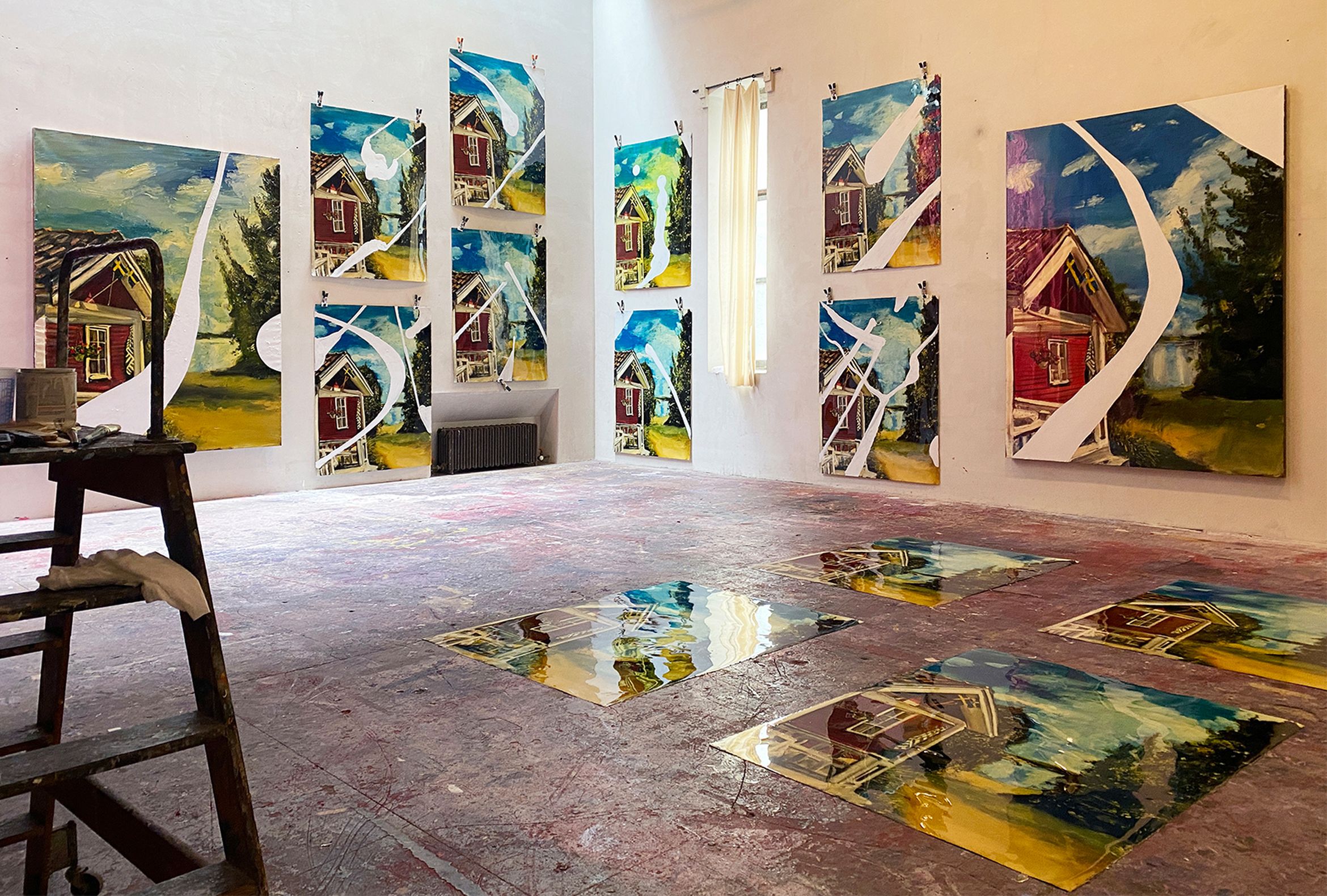
Julian Schnabel: From Avant-Garde to Auction House Wealth
Introduction

In the frantic art world of 1980s New York, few figures commanded as much attention, controversy, and commercial success as Julian Schnabel. Known initially for his massive canvases embedded with broken ceramic plates, Schnabel crafted a persona that was as larger-than-life as his art. But artistic notoriety does not automatically translate into generational wealth. The trajectory from avant-garde to auction house — how Julian Schnabel gained riches is a masterclass in aggressive self-branding, market positioning, cross-disciplinary success, and the strategic navigation of the global art economy.
Understanding how Schnabel built his fortune requires looking beyond the canvas. His career bridges the gap between the gritty, bohemian underground of the East Village and the polished, high-stakes ecosystem of international auction houses like Sotheby's and Christie's. By treating his career as a total work of art—embracing filmmaking, interior design, and real estate—Schnabel engineered a multifaceted financial empire.
The Genesis of the Plate Paintings and Early Market Heat
To understand Schnabel’s wealth, one must start with the innovation that catapulted him to fame: the 'Plate Paintings'. Emerging in the late 1970s and early 1980s, Schnabel defied the prevailing minimalist and conceptual trends by returning to raw, aggressive figuration and texture. He smashed crockery—often plates, cups, and bowls—and adhered them to large wooden panels coated in Bondo, painting sweeping, expressive scenes over the jagged surfaces.
Capturing the Neo-Expressionist Boom
The timing of Schnabel's emergence was fortuitous. The 1980s art market was experiencing an unprecedented speculative boom. Collectors, fueled by newfound Wall Street wealth and an appetite for loud, emotional statements, gravitated toward Neo-Expressionism. Schnabel, alongside contemporaries like Jean-Michel Basquiat and Keith Haring, became the darling of the market.
- Aggressive Gallery Representation: Schnabel aligned himself with legendary art dealer Mary Boone, often called the 'new queen of the art scene.' Boone mastered the art of hype, creating artificial scarcity and driving prices skyward.
- Museum Validation: Early acquisitions by major institutions like the Museum of Modern Art (MoMA) and the Whitney Museum cemented his historical importance, assuring hesitant collectors that his work was a sound investment.
Scaling the Heights: From Avant-Garde to Auction House — How Julian Schnabel Gained Riches
As the primary market for his work matured, Schnabel’s secondary market—the realm of the auction house—began to dictate his true financial standing. While artists generally only profit from the initial sale of their work in the primary market, Schnabel’s early foresight, strategic retention of key pieces, and escalating reputation meant that every auction record exponentially increased the value of his brand and any works he held in reserve.
By the 2000s and 2010s, major auction houses regularly featured his monumental paintings. Pieces that once sold for thousands of dollars in the 1980s began fetching hundreds of thousands, and eventually millions, at high-profile evening sales. This secondary market liquidity transformed Schnabel from a successful painter into a wealthy cultural tycoon.
Diversifying the Portfolio: Film and Architecture

Relying solely on painting sales can be volatile, subject to the fickle whims of collectors and economic recessions. Schnabel mitigated this risk by diversifying his creative output into highly lucrative, critically acclaimed alternate streams.
Directing A-List Feature Films
Schnabel successfully transitioned into feature filmmaking, directing projects that brought both critical acclaim and substantial financial rewards. His directorial debut, Basquiat (1996), offered an insider's view of the very scene that made him famous. He followed this with:
- Before Night Falls (2000): Earned Javier Bardem an Academy Award nomination.
- The Diving Bell and the Butterfly (2007): Won Schnabel the Best Director award at the Cannes Film Festival and earned four Oscar nominations, broadening his global cultural footprint and increasing the prestige value of his name.
- At Eternity's Gate (2018): A meditation on Vincent van Gogh that further solidified his cinematic credibility.
Real Estate as a Canvas
Perhaps one of Schnabel’s most lucrative non-art ventures has been real estate development. Known for his maximalist aesthetic, Schnabel transformed properties into architectural statements. His most famous venture, the Palazzo Chupi in New York's West Village, is a sprawling, pink, Venetian-style palazzo topped with a dramatic copper roof. By developing and selling high-end residential real estate infused with his distinct artistic vision, Schnabel turned architectural investments into multi-million-dollar windfalls.
The Business of Being Julian Schnabel
Ultimately, Schnabel’s wealth is the result of relentless self-belief and a refusal to separate art from commerce. He understood that in the modern art world, the artist is a brand. By cultivating an iconic personal style—famously wearing pajamas to formal events and galas—he remained a permanent fixture in cultural discourse.
When collectors buy a Julian Schnabel, they are buying a piece of art history, a slice of New York bohemian mythology, and a status symbol. This potent combination has ensured that his works remain heavily sought after, anchoring his status as one of the financially most successful artists of his generation.
Conclusion
Julian Schnabel’s journey is a testament to the power of bold disruption. By challenging the status quo of the late 20th-century art scene, he didn't just carve out a new aesthetic movement; he built a sustainable, highly lucrative financial enterprise. From smashing plates in a modest studio to watching those same shards command small fortunes at elite auction houses, Schnabel proved that creative risk, when paired with astute market awareness, can yield extraordinary rewards.