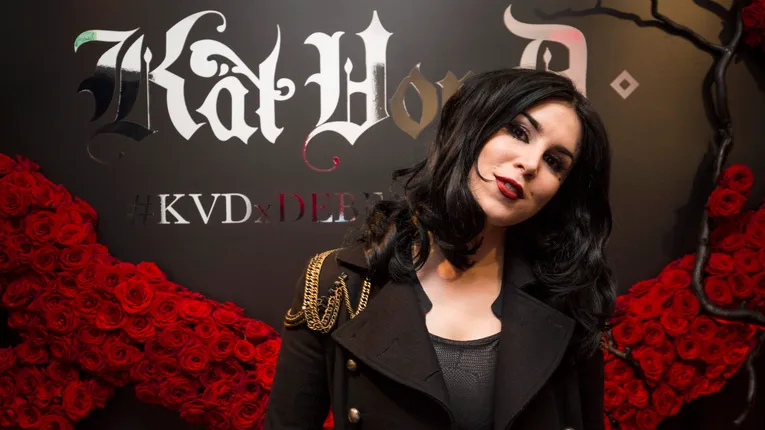
Kat Von D’s $100 Million Net Worth Explained
When people think of modern beauty moguls, names like Rihanna, Kylie Jenner, and Huda Kattan immediately come to mind. These women have crossed—or skirted close to—the elusive billionaire threshold, reshaping how celebrity-backed brands scale. Yet, a different tier of creator entrepreneur often flies under the mainstream financial radar. Take Kat Von D, whose trajectory highlights a compelling financial reality. With Kat Von D’s $100 Million Net Worth: Is This the New Standard for Female Billionaires?, financial analysts and beauty industry experts are taking a fresh look at what long-term success actually looks like in the creator economy.

While a nine-figure net worth is undeniably massive, putting an individual comfortably in the top fraction of one percent, it sparks an intriguing debate. In an era where billionaire status seems to be the baseline benchmark for celebrity success, is $100 million a disappointment, or is it actually the more sustainable, realistic new standard for independent female founders?
The Anatomy of Kat Von D’s $100 Million Net Worth
Kat Von D—born Katherine Drachenberg—built her financial foundation long before launching a cosmetics line. She first rose to prominence as a master tattoo artist, starring in hit reality television shows like Miami Ink and LA Ink. These platforms transformed her distinct gothic aesthetic into a recognized global brand.
However, the bulk of her wealth stems from strategic business ventures rather than television appearances alone. Understanding how she accumulated her fortune requires breaking down her primary revenue streams:
- Kat Von D Beauty: Launched in 2008 in collaboration with Kendo Holdings (an incubator owned by LVMH), this cruelty-free makeup line became a cult favorite, generating hundreds of millions in global retail sales.
- High-Voltage Tattoo: Her legendary Los Angeles tattoo parlor served as both a functioning business and a cultural landmark that cemented her personal brand.
- Music, Books, and Art: Venturing into vegan footwear, synth-pop music, and fine art diversification added steady secondary streams of income.
- Real Estate Investments: Strategic property flips, including the sale of her historic Los Angeles Victorian mansion, contributed significantly to her liquid capital.
The Kendo LVMH Buyout: The Turning Point
The pivotal moment in Von D’s financial journey came in January 2020. After more than a decade of massive growth, she officially sold her remaining shares of Kat Von D Beauty to her partner, Kendo Holdings. While the exact financial figures of the buyout were kept private, industry insiders estimate the transaction netted her tens of millions in cash upfront.
Crucially, this move freed her from the corporate machinery of LVMH. It allowed her to walk away with a clean, highly liquid sum, insulating her from the supply chain volatility and shifting consumer trends that later plagued other celebrity makeup lines.
Is $100 Million the New Billionaire Benchmark?
To understand whether $100 million represents a new standard, we have to look at the shifting psychology of wealth among modern entrepreneurs. Reaching a billion-dollar valuation often requires massive venture capital backing, aggressive rapid scaling, loss-leading growth strategies, and eventually, giving up majority control of your own company.
For many female founders, chasing the elusive billionaire status comes with steep trade-offs:
- Loss of creative and operational control due to investor pressure.
- Extreme personal financial risk if hyper-growth strategies fail.
- The relentless pressure to constantly expand into unrelated product categories.
By contrast, sitting comfortably at a $100 million net worth often affords a founder complete autonomy. With nine figures in the bank, an entrepreneur can fund passion projects—such as Kat Von D’s independent vegan shoe line and music career—without answering to a board of directors or private equity overlords.
The Realities of Female Entrepreneurship in Beauty
The beauty industry is notoriously cutthroat. While founders like Rihanna have cracked the code to multi-comma fortunes through massive global conglomerates (like Fenty Beauty's partnership with LVMH), many independent creators find that scaling to a billion dollars is nearly impossible without corporate giants pulling the strings.
Kat Von D’s path demonstrates that a founder does not need a ten-figure valuation to achieve absolute financial freedom. Her decision to step away from her flagship cosmetics brand when it aligned with her personal values—specifically her transition to a fully vegan lifestyle—demonstrates a prioritization of personal integrity over pure asset accumulation.
Independence Versus Scale
When evaluating the financial blueprint of modern creators, we see a clear divergence:
- The Conglomerate Route: Partnering with massive holding companies to chase billion-dollar valuations, resulting in rapid distribution but diluted ownership.
- The Independent Boutique Route: Maintaining tighter control, building a fiercely loyal niche audience, and exiting gracefully with a clean nine-figure payout.
Kat Von D chose the latter. Her $100 million net worth is the result of owning her intellectual property, leveraging a distinct personal brand, and knowing when to cash out and pivot.
Conclusion
Ultimately, labeling Kat Von D’s $100 Million Net Worth as anything less than a massive triumph misses the point of modern wealth-building. While headlines are easily captured by multi-billionaire tech founders and hyper-scaled celebrity brands, a $100 million fortune represents the pinnacle of creative independence.
For female entrepreneurs watching from the sidelines, Von D’s journey proves that you do not need to chase a billion-dollar unicorn status to win. Sometimes, building a profitable, highly authentic enterprise and retaining your peace of mind is the ultimate standard of success.