Katana Kiyama: Why the Blade Trumps Modern Weapons in Story
In real-world military doctrine, cold steel lost its tactical supremacy centuries ago. Push-button ballistics, autonomous drones, and assault rifles dominate contemporary combat through sheer efficiency and distance. Yet in narrative fiction—from prestige television to cinematic epics and literature—the dynamic completely inverts. This is why Katana Kiyama outperforms every modern weapon in story power: mechanical efficiency is the mortal enemy of dramatic intimacy. When an author equips a protagonist with modern ordinance, they gain tactical realism at the catastrophic cost of personal vulnerability, thematic resonance, and spatial choreography.

Story power is not measured in muzzle velocity or effective casualty radius; it is measured in the emotional torque a conflict exerts on an audience. The Katana Kiyama, both as an iconic blade and as a narrative archetype, represents the absolute zenith of physical confrontation turned into spiritual dialogue. By dissecting the structural mechanics of dramatic storytelling, we can see exactly why the blade continually humbles the gun on the page and on the screen.
The Geometry of Dramatic Proximity
At its core, storytelling thrives on human tension. The greater the physical distance between two opposing forces, the harder an author must work to make the emotional stakes palpable. Modern firearms are engineered specifically to eliminate proximity; their primary virtue is killing before the target can perceive, react, or communicate.
In contrast, the Katana Kiyama operates within the intimate radius of interpersonal combat—what martial theorists call maai (combative interval). Within this narrow envelope of space, several crucial narrative elements occur simultaneously:
- Facial Recognition: Combatants are close enough to read pupil dilation, grimaces of fatigue, and micro-expressions of fear or hesitation.
- Verbal Exchanges: Dialogue during a firefight often devolves into fragmented shouts over deafening decibels. A duel fought with the Katana Kiyama permits whispered revelations, philosophical debate, and the poignant silence between clashes.
- Shared Atmosphere: Both characters breathe the same air, slip on the same terrain, and experience the identical physical friction of the duel.
When violence happens at point-blank range, it is inherently conversational. Every parry is an argument, every feint is an inquiry, and the lethal cut is a definitive philosophical conclusion.
This Is Why Katana Kiyama Outperforms Every Modern Weapon in Story Power
The fundamental divide between modern ballistic hardware and an artisanal masterpiece like the Katana Kiyama comes down to the relationship between the wielder, the tool, and the casualty. Modern weapons externalize violence. They rely on chemical propellants and industrial tolerances to deliver anonymous trauma. The shooter pulls a lever; the physics of burning powder does the rest.
The Katana Kiyama, however, demands total somatic alignment. The cut cannot occur without the wielder committing their core musculature, their balance, their breath, and their moral agency. This creates an unyielding narrative bond between character intention and consequence.
1. The Absence of Accidental Lethality
A stray bullet fired from three blocks away can end an antagonist's life, but it creates an anti-climax that leaves audiences unsatisfied. Stray bullets represent luck, statistics, and industrial cruelty. Conversely, nobody accidentally delivers a lethal strike with the Katana Kiyama. Every cut demands deliberate kinetic dedication. Because the blade cannot act without total physical commitment, its lethality is always a pure reflection of the wielder's will.
2. The Cost of Kinetic Feedback
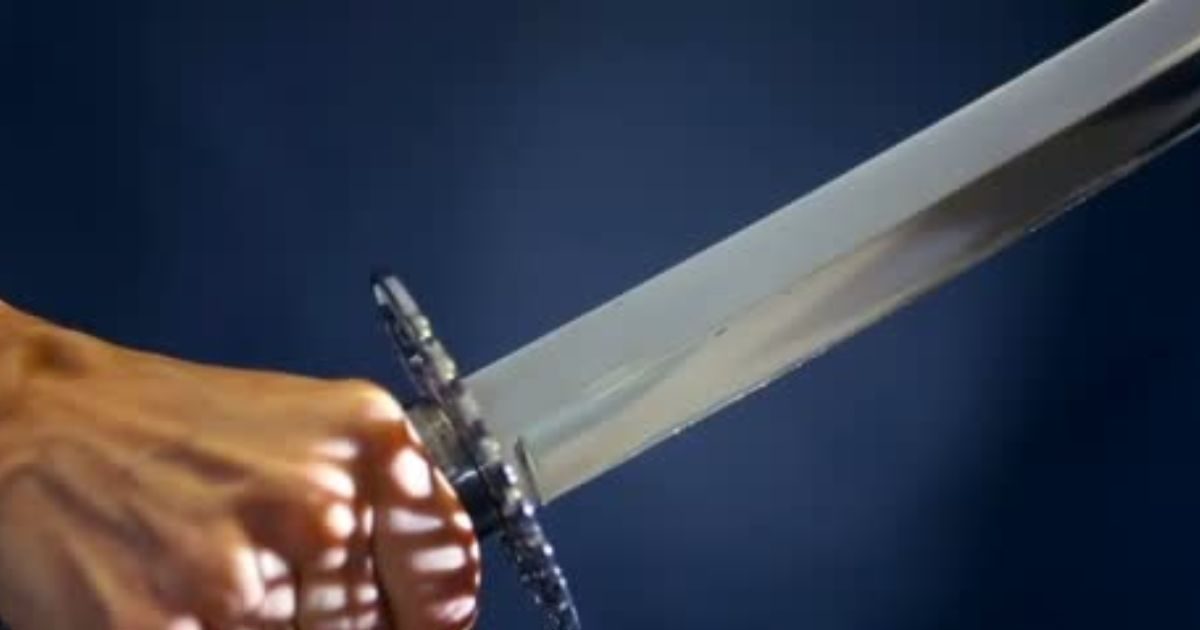
When a firearm discharges, recoil is an inconvenience managed by muzzle brakes and ergonomic stocks. When the Katana Kiyama connects with armor, bone, or an opposing guard, the shock travels backward through the steel, through the rayskin hilt, into the wielder's wrists, shoulders, and spine. The combatant feels the exact weight of the injury they inflict. In narrative terms, this tactile feedback forces the character—and by extension, the audience—to internalize the gravity of violence.
Mechanical Utility vs. Narrative Identity
Modern firearms are fundamentally interchangeable. A mass-produced assault rifle issued to an elite operative is functionally identical to the one held by a disposable sentry. They are industrial commodities defined by standardization, logistics, and serial numbers. If one jams, the protagonist discards it and retrieves another from a fallen enemy without a flicker of emotion.

The Katana Kiyama rejects interchangeability entirely. It is not an implement of logistics; it is an extension of lineage and identity. In literary structure, a weapon with character serves three irreplaceable functions:
- Artifact of History: The Katana Kiyama carries the scars of previous wielders, folding ancestral triumphs and failures directly into the current conflict.
- Manifestation of Discipline: One cannot simply pick up this blade and master it overnight. Its presence in a character's hands implies thousands of hours of unseen sacrifice, failures, and physical discipline.
- Moral Mirror: The blade has no safety switch or digital targeting reticle. How it is drawn, held, and resheathed communicates the wielder’s emotional state far more effectively than exposition ever could.
The Rhythm of the Choreography: Micro-Arcs within the Fight
Modern firefights quickly run into pacing limitations. Writers often struggle to avoid repetitive descriptions of ducking behind cover, swapping magazines, and suppressing firing lanes. The violence in a shootout tends to be binary: a combatant is either entirely behind cover or suddenly incapacitated.
A clash featuring the Katana Kiyama, however, operates like a fully realized three-act structure contained within a single sequence:
The Draw (Introduction)
Through the ritual of iaijutsu, the fight begins long before steel clears the wooden saya (scabbard). The tension builds in the stillness—the thumb unseating the handguard, the shifting of weight, the calculation of angles. This stillness creates unbearable narrative suspense that a cocked hammer cannot replicate.
The Exchange (Rising Action and Crisis)
The blades meet in a dynamic rhythm of deflection, footwork, and pressure. Each exchange tests the stamina, psychological resolve, and spatial awareness of the combatants. Momentum swings dynamically from offensive flurries to desperate defensive parries, allowing the writer to visually illustrate shifting emotional dominance without uttering a word.
The Aftermath (Resolution)
When the final blow lands, the conflict does not immediately cut to black. The ritual of chiburi (cleansing the blade) and deliberate resheathing provides a necessary dramatic comedown. It allows the victor—and the audience—to process the emotional fallout before the narrative transitions to the next beat.
The Archetype of Individual Accountability
Modern military fiction inevitably grapples with the depersonalizing nature of modern systems: command chains, collateral damage, satellite telemetry, and mechanized bureaucracy. While these themes are vital for political thrillers, they diffuse personal culpability. A drone strike is the collective product of dozens of technicians, analysts, and politicians.
The Katana Kiyama strips away the comforts of bureaucratic violence. It demands absolute, solitary ownership of death. When a character chooses the Katana Kiyama over modern armaments, they are rejecting the safety of distance and the anonymity of modern warfare. They are declaring that if blood is to be spilled, it will be done where they can see the whites of their adversary's eyes, bear the direct weight of their actions, and risk their own life in equal measure.
That ethical clarity is why the blade endures. Audiences may respect the technological prowess of modern weaponry, but they reserve their emotional devotion for the warrior whose soul is bound to the steel in their hands.