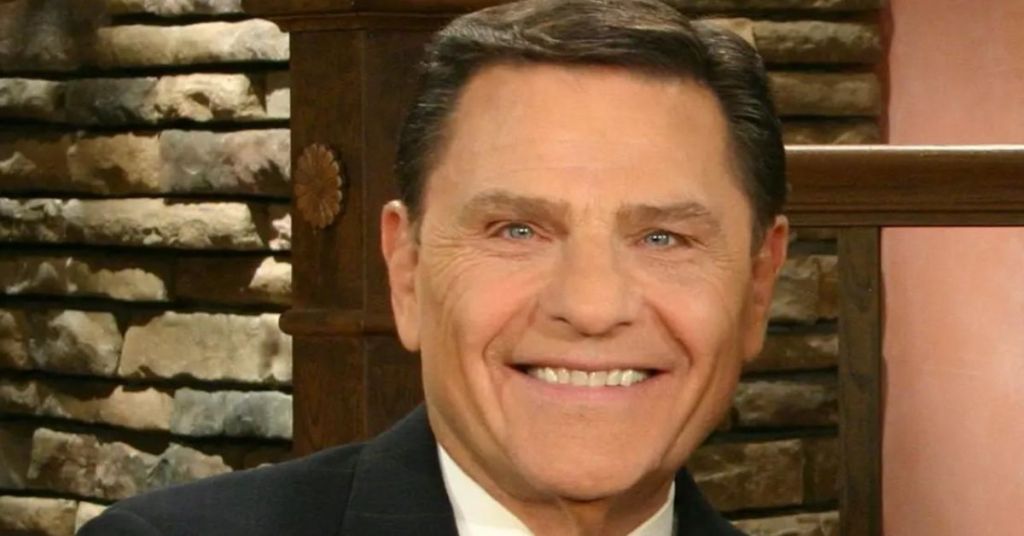
Kenneth Copeland's $25M Education: Financial Roots
Introduction

When people think of televangelist Kenneth Copeland, they usually picture private jets, massive television studios, and a multi-million-dollar ministry empire. However, long before global broadcasts and controversy surrounded Kenneth Copeland’s $25M education—referring to the vast educational and financial infrastructure of his ministry—there was a young man from Texas learning the ropes of business, media, and persuasion.
Understanding how Copeland built his financial foundation requires looking past modern headlines and examining his early life, his introduction to the Word of Faith movement, and the strategic pivots that turned a modest radio preacher into one of the wealthiest religious figures in the world. This article breaks down the formative experiences that shaped his financial empire.
Early Life and Formative Background
Kenneth Max Copeland was born on December 6, 1936, in Texarkana, Texas. Growing up in a working-class environment during and immediately after World War II, Copeland did not inherit a vast fortune. His father worked as a safety engineer, and young Kenneth was exposed to practical, industrious environments early on.
Before finding his calling in the pulpit, Copeland pursued secular entertainment and media. He worked as a recording artist for Hollywood’s Imperial Records in the late 1950s, scoring a minor billboard hit with the song "Pledge of Love." This early exposure to the entertainment industry, radio broadcasting, and music production provided him with technical skills that would later prove invaluable for his television ministry.
The Power of Media and Broadcasting
Copeland’s time in the secular entertainment world was short-lived, but it left him with a deep understanding of media production. While many traditional pastors viewed television and radio with suspicion, Copeland recognized the medium's potential to scale a message globally.
- Audio Engineering: Understanding how microphones, mixing boards, and acoustics worked.
- Camera Presence: Learning how to command attention on a screen rather than just a physical stage.
- Production Value: Treating religious broadcasts with the same professional polish as mainstream entertainment.
The Oral Roberts Connection and Theological Training
A major turning point in Copeland’s life occurred in the fall of 1962 when he made a commitment to full-time Christian ministry. Seeking guidance, he enrolled at Oral Roberts University (ORU) in Tulsa, Oklahoma, which was then expanding rapidly as a powerhouse of charismatic Christianity.
At ORU, Copeland did more than just study theology; he worked directly as a pilot and chauffeur for healing evangelist Oral Roberts. This close proximity allowed Copeland to observe firsthand how a major multi-million-dollar ministry operated behind the scenes.
Key Lessons Learned from Oral Roberts

Working alongside Oral Roberts gave Copeland a masterclass in scaling a religious organization. He absorbed specific operational strategies:
- The Seed-Faith Principle: Roberts popularized the concept that giving money to a ministry acts as a financial 'seed' that God will multiply back to the donor. Copeland adopted and expanded this doctrine into his own teachings.
- Mass Media Expansion: Roberts was an early pioneer of television evangelism, buying network airtime and building a sprawling campus. Copeland mirrored this strategy decades later.
- Infrastructure Building: Moving from tent revivals to permanent, sprawling campuses capable of housing universities, television studios, and administrative offices.
Entering the Word of Faith Movement
In the mid-1960s, Copeland encountered the teachings of E.W. Kenyon and Kenneth Hagin, the foundational figures of the modern Word of Faith movement. This theological framework emphasized positive confession, divine health, and financial prosperity as direct rights of believers.
In 1967, Copeland launched Kenneth Copeland Ministries (KCM) alongside his wife, Gloria. Their early days were characterized by small-scale radio broadcasts. However, as they refined their message around financial abundance, donations began to scale rapidly. The core message was simple yet compelling to their audience: poverty was not godly, and financial struggle could be overcome through spiritual laws of giving and believing.
Scaling the Empire: Kenneth Copeland’s $25M Education
The phrase Kenneth Copeland’s $25M education often colloquially references the massive capital investment, property acquisitions, and operational scaling that KCM achieved over the decades. The ministry grew from a regional radio outreach into a global powerhouse headquartered at the Eagle Mountain International Church property in Newark, Texas.
Infrastructure and Real Estate Assets
To sustain a global operation, Copeland invested heavily in physical infrastructure, transforming his ministry into a self-sustaining compound.
- The Newark Compound: Spanning over 1,500 acres, the Eagle Mountain property includes a private airport, a massive church sanctuary, television production facilities, and housing for ministry staff.
- Private Aviation Fleet: Recognizing the need for global travel without commercial airline delays, Copeland famously built a multi-million-dollar aviation department, utilizing jets to transport preaching teams worldwide.
- The Believer's Voice of Victory: A multi-platform media arm spanning daily television broadcasts, magazines, digital apps, and a 24-hour network.
Conclusion
Kenneth Copeland’s financial foundation was not built overnight. It was constructed through a combination of early media exposure, strategic mentorship under pioneers like Oral Roberts, and the systematic monetization of the Word of Faith theology. By mastering television broadcasting, real estate acquisition, and direct donor engagement, Copeland turned a modest preaching career into one of the most financially successful religious enterprises in modern history.