Kick Streaming Pay Hourly: Rates and Rules
When Kick launched in late 2022, it sent shockwaves through the creator economy by offering a 95/5 subscription revenue split. Shortly after, the platform made an even bolder claim: creators would eventually receive an hourly wage just for broadcasting. Today, the conversation surrounding kick streaming pay hourly contracts centers on the Kick Creator Incentive Program (KCIP), a system designed to provide steady, predictable income to consistent broadcasters.

However, misconceptions about how this hourly compensation works remain widespread. It is not an open-door policy where anyone who turns on a webcam receives minimum wage. Below is an in-depth breakdown of how Kick’s hourly pay functions, what creators actually earn, and what you must do to qualify.
What Is the Kick Creator Incentive Program (KCIP)?
Kick’s hourly compensation is officially structured through the Kick Creator Incentive Program (KCIP). Spearheaded by platform co-founder Ed Craven and prominent creator Trainwreckstv, KCIP was created to solve the primary dilemma of modern streaming: revenue instability.
On traditional platforms like Twitch or YouTube, a broadcaster’s income fluctuates wildly based on monthly subscriptions, donations, and volatile ad impressions. KCIP functions more like an independent contractor agreement. Streamers who qualify are compensated based on their active streaming hours, provided they sustain specific engagement metrics, follow strict content guidelines, and maintain an authentic audience.
Kick Streaming Pay Hourly: How Much Do Creators Make?
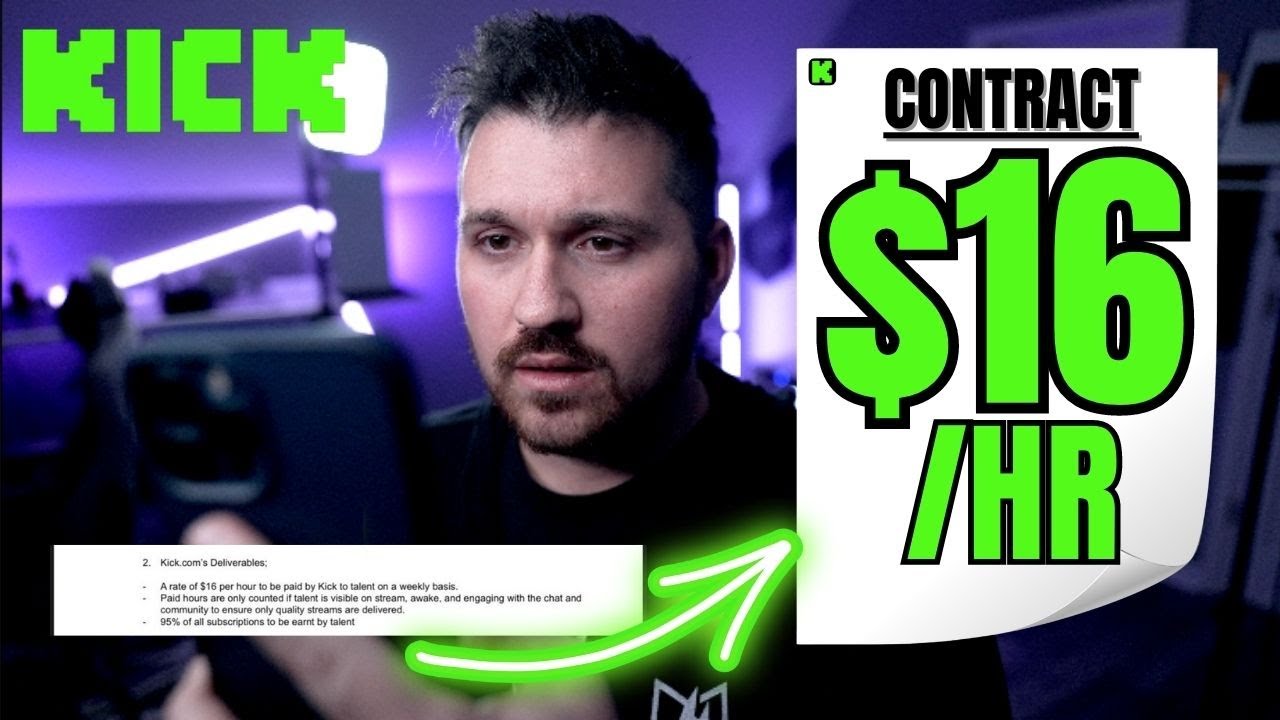
The earliest reports and promotional posts suggested a baseline of roughly $16 per hour for qualifying creators. In practice, Kick uses a dynamic formula rather than a rigid, universal flat rate. Payouts are scaled primarily against your Average Concurrent Viewers (CCV) and the geographic distribution of your audience.
While Kick does not publish a static public pay scale, creator contracts and public disclosures point to the following general structure across tiers:
- Entry-Tier KCIP Streamers (approx. 100–300 CCV): Typically earn between $15 and $25 per hour.
- Mid-Tier KCIP Streamers (approx. 300–1,000 CCV): Frequently earn between $30 and $60 per hour, depending on audience engagement and country of viewership.
- Top-Tier Broadcasters (1,000+ CCV): Can earn anywhere from $100 to hundreds of dollars per hour under bespoke enterprise contracts.
These hourly payouts are paid in addition to the platform's standard 95% cut on viewer subscriptions and direct on-channel tips, making it one of the most lucrative creator programs in live broadcasting for those who cross the entry barrier.
How Kick Calculates Your Hourly Wage
Kick does not pay for idle time or inflated viewer counts. The platform monitors several backend variables to determine an account’s effective hourly rate and eligibility for payout:
1. Average Concurrent Viewership (CCV)
CCV is the cornerstone of the pay formula. A streamer holding 500 stable viewers will have a substantially higher hourly rate than a creator hovering at 100 viewers. Sudden drops or artificial spikes in CCV are heavily scrutinized.
2. Viewer Engagement and Chat Velocity
Video: Kick Partner Program KCIP Explained How Streamers Get Paid Hourly & Why They're Leaving Twitch
To combat automated viewer manipulation, Kick’s payment algorithm measures the ratio of active chatters to passive viewers. A stream with 400 viewers but only three people speaking in chat signals botting or unengaged traffic, which can immediately disqualify the stream from receiving hourly compensation.
3. Audience Demographics
Advertiser and platform value varies by region. Viewers located in Tier 1 advertising regions (such as the United States, Canada, the United Kingdom, Germany, and Australia) generate higher hourly payouts than audiences concentrated in areas with lower ad market valuations.
4. Stream Duration Caps
KCIP agreements typically include a monthly cap on compensated hours (usually ranging from 80 to 120 hours per month). This cap prevents streamers from broadcasting unhealthy 20-hour marathons simply to farm hourly pay, ensuring that creators maintain high content standards throughout their compensated time.
Requirements to Qualify for Hourly Pay on Kick
You cannot simply register an account and start billing Kick for your hours. Admission into the Creator Incentive Program requires passing rigorous performance and behavioral thresholds.
- Kick Verification: You must first attain Kick Verified status (denoted by the green checkmark), which requires building a core following and a consistent track record of broadcasts.
- Viewer Thresholds: Most creators invited to early KCIP phases needed an average of at least 100 to 150 concurrent viewers across a continuous 30-day window.
- Consistent Broadcasting Schedule: Candidates must stream a minimum number of days (usually 15–20 days per month) with at least 50–80 total hours logged within that window.
- Healthy Follower Growth and Engagement: Kick evaluates whether your follower count aligns proportionally with your concurrent viewership and chat activity.
- Zero Terms of Service (TOS) Violations: Broadcasters must maintain a clean record free from copyright strikes, hate speech violations, and prohibited gambling activities outside platform rules.
Common Pitfalls: Why Creators Get Rejected or Removed
The lure of guaranteed hourly pay has led many creators to attempt to game the system. Kick's compliance team actively audits KCIP participants. Common reasons streamers are rejected or dropped from the program include:
- Viewbotting: Kick uses sophisticated detection tools to track incoming traffic sources, viewer IP distributions, and account ages. Accounts caught inflating numbers face immediate termination.
- AFK and Sleep Streaming: Broadcasting idle screens, pre-recorded video loops, or sleeping on camera to accrue billable hours is explicitly prohibited under KCIP contracts.
- Sub-Only Chat Walls: While sub-mode is permitted in moderation, keeping a channel locked to suppress low organic engagement metrics will trigger manual contract reviews.
- Toxic or Brand-Unfriendly Conduct: While Kick markets itself as a freer alternative to Twitch, advertisers and business partners still demand brand safety. Flagrant violations lead to rapid contract termination.
Kick Hourly Pay vs. Twitch Revenue Model
The contrast between Kick’s hourly approach and Twitch’s traditional revenue architecture is stark:
- Twitch: Relies primarily on a 50/50 sub split (or 70/30 for select Partner Plus participants), ad-revenue-per-thousand (CPM) payouts that rarely exceed $2 to $5 per 1,000 ad impressions, and viewer Bits. There is zero base hourly pay for the vast majority of broadcasters.
- Kick: Delivers a 95/5 subscription revenue split, allowing creators to keep nearly all subscriber funding, combined with a direct hourly rate for accepted KCIP members.
For mid-sized creators pulling 200–500 average viewers, Kick’s model can produce several times the net monthly income of Twitch, provided the creator is approved for the hourly program.
Final Thoughts: Is Kick’s Hourly Pay Sustainable?
The Kick streaming pay hourly initiative has changed expectations for live broadcast compensation. While early skepticism questioned whether any platform could sustain paying thousands of streamers an hourly wage, Kick has managed the financial burden by treating KCIP as an exclusive, performance-gated incentive rather than a blanket entitlement.
If you are an aspiring streamer, you should not approach Kick expecting an instant paycheck. Instead, treat the hourly program as a high-value milestone: focus first on building an authentic community, maintaining consistent chat engagement, and hitting verification metrics. Once you clear those benchmarks, KCIP provides one of the most reliable and lucrative safety nets anywhere in modern content creation.