King Solomon’s Golden Count: Richest of All Empires?
Few figures in antiquity evoke the sheer scale of material opulence associated with King Solomon. According to the Hebrew Bible, the third king of the United Monarchy of Israel did not merely accumulate money; he transformed gold into architectural infrastructure, everyday dinnerware, and sovereign diplomacy. For centuries, historians, economists, and biblical scholars have wrestled with a tantalizing historical paradox when evaluating King Solomon’s golden count: was his wealth greater than any empire’s sum?
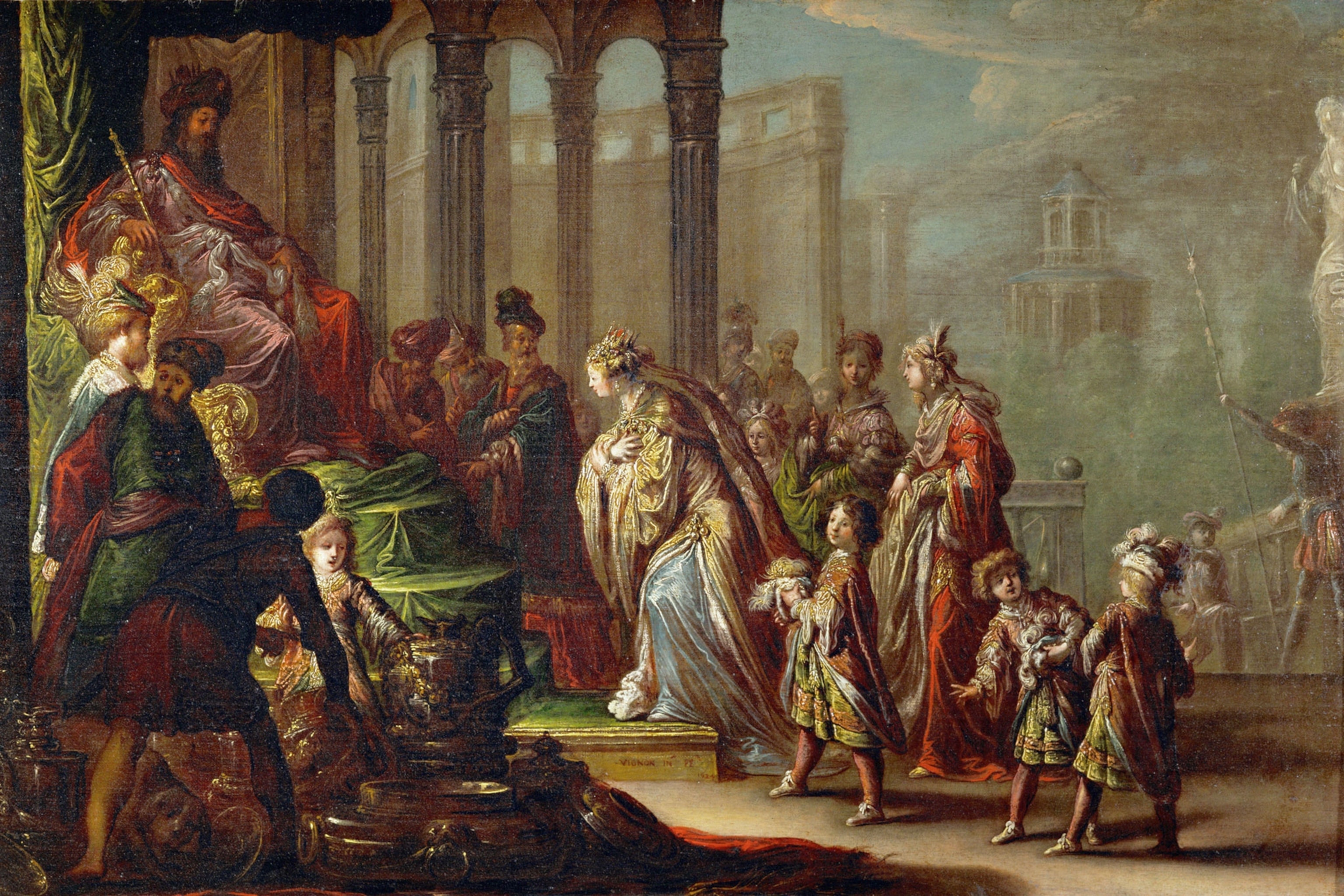
To answer that question, we must sift through ancient ledgers, contextualize the metallurgical economy of the late Iron Age, and measure Solomon's legendary tributary influx against the colossal treasuries of Persia, Rome, and West Africa.
The Biblical Ledger: Solomon's 666 Talents of Gold
The primary source for Solomon’s wealth is found in the biblical books of 1 Kings and 2 Chronicles. The text records an astonishing annual figure: every single year, Solomon received 666 talents of gold. This staggering tribute excluded additional revenues generated by commercial traders, maritime merchants, and the vassals of Arabia.
To understand the weight of this claim, one must convert ancient units of measurement:
- The Talent (Kikkar): While talent weights varied across the ancient Near East, an Israelite heavy royal talent of the 10th century BCE is generally estimated at approximately 30 to 34 kilograms (66 to 75 pounds).
- Annual Bullion: At 34 kilograms per talent, 666 talents equal roughly 22,644 kilograms—more than 22.6 metric tons of pure gold arriving in Jerusalem each year.
- Cumulative Influx: Over a purported 40-year reign, this baseline revenue alone would total over 900 metric tons of gold, without factoring in one-off gifts like the 120 talents presented by the Queen of Sheba or the maritime bounty brought home from the mysterious port of Ophir.
The scriptures describe this gold not as passive bullion locked in deep vaults, but as an omnipresent decorative element. Solomon commissioned 200 large ceremonial shields of beaten gold (each using 600 shekels of gold) and 300 smaller shields. His throne was sculpted from ivory and overlaid with refined gold. The sacred interior of the Temple in Jerusalem was famously lined with gold leaf, right down to the hinges of the inner doors and the drinking chalices of his royal court.
King Solomon’s Golden Count: Was His Wealth Greater Than Any Empire’s Sum?
When measuring Solomon’s baseline bullion against the world's most formidable empires, the comparison yields surprising revelations. Did a single Levant kingdom outstrip the total reserves of world-dominating imperial machines?
Solomon vs. The Achaemenid Empire of Persia
The Persian Empire under Cyrus the Great, Darius I, and Xerxes stretched from the Aegean Sea to the Indus River, gathering taxes from dozens of wealthy satrapies. When Alexander the Great sacked the Persian capitals of Susa and Persepolis in 330 BCE, historical chroniclers like Diodorus Siculus and Arrian recorded the captured imperial treasury.
Alexander reportedly seized between 120,000 and 180,000 talents of bullion—mostly silver, but with vast reserves of Daric gold coins. This accumulated surplus required a baggage train of thousands of pack mules and camels to haul away. While Solomon’s claimed annual income of gold is exceptionally high, the total liquidated wealth of the Persian imperial core far exceeded the scale of any regional kingdom in the Levant.
Solomon vs. Imperial Rome
At the apex of the Roman Empire under Augustus and Trajan, the state budget operated on an economy of continental scale. Augustus personally owned Egypt—the breadbasket and premier gold-hoarding nation of the Mediterranean. The imperial mints churned out hundreds of millions of gold aurei.

Following Trajan’s conquest of Dacia (modern Romania) in 106 CE, Roman forces extracted an estimated 165 tons of gold and over 300 tons of silver directly from the Dacian royal mines. Rome’s imperial apparatus operated with an aggregate economic throughput that dwarf individual monarchical holdings, even those as gilded as Solomon’s.
Solomon vs. Mansa Musa of Mali
If Solomon holds a rival for the title of history's wealthiest singular monarch, it is Mansa Musa, the 14th-century ruler of the Mali Empire. Mali produced over half of the Old World's gold supply at the time. During his 1324 pilgrimage to Mecca, Musa traveled with dozens of camels, each carrying up to 300 pounds of gold dust, dispersing so much bullion in Cairo that he caused double-digit currency inflation that lasted over a decade. In raw, verified physical gold production, Mali remains peerless.
Converting Solomon's Riches into Modern Currency
Attempting to convert ancient bullion into modern purchasing power is an imperfect economic science, but spot-price calculations provide useful perspective:
- Raw Bullion Value: At a modern gold price of roughly $70,000 to $75,000 per kilogram, Solomon’s annual 22.6 metric tons equates to approximately $1.6 to $1.7 billion per year in raw metal alone.
- 40-Year Cumulative Baseline: Over four decades, 900 metric tons translates to roughly $65 billion to $70 billion in modern raw bullion value.
- The Ancient Purchasing Premium: Gold in the 10th century BCE carried vastly higher relative purchasing power than it does today. In an era before mechanized mining and globalized logistics, a single ounce of gold could purchase hundreds of bushels of wheat, hire veteran mercenaries for months, or secure municipal properties. In relative purchasing terms within the ancient economy, Solomon's wealth was equivalent to several hundred billion dollars in modern capital.
Archaeology vs. Biblical Text: The Historical Context
Modern Levant archaeology presents a more nuanced reality regarding 10th-century BCE Jerusalem. Excavations led by archaeologists such as Israel Finkelstein suggest that early Iron Age Judah was a developing highland polity with limited administrative bureaucracy, rather than a globe-spanning economic powerhouse.
Conversely, researchers like the late Eilat Mazar have uncovered monumental stone structures in the City of David and massive fortifications from the 10th century BCE that point to significant centralized authority. Furthermore, excavations at the Timna copper mines in southern Israel show highly sophisticated industrial-scale metallurgical operations dating precisely to the reign of Solomon.
Why has no direct trace of Solomon’s vast gold hoard been found? History provides a straightforward explanation: ancient Jerusalem was captured, besieged, and plundered dozens of times. Barely five years after Solomon’s death, Pharaoh Shishak (Sheshonq I of Egypt) invaded Jerusalem and, as recorded in both 1 Kings 14:26 and the Bubastite Portal at Karnak, stripped the Temple and royal palace of all their gold shields and treasures. Any monumental cache that existed was melted down, recast, and dispersed into Egyptian and Mesopotamian war chests millennia ago.
The Verdict: Reality, Hyperbole, or Sacred Literature?
Was Solomon’s wealth greater than any empire’s sum? In strictly empirical terms, no singular regional kingdom of the ancient Levant could financially match the combined physical output of the Persian Empire, the Roman treasury, or the mineral monopoly of medieval Mali. The logistical infrastructure needed to store, transport, and guard hundreds of tons of gold annually requires an imperial military footprint that archaeological records do not reflect for 10th-century Judea.
Yet, within its historical milieu, Solomon’s golden count represents something profound. It describes an extraordinary golden age of trade alliances, leveraging Phoenician sea routes from Ezion-Geber and dominating the overland incense trails of Arabia. Whether interpreted as literal accounting or theological hyperbole designed to project divine favor, King Solomon’s legendary hoard remains the ultimate cultural benchmark for sovereign magnificence.


