King Solomon’s Wealth: Measuring Ancient Treasure
Throughout history, few figures have captured the human imagination quite like King Solomon. Famed for his wisdom, his vast administrative empire, and his legendary building projects, the Israelite monarch is often remembered as one of the richest men to ever walk the earth. From temple gold to ancient treasure, the biblical accounts describe a kingdom overflowing with precious metals, exotic imports, and unprecedented luxury. But separating historical reality from legendary hyperbole remains a fascinating challenge for historians, archaeologists, and economists alike.
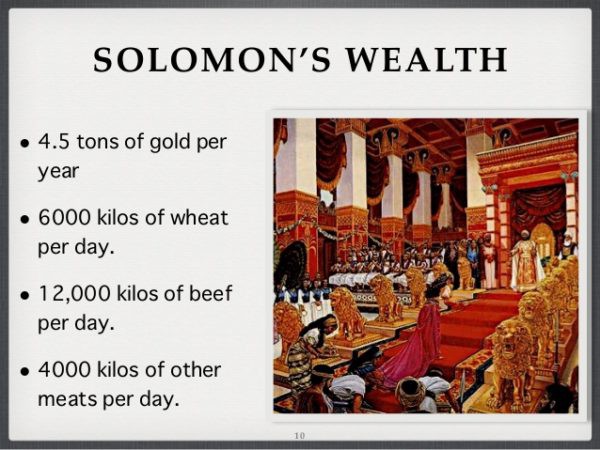
Evaluating the true extent of ancient fortunes is notoriously difficult. Unlike modern billionaires, ancient rulers did not file tax returns or hold liquid assets in global banks. Instead, their wealth was measured in raw commodities: gold, silver, bronze, land, livestock, and tribute from vassal states. To understand how much King Solomon was actually worth, we must look closely at biblical texts, archaeological context, and modern economic evaluations.
The Biblical Blueprint: Quantifying the Inflow
The primary source for information regarding Solomon’s fortune comes from the Hebrew Bible, specifically the books of 1 Kings and 2 Chronicles. These texts provide specific figures that, when added together, paint a picture of staggering opulence. According to these accounts, the Israelite king received an annual income of 666 talents of gold.
To put this into perspective, a biblical talent is generally estimated to weigh between 75 and 100 pounds (approx. 34 to 45 kilograms). Taking the conservative estimate, 666 talents equal roughly 50,000 pounds of gold every single year. At modern market values, that annual influx alone would be worth billions of dollars.
Key Sources of Solomon's Income
The biblical narrative outlines several primary streams of revenue that fueled the royal treasury:
- Foreign Tribute: Neighboring kings and vassal states paid regular taxes in the form of precious metals, spices, and textiles.
- Commercial Tariffs: Solomon’s kingdom sat at the crossroads of major ancient trade routes, allowing him to tax passing merchants and caravan traders.
- Royal Enterprise: Joint maritime ventures with King Hiram of Tyre brought back fleets of merchant ships laden with foreign goods.
- Internal Taxation: Twelve regional administrative districts provided food and provisions for the royal household on a rotating monthly basis.
From Temple Gold to Ancient Treasure
The most famous monument to Solomon’s wealth was the First Temple in Jerusalem. The biblical descriptions of its construction detail an interior lavishly coated in precious metals. The inner sanctuary was completely overlaid with pure gold, and even the altar was covered in the precious metal. Beyond the temple itself, Solomon built a magnificent palace complex, featuring a throne of ivory overlaid with refined gold.
This accumulation of temple gold and ancient treasure was not meant merely for hoarding; it was a deliberate political and theological statement. In the ancient Near East, a king's splendor directly reflected the power and favor of his national deity. By building a temple of such unmatched opulence, Solomon signaled to rival empires—such as Egypt and Assyria—that Israel was a major regional power.
However, this immense wealth proved to be a double-edged sword. The vast resources required for these monumental projects placed a heavy economic burden on the population. Following Solomon's death, the united monarchy fractured, and subsequent invaders—most notably Pharaoh Shishak of Egypt—raided Jerusalem, carrying away much of the temple gold as plunder.
Video: The UnXplained: King Solomon's LOST Treasures of Gold & Copper (Season 6) | History

Modern Economic Estimates: How Much Was He Worth?
In recent years, financial publications and historians have attempted to calculate a net worth for biblical figures. Popular estimates often place King Solomon’s peak net worth anywhere from $2 trillion to over $2.2 trillion in modern currency, frequently ranking him near the top of lists comparing historical figures of extreme wealth, alongside figures like Augustus Caesar and Mansa Musa.
How do economists arrive at these figures? They typically calculate the total weight of the gold and silver mentioned in the biblical texts and multiply it by current spot prices for precious metals. They also factor in the estimated value of real estate, military assets, and the economic output of his empire.
Yet, many historians urge caution with these modern valuations. Applying contemporary capitalist metrics to an ancient redistributive economy is inherently flawed. Ancient wealth was not easily convertible into cash, nor did it function within a modern market economy. Much of Solomon's treasury existed in state-owned goods that could not be liquidated without collapsing the regional trade network.
Fact Versus Legend: What Does Archaeology Say?
When investigating the historical backing of Solomon's wealth, archaeologists face a frustrating dilemma. Direct, unassailable archaeological evidence naming King Solomon remains scarce. While sites like Gezer, Hazor, and Megiddo reveal monumental architecture and sophisticated city planning consistent with a centralized 10th-century BCE monarchy, scholars fiercely debate the exact scale of the united monarchy.
Some minimalist archaeologists argue that 10th-century Jerusalem was little more than a modest highland hill village rather than the gleaming imperial capital described in scripture. If this view is accurate, the descriptions of temple gold and ancient treasure may reflect later theological embellishments written down during the Babylonian exile, designed to romanticize a lost golden age.
Conversely, maximalist scholars point to recent excavations in the Timna Valley, where ancient copper mines dating to the time of Solomon and his father, David, show a highly organized, highly productive industrial complex. Copper was the "oil" of the ancient world, vital for producing bronze tools and weapons. Control over these mines would have generated massive wealth, supporting the idea that Solomon’s kingdom was indeed an economic powerhouse.
Conclusion
Ultimately, measuring the wealth of King Solomon requires balancing faith, historical texts, and archaeological data. Whether the specific numbers in the Bible represent literal economic statistics or symbolic expressions of divine blessing, the core reality remains unchanged. Solomon ruled over a strategic, prosperous crossroads empire capable of accumulating remarkable riches.
From the gleaming temple gold that dominated Jerusalem's skyline to the widespread ancient treasure amassed through trade and tribute, Solomon’s fortune continues to fascinate modern minds. It serves as a lasting testament to the heights of ancient Near Eastern civilization and the timeless allure of unmatched imperial wealth.


