Leak’s Alignment Patterns in Systemic Security
Understanding Leak’s Alignment Patterns
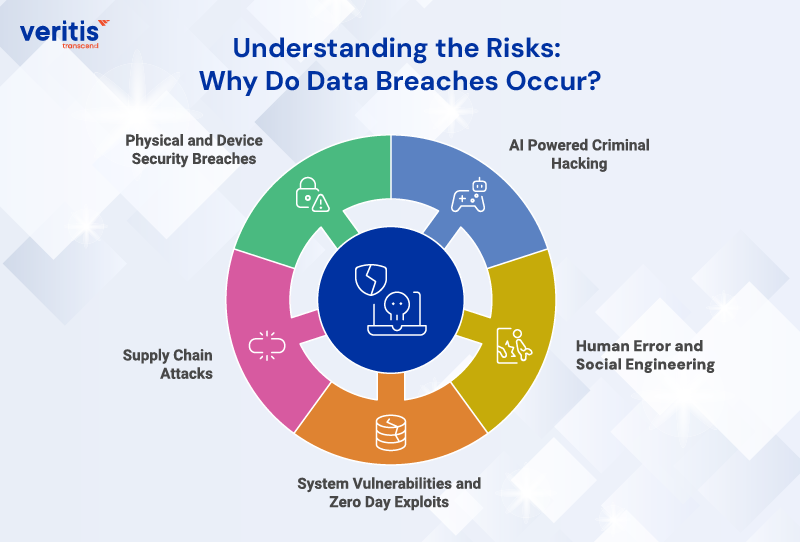
When an organization suffers a data breach, the immediate response is often forensic firefighting. Teams rush to patch the specific vulnerability, revoke compromised credentials, and issue public apologies. Yet, months later, another breach occurs through a seemingly unrelated vector. This cycle of reactive patching stems from a fundamental misunderstanding of how security failures manifest. Security breaches are rarely random anomalies; they are symptoms of underlying architectural decay. To break this cycle, security leaders must examine leak’s alignment patterns—why your security breaches align with deep systemic risks!
Alignment patterns refer to the hidden geometric and behavioral symmetries found across multiple security incidents within an enterprise. When you map out breaches over a timeline, striking correlations often emerge regarding department silos, legacy technology adoption, and administrative choke points. Recognizing these patterns shifts your security posture from reactive defense to proactive architectural resilience.
The Anatomy of Systemic Security Risks
To understand why leaks align themselves predictably, we must look beyond individual software bugs or human errors. Individual vulnerabilities are merely the surface manifestation of deeper systemic risks built into organizational workflows.
Technical Debt and Architectural Blind Spots
Legacy systems accumulate technical debt over years of rapid feature deployment. When engineering teams prioritize speed over secure-by-design principles, they inadvertently create structural fissures. These fissures do not fail uniformly; they break along lines of high operational stress. Consequently, independent teams working on separate projects often introduce identical architectural flaws because they rely on the same outdated libraries or insecure authentication patterns.
Organizational Silos and Communication Breakdowns
Human behavior mirrors technical architecture. When departments operate in rigid silos, security policies become fragmented. A cloud migration team might implement robust encryption while the marketing department leaves third-party analytics trackers completely unmonitored. When data leaks occur across these disparate units, the incidents share a common root cause: decentralized governance and a lack of holistic visibility.
How to Identify Your Organization's Alignment Patterns
Video: AI Chaos: Uncontrolled Adoption Risks Data Leaks & Security Breaches!

Uncovering systemic alignment patterns requires moving beyond automated vulnerability scanners. While scanners excel at finding known software bugs, they blind you to structural design flaws. Implementing a pattern-recognition framework involves several distinct steps:
- Aggregate Incident Metadata: Collect post-mortem reports from every security incident, no matter how minor, over the past three years.
- Map Human and Technical Vectors: Categorize incidents not just by the technology affected, but by the business unit, approval workflow, and vendor involved.
- Look for Common Denominators: Ask which foundational assumptions were shared across disparate breaches. Was it an over-reliance on perimeter defense? Was it a lack of internal zero-trust segmentation?
- Visualize the Timeline: Plot incidents chronologically alongside organizational changes, such as rapid hiring phases, leadership transitions, or rushed product launches.
Shifting from Reactive Patching to Systemic Resilience
Identifying alignment patterns is only half the battle; the real value lies in remediation. If your breach analysis reveals that 70% of data leaks trace back to third-party vendor integrations managed without security oversight, patching individual APIs is a waste of resources. Instead, you must redesign the vendor onboarding and API gateway architecture.
Adopting a Zero-Trust Architecture
Zero-trust principles directly combat systemic alignment patterns by eliminating implicit trust based on network location or past authorization. By enforcing continuous verification for every user and device, you minimize the blast radius when a structural flaw is inevitably exploited.
Redefining Risk Metrics
Traditional metrics focus on the number of vulnerabilities patched or the time it takes to close a ticket. To address systemic risk, security teams must measure architectural coherence. Metrics should evaluate code reuse security, pipeline automation coverage, and the uniformity of access control policies across all business units.
Conclusion
Security breaches will always occur, but repeating the same types of failures is an avoidable architectural choice. By studying leak’s alignment patterns, you can look past the noise of daily alerts and address the root causes of organizational vulnerability. Aligning your defense strategy with the reality of systemic risk transforms security from a cost center into a sustainable foundation for business growth.