Learn Columbus Body Rub Techniques at Home
Bringing the soothing ambiance of a professional spa into your living space is easier than you might think. Whether you want to unwind after a long work week or share a relaxing evening with a partner, taking the time to learn Columbus body rub techniques at home can significantly improve your overall wellness and stress levels. Unlike clinical physical therapy, a classic body rub focuses on fluid, gliding movements designed to ease muscle tension, improve circulation, and promote deep mental relaxation.

Creating the Right Atmosphere at Home
Before your hands ever touch skin, you need to prepare your environment. A professional-grade massage requires sensory engagement. Recreating a serene studio environment at home helps the nervous system transition from daily stress to deep relaxation.
Lighting and Sound
Harsh overhead lighting is the enemy of relaxation. Instead, opt for dim lamps, fairy lights, or unscented candles to create a warm, inviting glow. Pair the lighting with soft, ambient instrumental music or nature sounds played at a low volume. This masks household noises and helps both the giver and the receiver focus on the rhythm of the session.
Temperature and Comfort
When the body relaxes, its internal temperature drops. Ensure your room is comfortably warm—around 72 to 75 degrees Fahrenheit. Set up a firm yet comfortable surface, such as a massage table, a thick yoga mat on the floor, or a firm mattress. Cover the surface with clean, soft cotton sheets and have extra blankets nearby to drape over unworked areas of the body.
Essential Oils and Lubricants
Friction is the primary obstacle to a smooth, restorative session. Using the right medium allows your hands to glide effortlessly over the skin without pulling or pinching hair.
- Massage Oils: Sweet almond oil, fractionated coconut oil, and jojoba oil are industry favorites because they absorb slowly and leave the skin feeling nourished.
- Lotions and Cremes: Unscented massage lotions provide more grip than oils, making them ideal if you need to apply targeted pressure to specific muscle knots.
- Aromatherapy: Add a few drops of lavender, eucalyptus, or chamomile essential oil to your base carrier oil to enhance the sensory experience.
Core Columbus Body Rub Techniques to Practice
Professional therapists rely on specific, time-tested strokes that work in harmony with the body's circulatory and muscular systems. When you practice these foundational movements, always maintain contact with your partner using at least one hand.

Effleurage (Gliding Strokes)
Effleurage is the cornerstone of any body rub. These are long, sweeping strokes performed with the palms of your hands. Use effleurage at the beginning of the session to warm up the tissue and spread the oil evenly, and at the end to signal that the session is concluding. Apply moderate pressure as you move toward the heart, and lighter pressure on the return stroke.
Petrissage (Kneading and Compression)
Once the muscles are warm, transition to petrissage. This technique mimics kneading bread dough. Gently pick up, lift, squeeze, and roll the muscle tissue between your thumbs and fingers. This is particularly effective on larger muscle groups like the shoulders, lower back, and thighs. It helps break up minor adhesions and stimulates blood flow deep within the muscle fibers.
Friction and Cross-Fiber Work
For stubborn knots—often found in the upper shoulders or lower back—use targeted friction. Instead of gliding along the length of the muscle, use your thumbs or fingertips to press firmly and move across the grain of the muscle fibers. Keep this pressure steady and check in with your partner to ensure it feels productive rather than painful.
Step-by-Step Home Routine
Follow this simple chronological sequence to structure your home session effectively:
- The Greeting and Warm-Up: Have your partner lie face down. Warm your oil between your palms, place your hands gently on their back, and take a collective deep breath to ground the session.
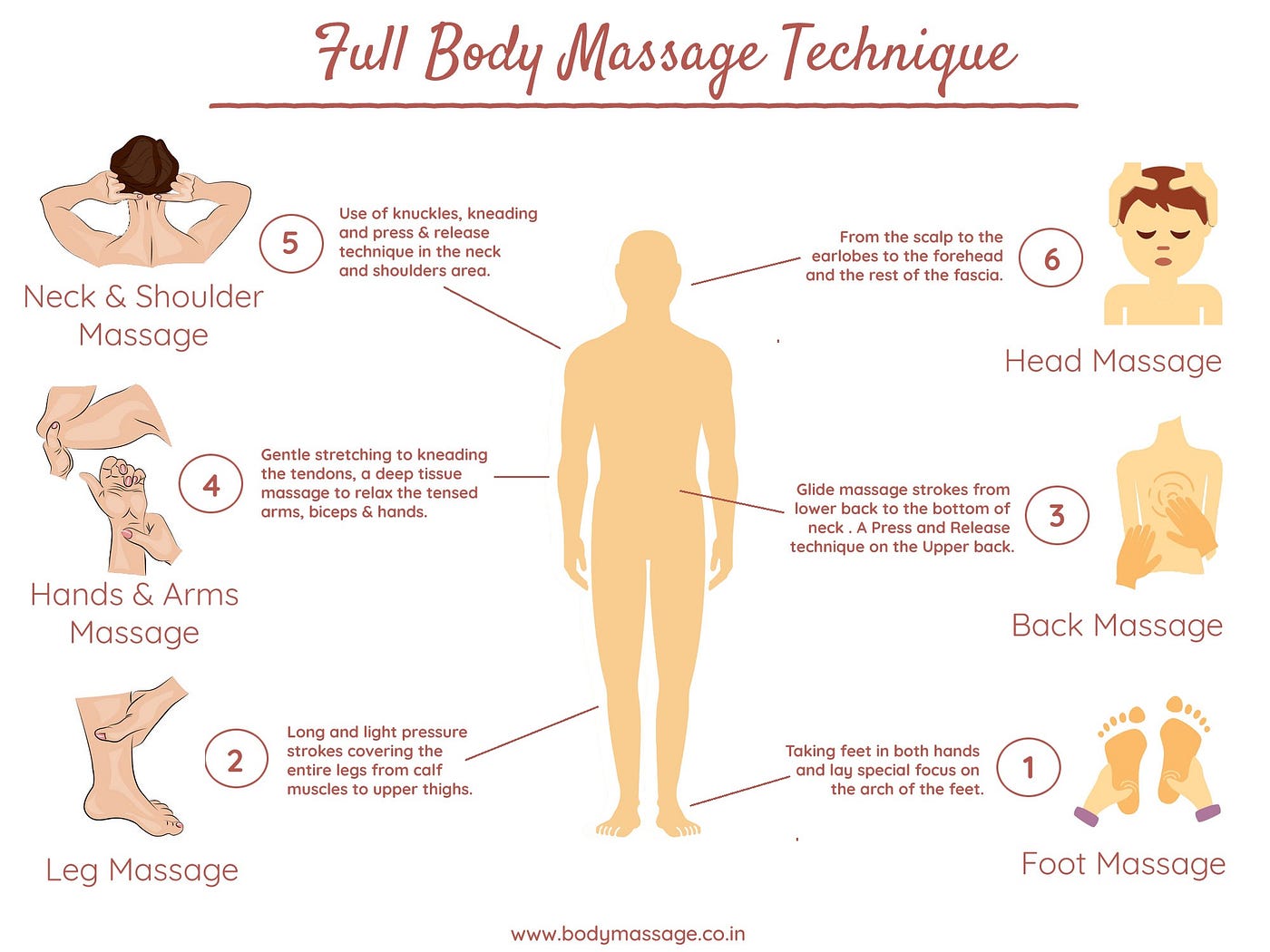
- Back and Shoulders: Begin with long effleurage strokes from the lower back up to the neck. Transition to kneading the shoulders and upper traps.
- Arms and Legs: Move outward to the limbs. Use long gliding strokes from the ankles up toward the hips, and from the wrists up to the shoulders.
- The Flip and Conclusion: Ask your partner to gently turn over. Address the neck, arms, and feet, and finish with a calming scalp massage before letting them rest for a few minutes.
Safety Guidelines and Best Practices
To ensure a safe and enjoyable experience for everyone involved, keep these golden rules in mind:
- Communicate Continuously: Check in frequently about pressure levels, room temperature, and comfort.
- Protect Your Ergonomics: Bend your knees and use your body weight rather than your wrist strength to press down. This prevents you from getting tired too quickly.
- Avoid Direct Bone Pressure: Never apply heavy pressure directly to the spine, neck bones, joints, or lower back kidneys.
By mastering these fundamental strokes and focusing on a calm, intentional environment, you can successfully recreate a restorative wellness experience right in your own home.