Least Impacted Majors at UCLA: A Complete Guide
Navigating the admissions process at the University of California, Los Angeles (UCLA) can feel overwhelming. With well over 100,000 applications submitted annually, getting into this prestigious institution is fiercely competitive. While high-profile programs like Computer Science, Biology, and Film and Television receive the lion's share of attention—and applicants—many students wonder about the least impacted majors at UCLA to maximize their chances of acceptance or internal transfer.
Understanding how UCLA handles impacted majors, what alternatives exist, and how the university evaluates applicants can give you a distinct strategic advantage. Here is a comprehensive breakdown of major selection at UCLA and how to approach it.
What Does "Impacted Major" Mean at UCLA?
Before looking at specific fields of study, it is crucial to understand what "impacted" actually means in the University of California system. An impacted major is one where student demand—meaning the number of qualified applicants—far exceeds the instructional resources, faculty, and physical classroom space available.
At UCLA, impacted status affects both incoming freshman admissions and students who hope to switch majors after enrolling. When a major is heavily impacted, the department often enforces:
- Strict prerequisite course completion requirements with high minimum GPA thresholds.
- Auditions, portfolios, or supplemental essays.
- Caps on the total number of students accepted into the upper-division major track.
Conversely, less impacted or non-impacted majors generally have more flexible pathways, welcoming departments, and fewer enrollment bottlenecks.
Are There Truly "Unimpacted" Majors for Freshmen?
A common misconception among high school seniors is that choosing an obscure or less popular major guarantees admission to UCLA. The reality is more nuanced.
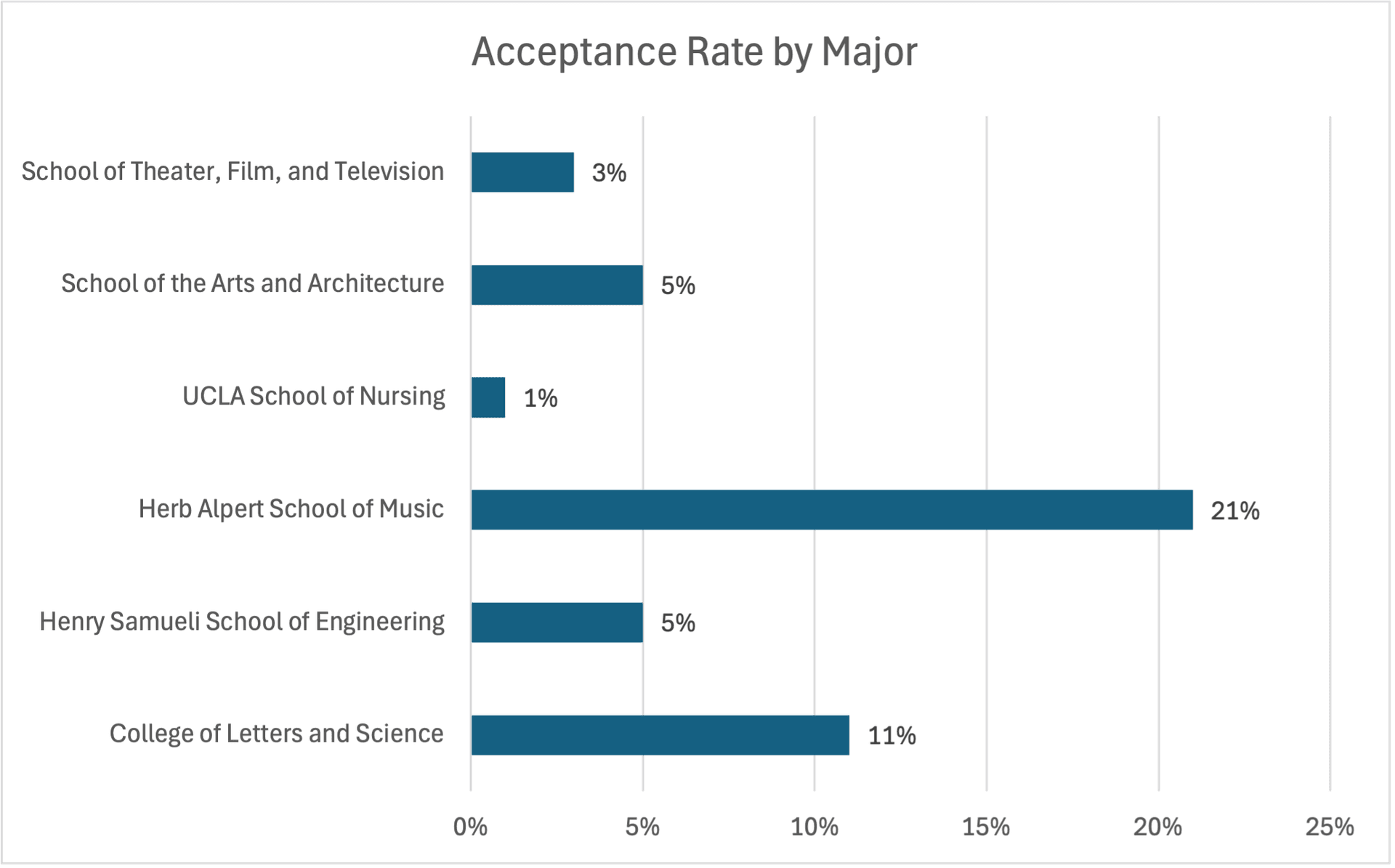
UCLA admits students to the university as a whole—or specifically to an undergraduate college (such as the UCLA College of Letters and Science, the UCLA Samueli School of Engineering, or the Herb Alpert School of Music)—rather than locking incoming freshmen into a hyper-specific departmental cohort on day one. However, your intended major listed on the application still matters significantly.
The UCLA College of Letters and Science
The vast majority of undergraduate students at UCLA enroll in the College of Letters and Science. This college houses dozens of humanities, social science, and physical science departments. While majors like Psychobiology, Economics, and Political Science are exceptionally popular and highly impacted, many disciplines within the humanities and select physical sciences receive significantly fewer first-choice applicants.
Exploring the Least Impacted Majors at UCLA
While UCLA does not officially publish a dynamic "least impacted" ranking list—as applicant volumes fluctuate year by year—historical data and institutional trends point toward several academic departments that experience lighter applicant pressure during the admissions cycle.
Video: UCLA Honest Review: Admissions, Cost vs. Value & The LA Campus Vibe

1. Humanities and Foreign Languages
Humanities programs routinely see lower application volumes compared to STEM and pre-professional tracks. Disciplines such as European Languages and Cultures, Near Eastern Languages and Cultures, Scandinavian, and Comparative Literature offer robust academic training with much smaller applicant pools.
These programs provide intimate classroom sizes, closer mentorship from faculty, and deep training in critical thinking, writing, and cultural analysis—skills that employers across all industries actively seek.
2. Interdisciplinary and Niche Arts Programs
While the School of Theater, Film and Television is notoriously difficult to enter, some niche academic areas within the arts and design sphere receive fewer direct applicants, though they may still require portfolios or auditions. Programs like Ethnomusicology or certain sub-disciplines in the UCLA Herb Alpert School of Music offer alternative entry points for creative students.
3. Select Physical and Mathematical Sciences
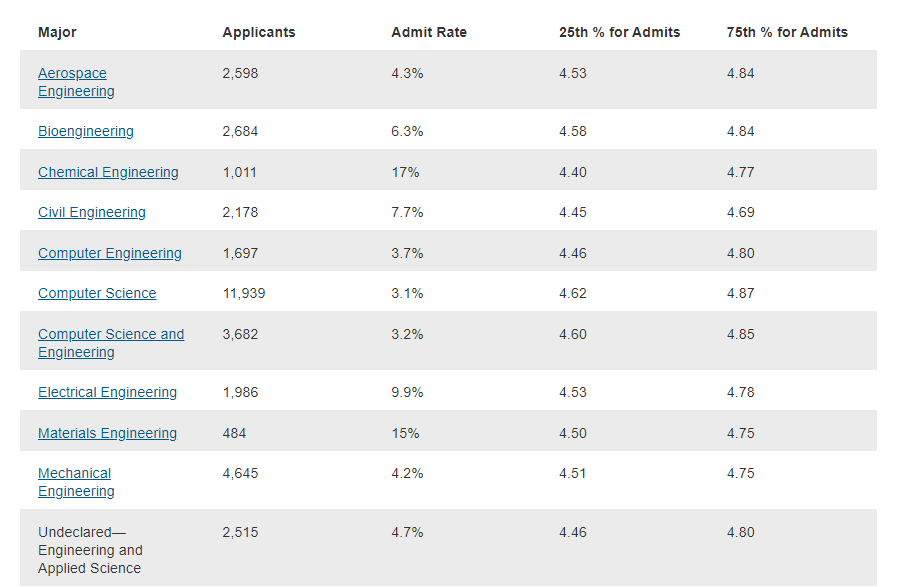
While Computer Science and Mechanical Engineering in the Samueli School of Engineering are intensely impacted, certain pure sciences or interdisciplinary physical science tracks in the College of Letters and Science report steadier, more manageable enrollment numbers. Programs focusing on atmospheric and oceanic sciences, earth and environmental science, or pure mathematics often have more room to accommodate interested students.
Strategies for Choosing Your UCLA Major
If you are strategic about your major selection, you can position yourself favorably without compromising your educational and career goals. Consider the following best practices:
- Align with Your True Strengths: Do not choose a major solely because you think it is less impacted. If your coursework and extracurricular activities do not reflect a genuine passion for the subject, admissions officers will notice the disconnect in your personal insight questions (PIQs).
- Leverage Alternate Majors: UCLA allows applicants to list an alternate major on their application (though note that competitive majors like Computer Science cannot be chosen as an alternate). Selecting a less impacted alternate major in the humanities or social sciences can sometimes keep your application alive if you are not admitted to your primary choice.
- Understand the Transfer Pathway: Many students who do not secure direct freshman admission to competitive majors successfully enter UCLA as undeclared or humanities majors, excel in their general education courses, and strategically utilize academic counseling to explore related fields.
The Myth of "Undeclared" Admissions
Many applicants believe applying as "Undeclared" is a loophole. At UCLA, students applying to the College of Letters and Science generally apply into a general division (Humanities, Social Sciences, Physical Sciences, or Life Sciences) or as "Undeclared" within those divisions. While this provides initial flexibility, you are still expected to declare a specific major by the end of your sophomore year. Choosing a less impacted specific major from the start can provide greater clarity for your prerequisite planning.
Conclusion
Securing a spot at UCLA is a milestone achievement, regardless of the path you take. While highly impacted majors dominate campus discussions, exploring the least impacted majors at UCLA—particularly within the humanities and specialized sciences—can reveal hidden academic gems. By balancing genuine academic interest with smart application strategy, you can present a compelling profile to the admissions committee and set yourself up for long-term success on campus.