LeBron James Net Worth: The Shocking Reality Behind Headlines
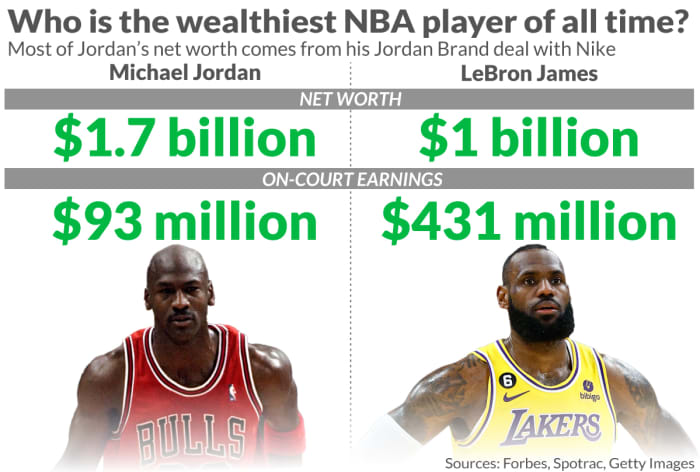
When Forbes officially certified LeBron James as a billionaire in June 2022, sports media erupted with celebratory coverage. He had achieved something even Michael Jordan could not: entering the three-comma club while still actively playing in the NBA. Yet when examining the true anatomy of LeBron James net worth: the shocking reality behind the headlines is that his basketball salary represents only a fraction of his fortune. The public sees the massive contract figures, but the mechanisms that actually created his wealth tell a radically different story.

As of 2024, LeBron James maintains an estimated net worth of roughly $1.2 billion. Unpacking that valuation requires looking past the surface-level contract figures to understand asset ownership, equity structures, aggressive tax realities, and a fundamental shift in how athletes monetize their fame.
The NBA Contract Illusion: What James Actually Takes Home
Over his record-setting two-decade career, LeBron James has earned more than $530 million in pure NBA playing salary across stints with the Cleveland Cavaliers, Miami Heat, and Los Angeles Lakers. On paper, that alone appears to guarantee generational wealth. In financial reality, high-earning professional athletes forfeit more than half of their gross contract values before seeing a single dollar.
Professional athletes competing in high-tax jurisdictions face substantial financial deductions:
- Federal Income Tax: The top marginal tax rate takes a 37% cut off the top.
- State Taxes (California): Playing for the Lakers subjects James to California's top state income tax rate of 13.3%.
- Jock Taxes: Professional athletes pay state income taxes in nearly every state and city where they play road games, creating complex multi-state tax obligations.
- NBA Escrow System: The NBA collective bargaining agreement withholds 10% of player salaries in escrow each season to guarantee the negotiated 50/50 basketball-related income split between owners and players.
- Agent and Management Fees: Agency commissions and business management teams routinely absorb another 3% to 5% of gross earnings.
After factoring in these compulsory deductions, James has taken home an estimated $240 million to $260 million from his playing contracts. That is an enormous sum, but it accounts for barely 20% of his current net worth. Playing basketball gave LeBron his starting capital; his balance sheet was built elsewhere.
LeBron James Net Worth: The Shocking Reality Behind the Headlines
The prevailing myth regarding celebrity athletes is that endorsement deals are simply paid advertisements: a brand cuts a check, the athlete films a commercial, and both parties move on. The defining reality behind LeBron James's wealth accumulation is his deliberate refusal to work as a traditional hired endorser.
Early in his career, James and his business partner Maverick Carter pivoted away from fee-for-service sponsorships in favor of equity ownership. Instead of accepting cash fees that are heavily taxed as ordinary income, James demanded equity stakes in high-growth enterprises. This strategy unlocked compounding wealth rather than linear paydays.
1. The Beats by Dre Windfall
In 2008, James negotiated a small equity stake in Beats Electronics in exchange for promoting Dr. Dre and Jimmy Iovine's premium headphones. When Apple acquired Beats for $3 billion in 2014, James reportedly walked away with a cash and stock payout estimated at $30 million to $50 million—far exceeding what any typical headphone sponsorship would have paid over that period.
2. The Blaze Pizza Gamble
In 2015, James walked away from an endorsement renewal with McDonald's worth an estimated $14 million over four years. Instead, he committed capital and likeness to a fledgling fast-casual chain called Blaze Pizza. James became an early franchise owner, opening multiple locations in Chicago and South Florida, while securing an estimated 10% equity stake in the parent company. That initial investment of roughly $1 million ballooned in value to more than $35 million within a few short years.
3. The Lifetime Nike Partnership
Video: The Shocking Truth Behind LEBRON JAMES' $1.2 Billion Net Worth 💰😲
While equity took center stage, James also leveraged his global influence to secure the most lucrative footwear agreement in modern sports. In late 2015, he signed a lifetime contract with Nike. While the financial details remain closely guarded, industry insiders and Carter have indicated the deal pays James upwards of $30 million annually, with structural royalties and bonuses that push the total lifetime value beyond $1 billion.
The Institutional Pillars: SpringHill and Fenway Sports Group
Achieving a ten-figure net worth requires owning institutional-grade assets that appreciate independently of personal labor. James's net worth is anchored primarily by two major commercial holdings.
The SpringHill Company: ~$300 Million Asset Value
Founded by James and Maverick Carter, The SpringHill Company consolidates three businesses: marketing agency Robot Company, athlete platform Uninterrupted, and SpringHill Entertainment (which produced Space Jam: A New Legacy and HBO's The Shop). In October 2021, the company sold a minority stake to a consortium of institutional investors including RedBird Capital Partners, Epic Games, Nike, and Fenway Sports Group at a valuation of roughly $725 million. James remains the single largest individual shareholder.
Fenway Sports Group (FSG): ~$100 Million Asset Value
In 2011, James partnered with FSG to acquire a 2% stake in English Premier League giant Liverpool FC for roughly $6.5 million. A decade later, he transformed that soccer-specific asset into direct equity in FSG itself. As an official FSG partner, James holds ownership interests in a massive sports empire that includes:
- Liverpool Football Club
- The Boston Red Sox and Fenway Park
- The Pittsburgh Penguins (NHL)
- RFK Racing (NASCAR)
- New England Sports Network (NESN)
Real Estate Portfolio and Liquid Reserves
Beyond operating companies and equity stakes, James maintains an exceptionally defensive balance sheet designed to preserve capital across market cycles.
His luxury real estate holdings total roughly $100 million in combined market value. Key properties include:
- Beverly Hills Compound: A sprawling 13,000-square-foot estate purchased for $36.8 million in 2020, which James recently demolished to construct a custom-designed modern estate.
- Brentwood Mansions: Two distinct estates in Los Angeles' affluent Brentwood neighborhood, acquired for $21 million and $23 million respectively.
- Akron Primary Residence: A custom 30,000-square-foot mansion situated in Bath Township, Ohio, valued at nearly $10 million.
The remainder of his wealth—estimated between $300 million and $400 million—is held in liquid investments, corporate bonds, public equities, and cash equivalents. This liquidity provides him with the operational dry powder necessary to pursue his stated long-term goal: paying the multi-billion-dollar expansion fee required to own an NBA franchise in Las Vegas.
The Real Takeaway of LeBron's Financial Empire
The shocking reality behind LeBron James's net worth is not simply that he has $1.2 billion. The real story is that he systematically dismantled the traditional business model of professional athletics. Previous generations traded their peak physical years for flat endorsement checks, retiring into financial vulnerability once their athletic utility expired.
By demanding equity, co-founding operating enterprises, and partnering with institutional capital, James insulated himself from the standard career trajectory of a professional basketball player. Even when his on-court career ends, his net worth will continue to appreciate—proving that his most consequential moves never happened on the hardwood.
.jpg?itok=GfGrzB5-)